Key Findings
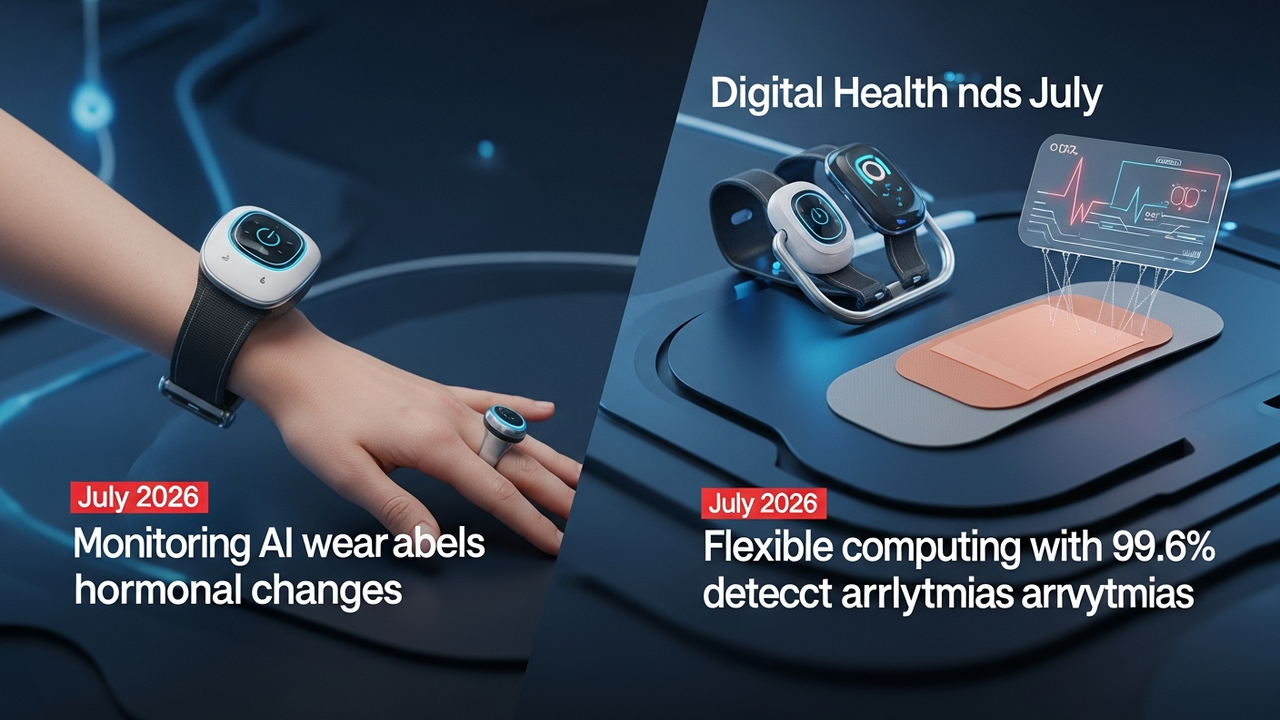
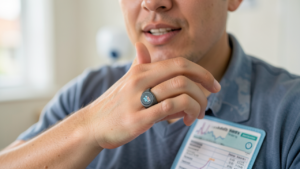
In July 2026, the digital health sector is witnessing significant progress driven by Artificial Intelligence (AI)-integrated wearable technologies, setting new standards for healthcare monitoring. Clair Health successfully completed an $11.6 million funding round to develop a wearable device capable of monitoring hormonal changes without the need for blood tests. This device combines ten biosensors with AI-driven voice biomarker analysis to comprehensively track menstrual cycles, perimenopausal states, and inflammation levels. Furthermore, a flexible computing patch developed at the University of Chicago demonstrated a remarkable 99.6% accuracy in detecting life-threatening cardiac arrhythmias, while also processing all data on-device. These achievements are poised to profoundly shape the future of personalized preventive medicine and early diagnosis.
Technical/Clinical Details
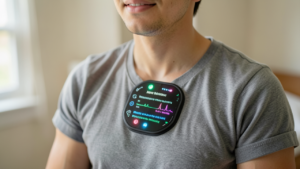
Clair Health’s wearable device integrates multiple chemical sensors to detect trace biomarkers in bodily fluids (e.g., hormone metabolites in sweat) with AI-driven voice biomarker analysis, inferring stress and emotional states from voice patterns and intonation. This enables non-invasive tracking of menstrual cycle phases, onset and progression of menopause, and dynamic changes in inflammatory profiles. Meanwhile, the University of Chicago’s flexible computing patch consists of an ultra-thin electronic circuit and a high-sensitivity electrode array adhered directly to the skin. This patch continuously monitors cardiac electrical signals, with an onboard processor equipped with AI algorithms identifying abnormal patterns indicative of life-threatening cardiac arrhythmias such as atrial fibrillation and ventricular tachycardia in real-time. On-device data processing reduces privacy risks and allows for immediate alerts without delays in results. The 99.6% detection accuracy signifies exceptionally high reliability for clinical diagnosis, with a notably low false-alarm rate.
Background and Industry Context
Hormonal balance and cardiac health are critically important for women’s health and overall well-being. However, traditional monitoring methods have primarily centered around periodic hospital visits or reactive responses once symptoms appear. Hormonal fluctuations are complex and highly individual, making it challenging to grasp a comprehensive picture from blood tests alone. Moreover, cardiac arrhythmias can occur suddenly, making early detection and intervention vital for saving lives. These new AI wearables and flexible patches address these unmet needs, enabling patients to continuously and non-invasively monitor their health status in daily life. This facilitates early disease detection and prevention, personalized therapeutic interventions, and contributes to reducing healthcare costs.
Strategic Significance & Outlook
These advancements in AI wearable technology are set to redefine the future of digital health. Clair Health’s device offers a new perspective on women’s health management, contributing to personalized management of dysmenorrhea, infertility treatments, and menopausal symptoms. The flexible computing patch from the University of Chicago will transform cardiac disease screening and monitoring standards, expanding the potential for continuous vital sign monitoring outside of hospital settings, especially for high-risk patients. In the future, these technologies are expected to evolve further, integrating with other biomarkers and physiological parameters to build more comprehensive ‘digital twins’ that can predict individual health states and recommend preventive interventions. Regulatory bodies must also streamline the approval processes for such innovative devices and establish frameworks to accelerate their widespread adoption.
Get our weekly technology intelligence — free
Receive an infographic that lets you judge at a glance whether each field’s analysis report is worth reading.
Subscribe Free — Weekly Tech Intelligence
By subscribing, you’ll receive Troy-Technical’s weekly technology intelligence newsletter.
- Your email and selected fields are used only to deliver the newsletter.
- We never share your information with third parties.
- You can unsubscribe anytime via the link in each email.
See our Privacy Policy for details.
Takes about a minute · Unsubscribe anytime




Comments