Key Findings
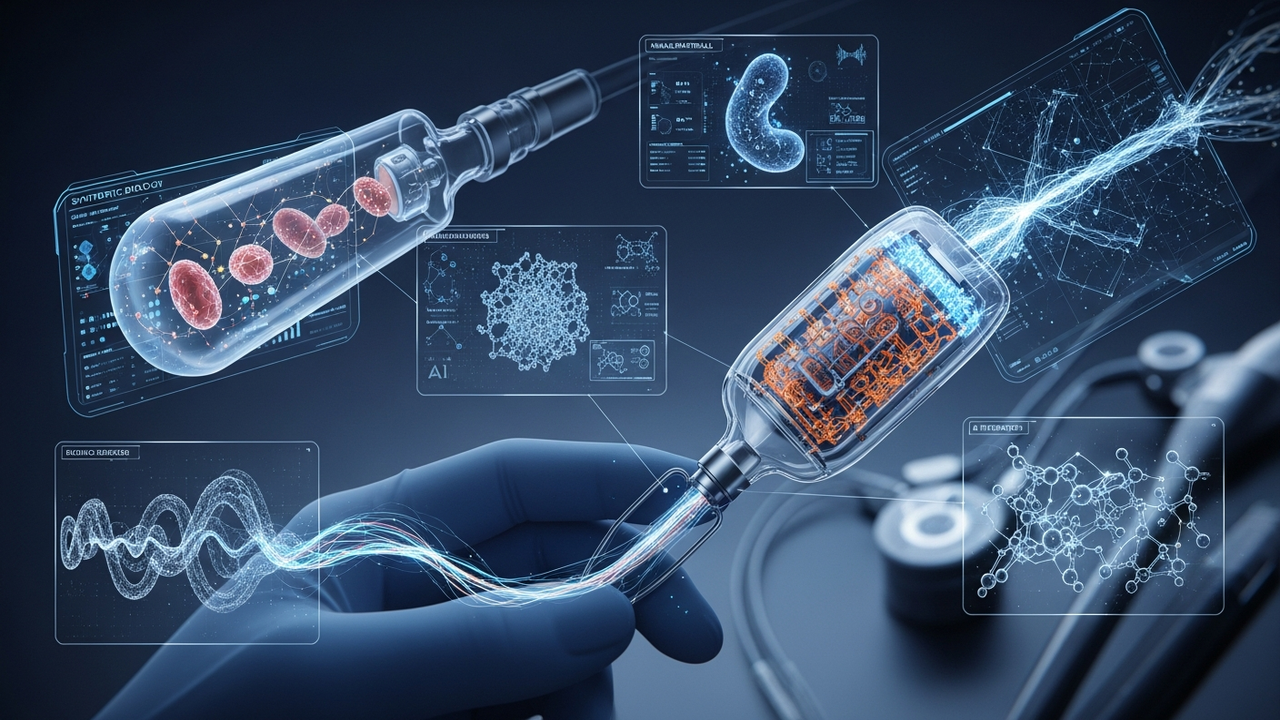
The integration of synthetic biology, nanomaterials, and artificial intelligence (AI) is ushering in a new era of next-generation bionic sensors, dramatically enhancing small molecule detection capabilities and opening new frontiers in precision medicine and real-time monitoring. These advanced wearable and implantable biosensors are particularly noteworthy for their capacity to continuously and sensitively monitor crucial biomolecules such as glucose, lactate, and cardiac markers, providing unprecedented physiological insights.
Technical and Clinical Details
- Synthetic Biology for Recognition: Bionic sensors utilize synthetically designed and modified biorecognition elements (e.g., enzymes, antibodies, DNA aptamers) to achieve high selectivity and affinity for specific target molecules. This enables accurate detection of desired small molecules even within complex biological samples.
- Nanomaterial Integration: Nanomaterials like graphene, carbon nanotubes, and quantum dots significantly boost sensor sensitivity, response speed, miniaturization, and wearability. Their high surface-to-volume ratio and excellent electrical properties provide platforms that efficiently transduce and amplify minute biological signals. Graphene-based sensors, in particular, are well-suited for skin-attachable and implantable devices due to their flexibility and biocompatibility.
- AI-Driven Data Analysis: The vast amounts of real-time data collected by these sensors are processed and interpreted by AI algorithms. AI facilitates noise reduction, pattern recognition, anomaly detection, and the prediction of future physiological states, thereby “smartifying” the sensors. This empowers clinicians and patients with deeper, more personalized insights.
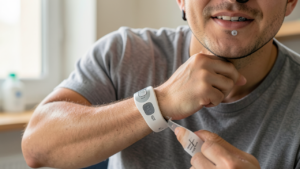
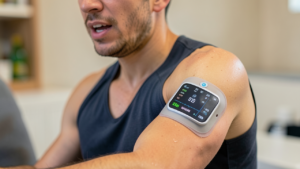
- Continuous Monitoring Applications: These sensors provide detailed physiological dynamics, previously unattainable through conventional intermittent testing, across a wide range of clinical applications. Examples include glucose monitoring for diabetic patients, lactate levels for athletes, cardiac markers for heart disease patients, and real-time drug response assessment in pharmacokinetics.
Background and Industry Context
With the advancements in precision medicine, understanding individual physiological states in real-time has become increasingly critical. Traditional diagnostic methods are often invasive, temporally limited, and fail to capture the dynamic nature of disease comprehensively. The integrated approach of bionic sensors overcomes these limitations, contributing to early disease detection, the formulation of personalized treatment strategies, and the strengthening of preventive medicine. Beyond healthcare, these sensors are also expected to find broad applications in areas such as environmental pollutant monitoring and food quality and safety assessment.
Strategic Significance and Outlook
The synergy between synthetic biology, nanomaterials, and AI is set to further amplify the performance and versatility of bionic sensors. In the future, these sensors are anticipated to evolve into “multimodal sensing platforms” capable of simultaneously and non-invasively monitoring multiple biomarkers, providing even more comprehensive health profiles in real-time. As miniaturization and cost reduction progress, these advanced sensor technologies are likely to become ubiquitous, moving from hospitals to homes and even integrating into smart city infrastructure, thereby contributing to public health improvement and the realization of a sustainable society. The next generation of sensors holds the key to realizing the vision of “personal health labs.”
Source: https://www.mdpi.com/2072-666X/17/6/725
Get our weekly technology intelligence — free
Receive an infographic that lets you judge at a glance whether each field’s analysis report is worth reading.
Subscribe Free — Weekly Tech Intelligence
By subscribing, you’ll receive Troy-Technical’s weekly technology intelligence newsletter.
- Your email and selected fields are used only to deliver the newsletter.
- We never share your information with third parties.
- You can unsubscribe anytime via the link in each email.
See our Privacy Policy for details.
Takes about a minute · Unsubscribe anytime



Comments