Key Findings
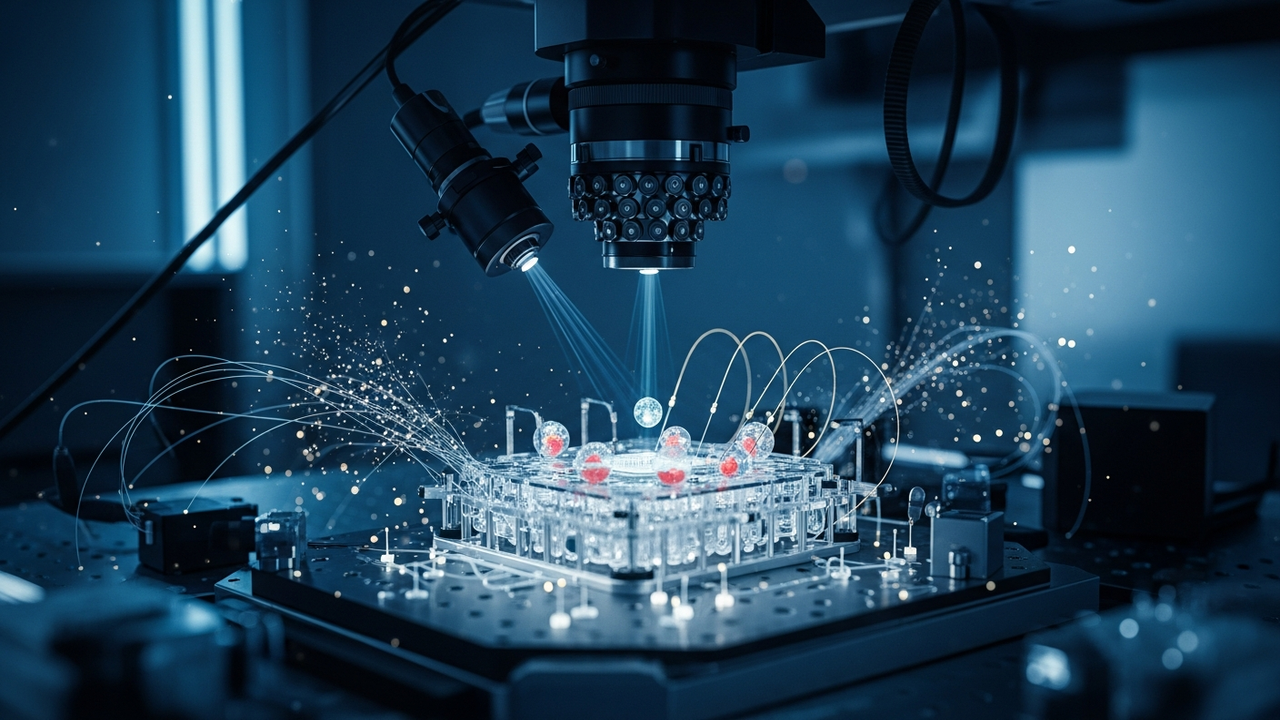
By fundamentally rethinking microfluidic platform design, significant progress is being made in integrating sensors, imaging, and computational capabilities within organoid-on-a-chip devices. This advancement makes continuous monitoring of critical physiological parameters—such as pH, dissolved oxygen, metabolites, and secreted biomarkers—a reality. Specifically, integrated electrochemical immunosensors and physical sensors have demonstrated the ability to automatically, continuously, and in situ monitor organoid responses to pharmaceutical compounds within multi-organ-on-a-chip platforms. This represents a groundbreaking leap that dramatically improves the precision and efficiency of drug screening, toxicology testing, and disease modeling.
Technical/Clinical Details
The integrated microfluidic platform proposed in this research functions by embedding multiple types of sensors within the microenvironment where organoids are cultured. Electrochemical sensors detect real-time changes in ion concentrations, pH levels, dissolved oxygen, and metabolites like glucose and lactate in the culture medium. For example, electrochemical impedance spectroscopy (EIS) can be used for non-invasive monitoring of cell barrier function and morphological changes. Optical sensors detect specific biomarkers (e.g., secreted proteins) based on fluorescence or absorbance, or evaluate cell viability through image analysis. Physical sensors (e.g., pressure sensors, flow sensors) precisely control hydrodynamic conditions within the chip and measure tissue responses to mechanical stimuli. The vast data generated by these sensors are processed and analyzed by on-chip computational units or external AI systems, providing comprehensive information on organoid health status, drug responses, and disease progression. This integration allows for long-term experiments with minimal manual intervention.
Background and Industry Context
Organ-on-a-chip technology is highly anticipated as a powerful tool to overcome the limitations of traditional 2D cell cultures and animal models, replicating more in vivo-like human physiological responses. However, to unleash its full potential, the ability to monitor the state of cultured tissues in real-time, in detail, and non-destructively was crucial. Previous systems often relied on external analytical instruments, posing challenges for continuous monitoring and high-throughput analysis. The approach of integrating sensing, imaging, and computational capabilities directly into the microfluidic platform itself resolves these bottlenecks, significantly improving the efficiency and accuracy of the drug development process. This helps reduce failure rates in preclinical stages and enables faster identification of promising therapies.
Strategic Significance & Outlook
Microfluidic platforms that integrate sensing, imaging, and computation are poised to profoundly change the future of drug discovery research and personalized medicine. In the future, these systems may evolve into ‘human-on-a-chip’ systems, connecting multiple organoids-on-a-chip to model systemic pharmacokinetics and pharmacodynamics. This platform, by utilizing patient-derived cells, will become a powerful tool for ‘precision drug discovery,’ enabling optimal drug selection and dosing regimens for individual patients. Furthermore, combining with AI and machine learning algorithms is expected to open new research areas, such as discovering novel disease biomarkers from the extensive sensor data and building predictive models for drug responses. This will make a future where safer and more effective therapies are delivered to patients more rapidly a reality.
Source: https://www.mdpi.com/2072-666X/17/7/807
Get our weekly technology intelligence — free
Receive an infographic that lets you judge at a glance whether each field’s analysis report is worth reading.
Subscribe Free — Weekly Tech Intelligence
By subscribing, you’ll receive Troy-Technical’s weekly technology intelligence newsletter.
- Your email and selected fields are used only to deliver the newsletter.
- We never share your information with third parties.
- You can unsubscribe anytime via the link in each email.
See our Privacy Policy for details.
Takes about a minute · Unsubscribe anytime







Comments