Key Findings
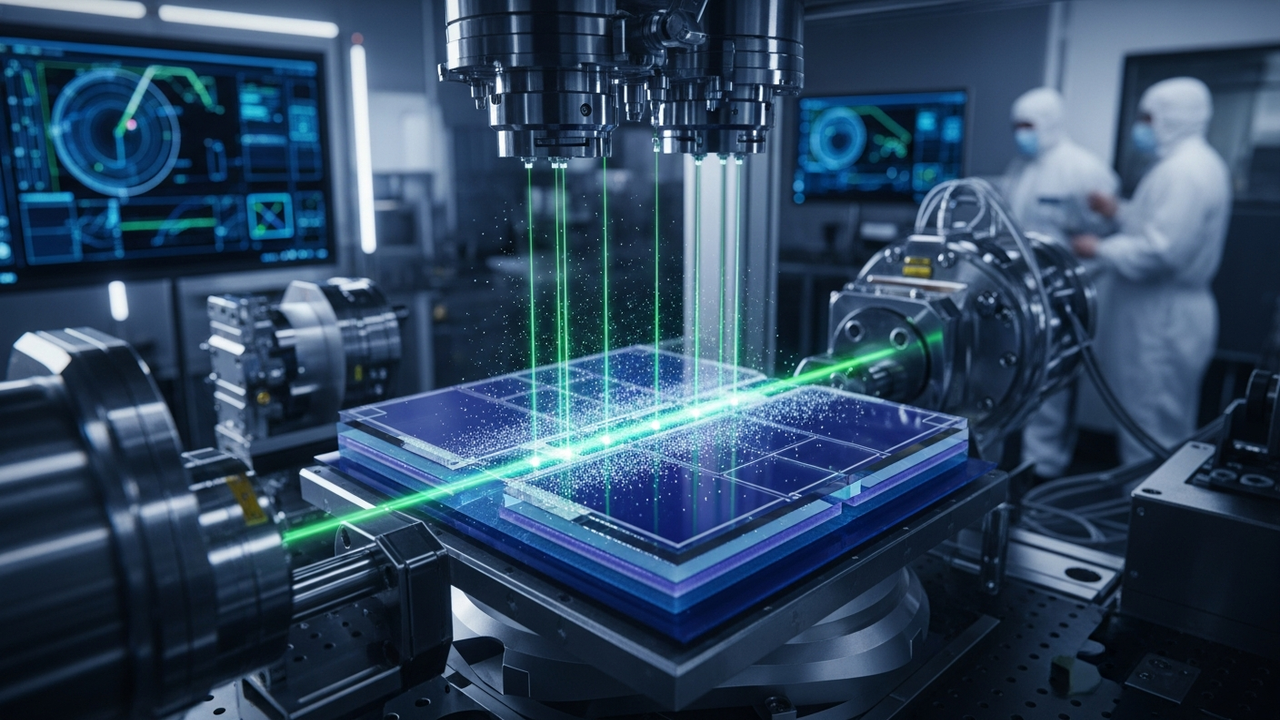
Researchers have successfully realized high-performance inverted perovskite solar cells (IPSCs) by developing a novel synergistic buried-interface engineering strategy that combines ion exchange and passivation. Devices fabricated with this technology achieved a high power conversion efficiency of 25.95% on a 1 cm² active area. Furthermore, and remarkably, these devices demonstrated extraordinary long-term stability, maintaining 100% of their initial efficiency after 1,200 hours of continuous 1-sun illumination at the maximum power point (MPP). This represents a substantial improvement in addressing the primary stability challenge of perovskite solar cells.
Technical Details
This buried-interface engineering aims to effectively suppress defects at the interface between the perovskite layer and the charge transport layer. The ion exchange process optimizes the crystal structure near the interface, reducing defect sites that contribute to non-radiative recombination. Simultaneously, the introduction of a passivation layer fine-tunes the energy levels at the interface, maximizing the efficiency of charge carrier extraction. These synergistic effects significantly extend carrier lifetime, leading to improvements in open-circuit voltage (Voc) and fill factor (FF). As a result, not only was a high efficiency of 25.95% achieved, but the devices also gained robustness against external environmental factors, exhibiting no efficiency degradation over 1,200 hours of continuous MPP operation. This groundbreaking data alleviates concerns regarding the durability of perovskite solar cells.
Background & Context
Inverted perovskite solar cells are gaining increasing commercial interest due to their simpler structure and high efficiency. However, the inherent instability of perovskite materials and defects at interfaces have been major factors undermining the long-term reliability of these devices. Particularly, the quality of the buried interface has a decisive impact on device performance. This research addresses these fundamental issues by combining two powerful techniques: ion exchange and passivation. Such advances in interface engineering significantly reduce the technological barriers to the commercialization of perovskite solar cells.
Strategic Significance & Outlook
The combination of 25.95% high efficiency and outstanding stability (100% retention over 1,200 hours) indicates that perovskite solar cells are making strong progress towards practical applications. This technology is expected to accelerate adoption in a wide range of fields, including Building-Integrated Photovoltaics (BIPV), flexible solar cells, and IoT devices. Enhanced long-term stability is essential for improving product reliability and market acceptance. Future research will focus on validating the scalability of this technology for mass production, evaluating stability under more severe environmental conditions, and optimizing cost-effectiveness. This research outcome further strengthens the potential for perovskite solar cells to become a leading renewable energy source in the near future.
Get our weekly technology intelligence — free
Receive an infographic that lets you judge at a glance whether each field’s analysis report is worth reading.
Subscribe Free — Weekly Tech Intelligence
By subscribing, you’ll receive Troy-Technical’s weekly technology intelligence newsletter.
- Your email and selected fields are used only to deliver the newsletter.
- We never share your information with third parties.
- You can unsubscribe anytime via the link in each email.
See our Privacy Policy for details.
Takes about a minute · Unsubscribe anytime

Comments