Key Findings
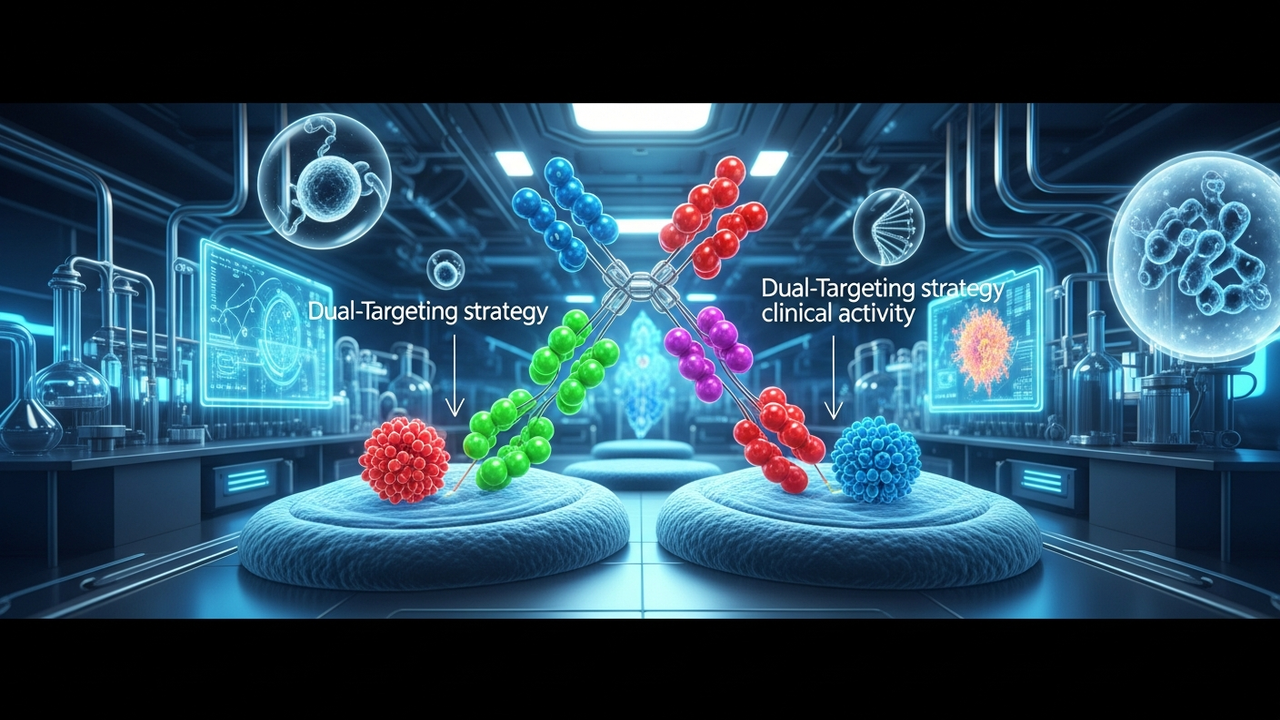
Antibody-drug conjugates (ADCs) are rapidly emerging as a significant and promising class of cancer therapeutics for biliary tract cancers (BTCs), offering improved outcomes in these notoriously difficult-to-treat tumors. Continuous advancements in ADC technology, particularly the development of novel cytotoxic payloads, the implementation of dual-targeting strategies, and more efficient drug delivery systems, are driving a growing pipeline of agents demonstrating significant clinical activity.
Technical / Clinical Details
Biliary tract cancers are often diagnosed at advanced stages due to their anatomical location and biological heterogeneity, leading to limited effective treatment options. ADCs are designed to deliver potent anti-cancer agents (payloads) directly to cancer cells by leveraging antibodies that specifically bind to tumor-associated surface antigens. This targeted approach aims to maximize therapeutic efficacy while minimizing systemic toxicity. The article highlights several key technological advancements in ADCs contributing to their success in BTC treatment:
- Novel Cytotoxic Payloads: Development of more potent and diverse payloads, including those with mechanisms of action distinct from traditional chemotherapy, which can be effective even against BTC cells that exhibit resistance to existing drugs (e.g., beyond tubulin inhibitors or DNA-damaging agents).
- Dual-Targeting Strategies: Approaches where a single ADC targets multiple tumor-associated antigens, or combinations of different ADCs are used. This addresses tumor heterogeneity and allows for broader targeting of cancer cells, promising improved response rates and overcoming drug resistance.
- Efficient Delivery Systems: Refinements in ADC linker and conjugation technologies have led to enhanced in vivo stability and more controlled, efficient release of the payload at the tumor site.
These technological improvements have translated into promising clinical results for ADCs in BTC, contributing to better patient prognoses through tumor shrinkage and extended progression-free survival.
Background & Context
Biliary tract cancers are rare but aggressive malignancies, typically diagnosed at advanced stages, leading to very poor prognoses. Surgical resection is the only curative option, but few patients are eligible, leaving many to rely on chemotherapy and radiation, which offer limited efficacy. While some molecular targets like HER2, FGFR2, and IDH1 have been identified in BTCs, and targeted therapies are emerging, ADCs offer a distinct mechanism that can potentially benefit a broader patient population. The introduction of ADCs into BTC treatment represents a major step towards addressing the high unmet medical need in this challenging cancer type.
Strategic Significance & Outlook
The progress of ADCs in biliary tract cancers is critically important for expanding treatment options and improving patient outcomes. A robust pipeline of ADC candidates is currently showing promising data in clinical trials, with several likely to gain approval within the next few years. In the future, ADCs are expected to become an integral part of standard BTC treatment regimens, exploring not only monotherapy but also combination strategies with immunotherapies and other molecularly targeted agents. This will further improve treatment efficacy, enhancing patient survival and quality of life. For investors and pharmaceutical companies, the BTC ADC market represents an attractive sector with high growth potential.
Get our weekly technology intelligence — free
Receive an infographic that lets you judge at a glance whether each field’s analysis report is worth reading.
Subscribe Free — Weekly Tech Intelligence
By subscribing, you’ll receive Troy-Technical’s weekly technology intelligence newsletter.
- Your email and selected fields are used only to deliver the newsletter.
- We never share your information with third parties.
- You can unsubscribe anytime via the link in each email.
See our Privacy Policy for details.
Takes about a minute · Unsubscribe anytime








Comments