Background
The burgeoning demands of training and inference for generative AI and large language models (LLMs) are consuming unprecedented computational resources and energy. This technological revolution is instigating a profound paradigm shift in data center design, where physical infrastructure limitations are emerging as a critical bottleneck for further AI advancement. Global investments in AI-specific data centers are rapidly escalating, with countries like South Korea at the forefront. These novel architectural requirements inherently translate into elevated construction costs and complexities. Consequently, real estate developers and construction firms must rapidly acquire new expertise and technologies to address the unique demands of AI data center infrastructure.
Key Findings
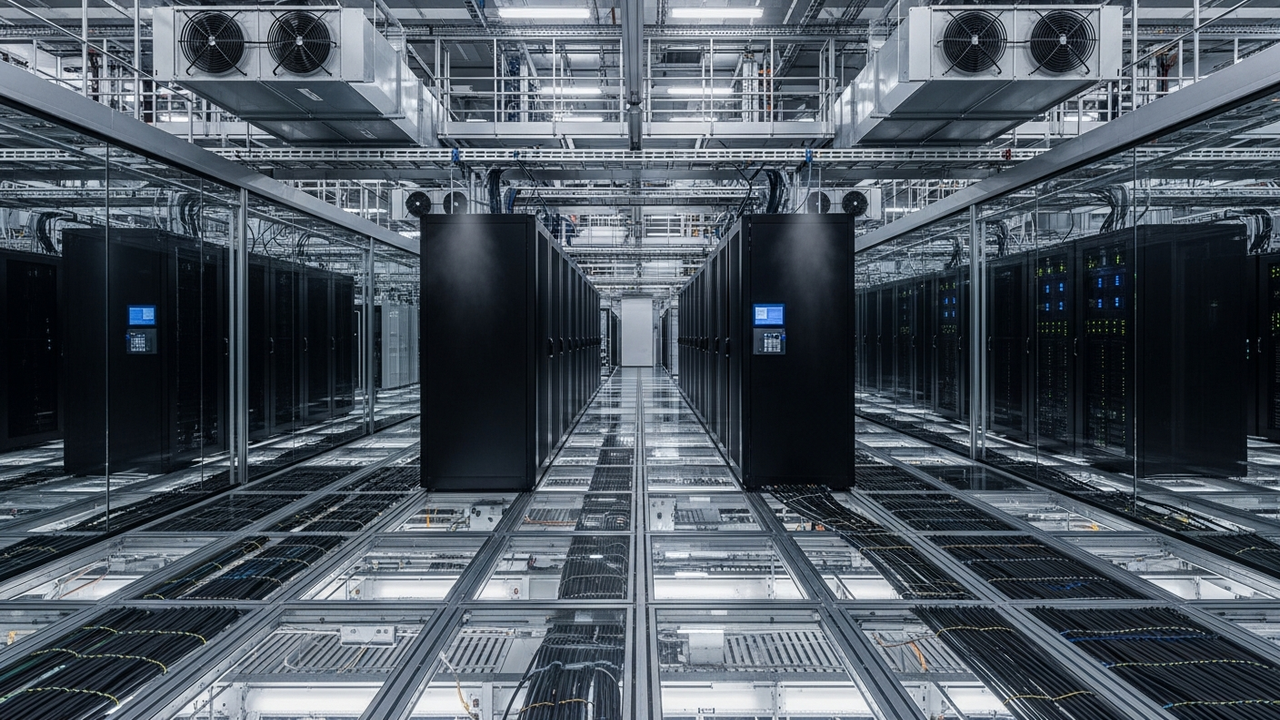
AI data center construction now mandates significantly higher floor heights and precise engineering compared to traditional data centers, primarily to manage the intense heat generated by high-performance GPUs and their substantial power consumption. While conventional office buildings typically feature floor heights of 3.5-4 meters, AI data centers require 5.5-9 meters to efficiently accommodate critical infrastructure.
The primary driver for these elevated floor heights (5.5-9 meters) is the critical need to densely integrate liquid cooling pipes, ultra-high-speed fiber optic cables, and extensive power distribution units within the ceiling and raised floor spaces. This robust infrastructure is indispensable for supporting the enormous data bandwidth and continuous power supply demanded by AI servers. High-performance GPUs generate thermal loads that far exceed the capabilities of traditional air cooling, rendering advanced liquid cooling systems essential. These systems directly connect to server racks, efficiently dissipating heat externally to ensure stable server operation and sustained performance.
Furthermore, individual AI server racks, fully equipped with liquid cooling systems and high-density GPUs, are reported to weigh between 1.3 and 1.5 tons. To structurally support such immense weights, extensive floor reinforcement featuring densely arranged special steel supports is imperative—a structural engineering requirement rarely encountered in conventional data center builds. AI data centers also exhibit significantly higher power consumption than typical facilities, necessitating the integration of large-scale transformer substations and robust, redundant power supply infrastructures to ensure operational continuity.
Looking ahead, AI data center design and construction will remain a vanguard of technological innovation. Future advancements, such as full immersion or direct-to-chip cooling, promise even higher computational densities and smaller physical footprints. Moreover, integrating sustainable practices, including renewable energy sources and waste heat recovery, will become pivotal. These ongoing technological shifts are crucial for optimizing AI infrastructure costs, accelerating the global adoption of AI, and affirming AI data centers as strategic foundations for the digital economy, rather than mere server aggregations.
Source: https://www.chosun.com/english/industry-en/2026/07/16/IOT4Z2X3IZDXTJFYPHUVCQN4DQ/
Get our weekly technology intelligence — free
Receive an infographic that lets you judge at a glance whether each field’s analysis report is worth reading.
Subscribe Free — Weekly Tech Intelligence
By subscribing, you’ll receive Troy-Technical’s weekly technology intelligence newsletter.
- Your email and selected fields are used only to deliver the newsletter.
- We never share your information with third parties.
- You can unsubscribe anytime via the link in each email.
See our Privacy Policy for details.
Takes about a minute · Unsubscribe anytime





Comments