Key Findings
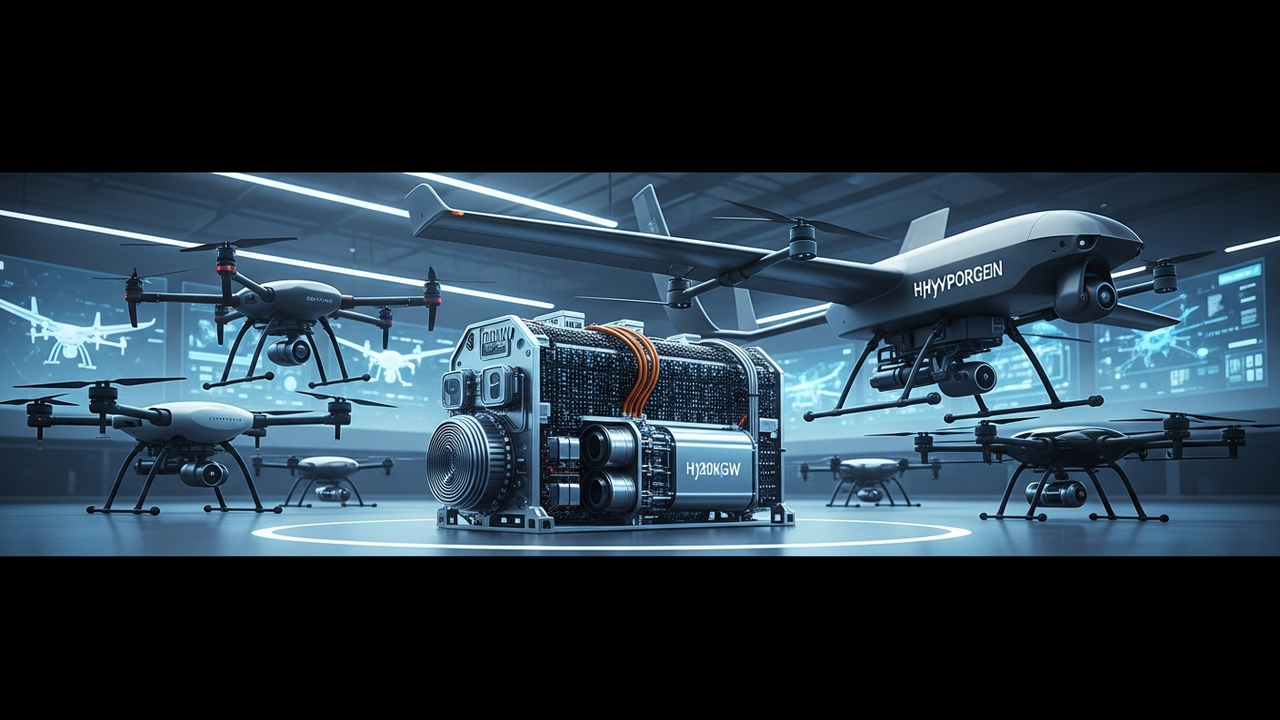
Intelligent Energy (IE) has officially unveiled its new 120kW hydrogen fuel cell power generation system specifically designed for heavy-lift fixed-wing drones. Concurrently with this technological innovation, the company announced that it has secured its largest commercial orders in its corporate history within the Unmanned Aerial Vehicle (UAV) sector, underscoring the significant impact hydrogen fuel cell technology is poised to have on the drone market.
Technical Details
The newly launched 120kW hydrogen fuel cell powertrain targets large fixed-wing drones capable of carrying substantial payloads. This system provides a dramatically extended flight time, ranging from three to five times longer than traditional battery-powered drones. This prolonged endurance significantly enhances operational capabilities for applications such as long-duration aerial surveillance, border patrol, critical infrastructure inspection, disaster response, and defense and security missions. Fuel cells generate electricity by reacting hydrogen with oxygen from the air, producing only water as a byproduct, ensuring clean and quiet operation. IE’s technology combines high power density with proven reliability.
Background and Industry Context
Drone technology is rapidly evolving across diverse sectors, including logistics, agriculture, infrastructure inspection, and defense. However, limitations in battery technology have historically presented bottlenecks for flight duration and payload capacity. Hydrogen fuel cells, possessing a much higher energy density than batteries, are emerging as a compelling solution to overcome these challenges. For heavy-lift applications and long-range missions, rapid refueling and extended range are indispensable, and hydrogen fuel cells are uniquely positioned to meet these demands. IE has been developing fuel cell technology for many years, and this product launch alongside substantial orders indicates both technological maturity and growing market demand.
Strategic Significance and Outlook
IE’s 120kW powertrain and record orders suggest that hydrogen fuel cells are poised to become a standard power source for commercial and defense drone markets. In missions requiring extended operation, hydrogen fuel cells significantly outperform batteries, which will accelerate their adoption in this segment. As fuel supply infrastructure develops and fuel cell systems become even more compact and lightweight, hydrogen fuel cells are likely to be adopted across a wider variety of UAV types. This represents a strategic inflection point, substantially improving the operational efficiency and environmental performance of the drone industry and creating new market opportunities.
Get our weekly technology intelligence — free
Receive an infographic that lets you judge at a glance whether each field’s analysis report is worth reading.
Subscribe Free — Weekly Tech Intelligence
By subscribing, you’ll receive Troy-Technical’s weekly technology intelligence newsletter.
- Your email and selected fields are used only to deliver the newsletter.
- We never share your information with third parties.
- You can unsubscribe anytime via the link in each email.
See our Privacy Policy for details.
Takes about a minute · Unsubscribe anytime






Comments