Key Findings
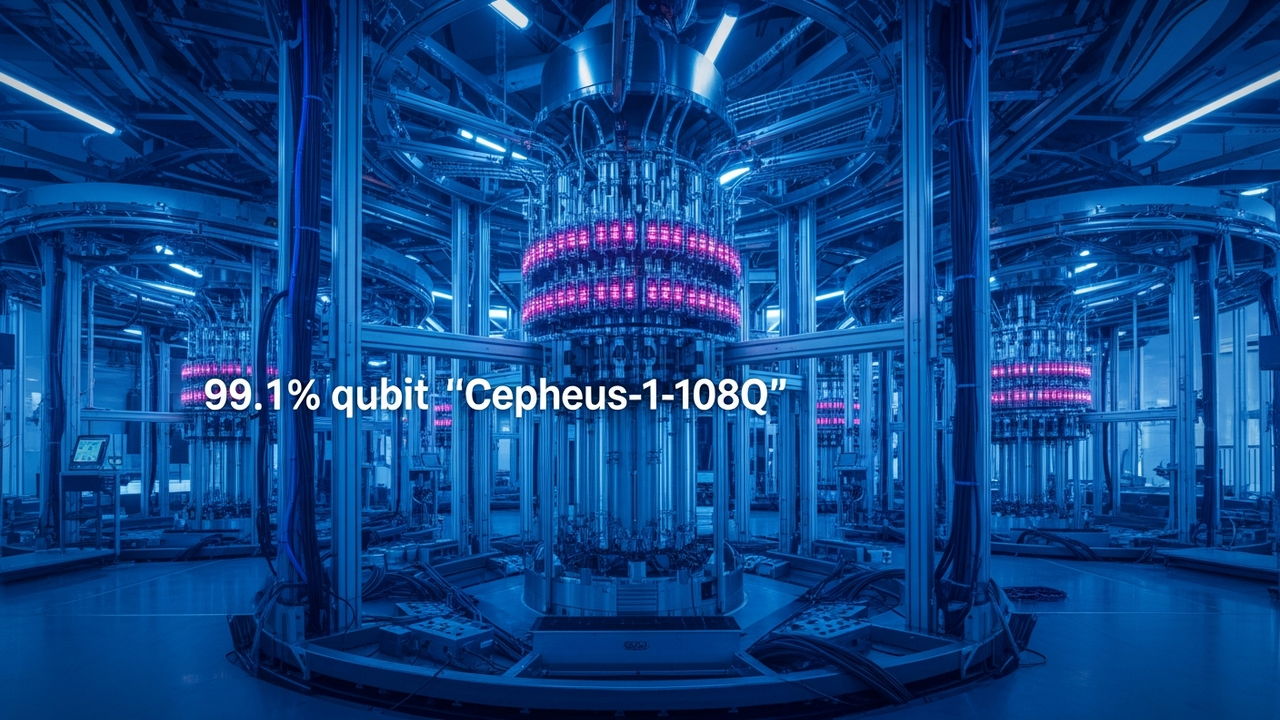
Rigetti Computing has announced that its 108-qubit modular superconducting system, designated ‘Cepheus-1-108Q,’ is currently operating with a median two-qubit gate fidelity of 99.1%. This achievement underscores the viability of Rigetti’s chiplet-based architecture for scalable quantum computing. The company has set an aggressive target to further improve this fidelity to 99.5% later in the year, a performance level previously demonstrated on its earlier 36-qubit multi-chip system.
Technical / Clinical Details
The Cepheus-1-108Q system employs a modular, chiplet-based superconducting architecture, which involves interconnecting multiple smaller quantum chips to form a larger processor. A two-qubit gate fidelity of 99.1% is a highly competitive figure, approaching the critical thresholds required for effective quantum error correction (QEC) and the accurate execution of complex quantum algorithms. The commitment to reaching 99.5% fidelity highlights Rigetti’s dedication to continuous improvement in qubit quality. Maintaining high fidelity is paramount for minimizing errors caused by decoherence, thereby reducing the physical qubit overhead necessary for ultimately achieving fault-tolerant quantum computers.
Background & Context
A primary challenge in the quantum computing industry is scaling the number of physical qubits while simultaneously enhancing the fidelity of each qubit operation. For superconducting qubit systems, inter-chip connectivity poses significant engineering hurdles. Modular architectures, such as Rigetti’s chiplet approach, are considered a promising strategy for building larger quantum processors. Historically, the focus was often solely on increasing qubit counts, but now, quality metrics like gate fidelity are recognized as equally, if not more, important for evaluating the true performance and practical utility of quantum computers.
Strategic Significance & Outlook
The achievement of high fidelity on Rigetti’s Cepheus-1-108Q, coupled with its ambitious improvement targets, holds significant implications for accelerating the commercialization of quantum computing. This progress will enable more reliable quantum computations across diverse fields where quantum computers promise transformative solutions, including drug discovery, materials science, financial modeling, and optimization problems. The chiplet-based modular approach is key to enabling the construction of large-scale, fault-tolerant quantum computers that will require thousands to millions of qubits. Rigetti’s continued technological development is expected to be a significant driving force in the pursuit of practical quantum advantage.
Source: https://www.techi.com/rigetti-multi-chip-fidelity-bet/
Get our weekly technology intelligence — free
Receive an infographic that lets you judge at a glance whether each field’s analysis report is worth reading.
Subscribe Free — Weekly Tech Intelligence
By subscribing, you’ll receive Troy-Technical’s weekly technology intelligence newsletter.
- Your email and selected fields are used only to deliver the newsletter.
- We never share your information with third parties.
- You can unsubscribe anytime via the link in each email.
See our Privacy Policy for details.
Takes about a minute · Unsubscribe anytime





Comments