Key Findings
This article underscores that advancements in New Approach Methodologies (NAMs) in drug discovery hold significant potential to impact drug development far beyond traditional laboratory settings. It critically emphasizes that to fully realize the transformative impact of technologies like Artificial Intelligence (AI) and organoids, new training approaches and robust, sustained collaborations among academia, industry, and regulatory agencies are indispensable.
Technical / Clinical Details
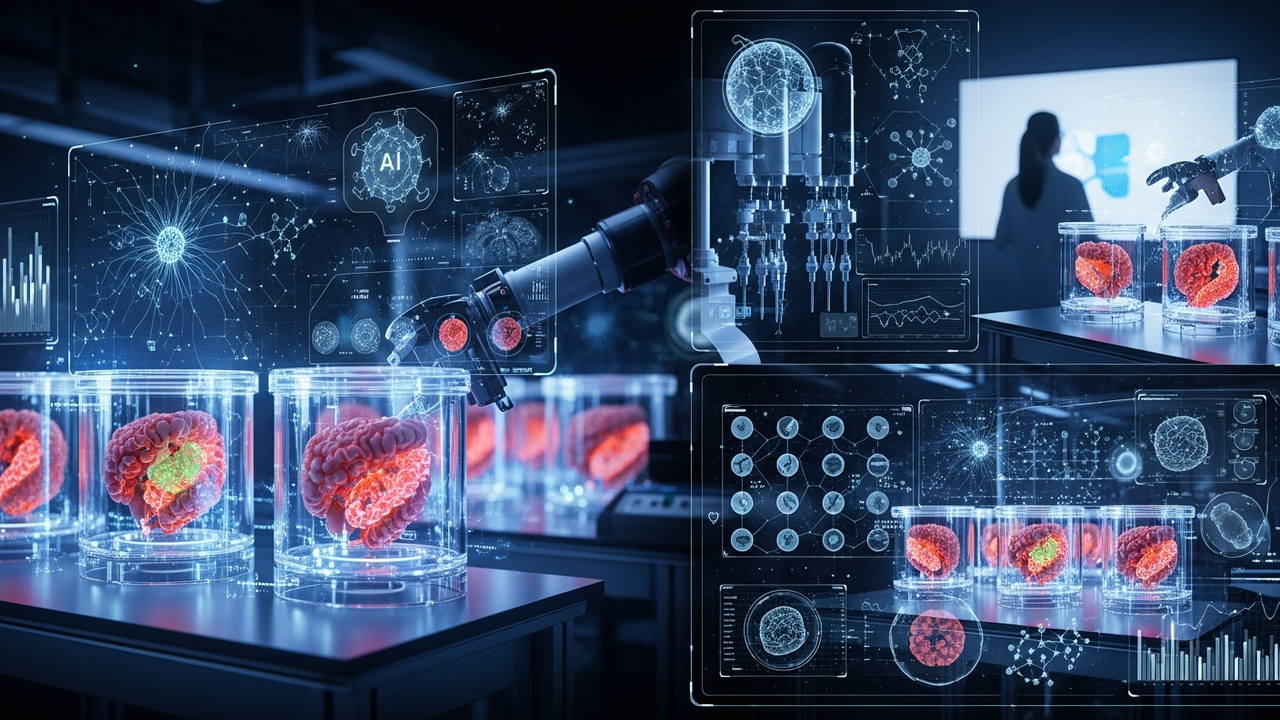
New Approach Methodologies (NAMs) encompass a range of innovative tools, including organoids (mini-organs), human-on-a-chip systems, in silico models (AI/machine learning), and advanced cell culture models. Historically, animal models have been widely used for efficacy and safety assessments, but species differences between animals and humans often contribute to unpredictable failures in clinical trials. Human-relevant models, such as organoids derived from patient stem cells, can recapitulate the complex 3D structure and functional characteristics of specific organs in vitro. This enables the evaluation of drug efficacy, toxicity, and pharmacokinetics under more human-like physiological conditions. AI plays a crucial role in processing vast datasets generated from these human-relevant models, helping to identify drug mechanisms of action, discover biomarkers, and predict therapeutic responses, thereby streamlining the drug discovery process. For example, AI can analyze image data from organoids to detect subtle changes in drug response, guiding the selection of promising drug candidates. This approach is expected to reduce the need for animal testing and improve the success rate of clinical trials.
Background & Context
Pharmaceutical development consistently faces challenges of high failure rates, immense costs, and prolonged development timelines. Specifically, the ‘translational gap’—where preclinical animal study results fail to replicate in human clinical trials—has been a major bottleneck in new drug development. Against this backdrop, regulatory bodies, including the U.S. FDA, are actively encouraging the adoption of NAMs as alternatives to animal testing and are developing guidelines for their scientific validation and integration. The combination of AI and organoids is emerging as one of the most promising technologies to bridge this translational gap, offering more predictive models that can revolutionize the entire drug discovery process.
Strategic Significance & Outlook
The integration of human-relevant models and AI will be a critical factor in shaping the future of drug discovery. To maximize the utility of these technologies, the following initiatives are essential:
- New Training Approaches: Researchers and regulators need to acquire specialized knowledge to properly interpret and utilize data from these novel models.
- Stronger Collaborations: Academia, industry (pharmaceutical companies), and regulatory agencies (e.g., FDA, EMA) must work closely to develop, validate, and establish regulatory acceptance for NAMs.
- Standardization and Validation: Standardized protocols for organoid models and their robust validation are crucial for widespread adoption and acceptance.
These efforts will enable the faster development and delivery of safer and more effective drugs to patients. Investors are keenly interested in the potential for increased efficiency and reduced development risks offered by these technologies, and investments in NAMs and AI within the drug discovery sector are expected to accelerate.
Get our weekly technology intelligence — free
Receive an infographic that lets you judge at a glance whether each field’s analysis report is worth reading.
Subscribe Free — Weekly Tech Intelligence
By subscribing, you’ll receive Troy-Technical’s weekly technology intelligence newsletter.
- Your email and selected fields are used only to deliver the newsletter.
- We never share your information with third parties.
- You can unsubscribe anytime via the link in each email.
See our Privacy Policy for details.
Takes about a minute · Unsubscribe anytime








Comments