Key Findings
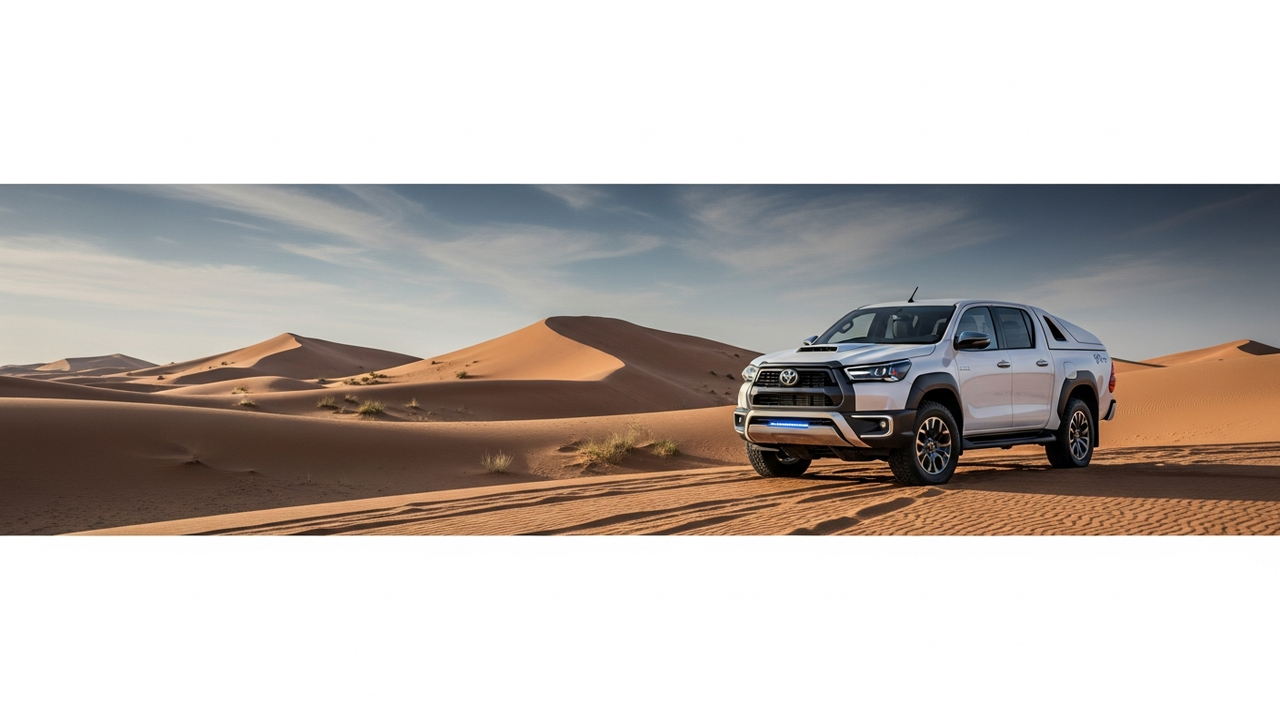
Toyota Motor Corporation has announced it will field a hydrogen fuel cell (FC) powered Hilux prototype in the ‘Future Mission 1000’ class of the Dakar Rally, widely regarded as the world’s toughest off-road race. This represents a groundbreaking initiative, being the first time a major automaker’s factory team has integrated hydrogen FC technology into competitive racing, aiming to demonstrate its performance and durability under extreme conditions.
Technical & Development Focus
The prototype vehicle, based on Toyota’s latest fuel cell system, will specifically address several critical technical challenges under the harsh, high-temperature, and high-altitude conditions of the Dakar Rally. Firstly, the optimization of thermal management technology is paramount; efficient cooling of the FC system, which generates heat during operation, is crucial in desert environments. Secondly, the project focuses on miniaturization and weight reduction of the FC stack to improve vehicle packaging and overall performance. Thirdly, ensuring durability against severe vibrations and impacts during off-road driving is a key objective. Finally, advancing the energy management system is vital for efficiently utilizing the limited hydrogen fuel supply. This demonstration aims to collect invaluable data essential for future hydrogen FC vehicle development and to catalyze technological breakthroughs.
Background & Industry Context
As the automotive industry globally shifts towards decarbonization, Toyota is championing hydrogen FC technology as a critical option alongside battery electric vehicles (BEVs). The Dakar Rally serves as the ultimate proving ground for pushing new technologies to their limits. The ‘Future Mission 1000’ class is part of the rally’s vision for a complete zero-emission transition beyond 2027, and Toyota’s participation demonstrates that hydrogen FC technology is viable not only for passenger cars but also for demanding commercial vehicles and motorsports. This effort is significant in building consumer confidence in fuel cell vehicles and encouraging investment in refueling infrastructure.
Future Outlook
The data and insights garnered from the FC Hilux’s performance in the Dakar Rally will directly feed into the development of Toyota’s future hydrogen FC production vehicles, particularly commercial vehicles and SUVs. Improvements in thermal management, durability, and efficiency will contribute to more powerful and reliable FC systems. Moreover, this project, alongside Toyota’s renewed collaboration with BMW on the VEEF project for carbon-neutral gasoline (as highlighted in Article 15), symbolizes the automotive industry’s trend towards pursuing diverse decarbonization solutions. The continued evolution of hydrogen FC technology is expected to be a crucial step towards decarbonizing global mobility.
Get our weekly technology intelligence — free
Receive an infographic that lets you judge at a glance whether each field’s analysis report is worth reading.
Subscribe Free — Weekly Tech Intelligence
By subscribing, you’ll receive Troy-Technical’s weekly technology intelligence newsletter.
- Your email and selected fields are used only to deliver the newsletter.
- We never share your information with third parties.
- You can unsubscribe anytime via the link in each email.
See our Privacy Policy for details.
Takes about a minute · Unsubscribe anytime



Comments