Key Findings
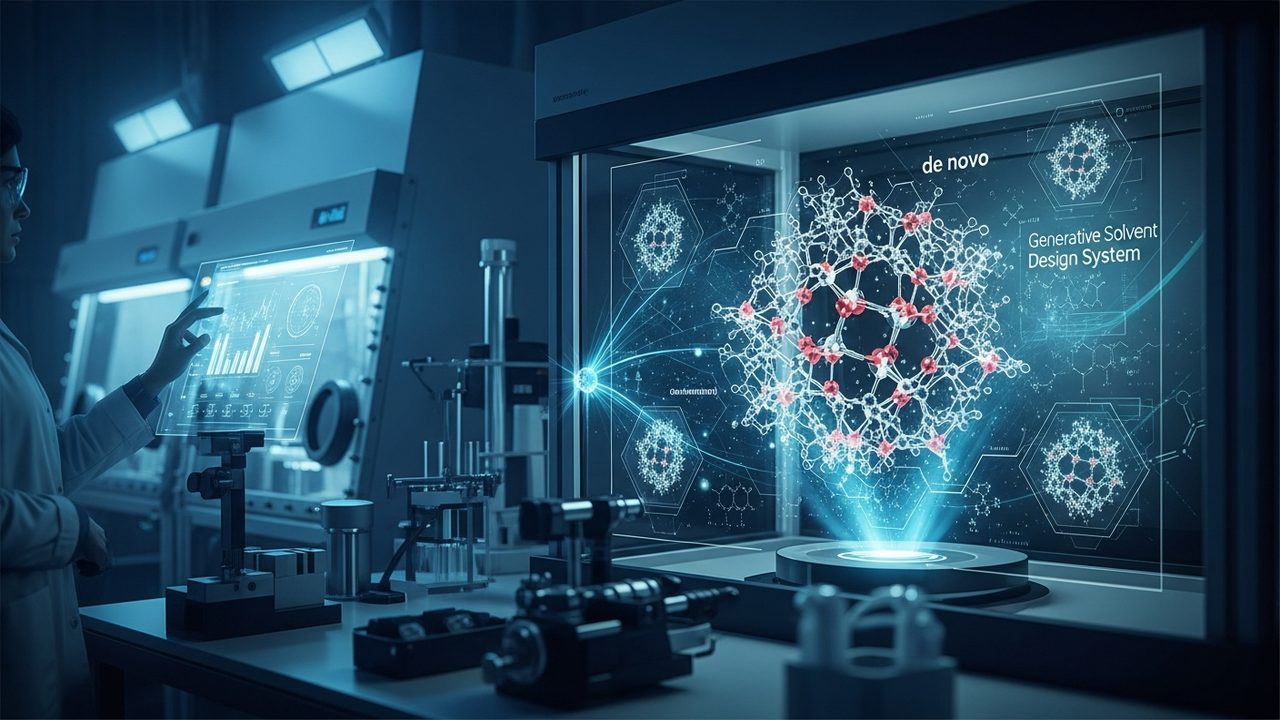
A groundbreaking study published in ACS Nano introduces the Generative Solvent Design System (GSDS), an AI-driven platform capable of de novo designing solvents for rechargeable batteries. This system integrates a graph-based deep molecular generator with machine learning property predictors, significantly accelerating the discovery of novel electrolyte candidates for alkali metal batteries.
Technical / Clinical Details
The GSDS leverages a deep molecular generator based on graph neural networks to propose optimal solvent structures from a vast chemical space. This generator works in conjunction with a machine learning property predictor that evaluates the electrochemical characteristics of generated molecules, such as ion conductivity, stability, and electrode compatibility, in real-time. The system has been fine-tuned using a large dataset specific to battery applications, enabling it to learn from existing data and autonomously suggest new molecules with superior performance. For alkali metal batteries, where conventional electrolyte discovery relies on time-consuming and expensive experimental trial-and-error, GSDS offers a computationally fast and efficient method to narrow down the search space, drastically reducing development timelines.
Background & Context
The development of high-performance rechargeable batteries is crucial for the proliferation of electric vehicles and renewable energy storage. However, finding new electrolyte solvents that balance stability and energy density has been a formidable challenge due to the immense chemical space. Traditional experimental approaches often require years. Advances in materials informatics, particularly generative AI models, provide powerful solutions to this problem. Systems like GSDS can rapidly identify promising candidates from millions of compounds, drastically shortening the research and development cycle. This allows researchers to dedicate more time to the experimental validation of the most promising candidates rather than exhaustive screening.
Strategic Significance & Outlook
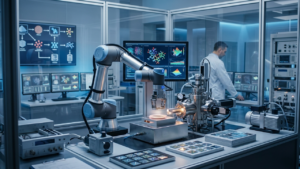
The success of GSDS has implications beyond battery technology, suggesting broad applicability for generative AI in other material science fields such as catalysis, pharmaceuticals, and polymers. In the future, integrating GSDS with automated synthesis and characterization laboratories could establish fully autonomous materials discovery cycles. This would realize a future where researchers simply input desired properties, and the system automatically executes the entire process of design, synthesis, evaluation, and optimization. The enhanced performance of alkali metal batteries facilitated by GSDS represents a critical step towards achieving a sustainable energy society.
Source: https://pubs.acs.org/doi/10.1021/acsnano.6c06255
Get our weekly technology intelligence — free
Receive an infographic that lets you judge at a glance whether each field’s analysis report is worth reading.
Subscribe Free — Weekly Tech Intelligence
By subscribing, you’ll receive Troy-Technical’s weekly technology intelligence newsletter.
- Your email and selected fields are used only to deliver the newsletter.
- We never share your information with third parties.
- You can unsubscribe anytime via the link in each email.
See our Privacy Policy for details.
Takes about a minute · Unsubscribe anytime




Comments