Key Findings
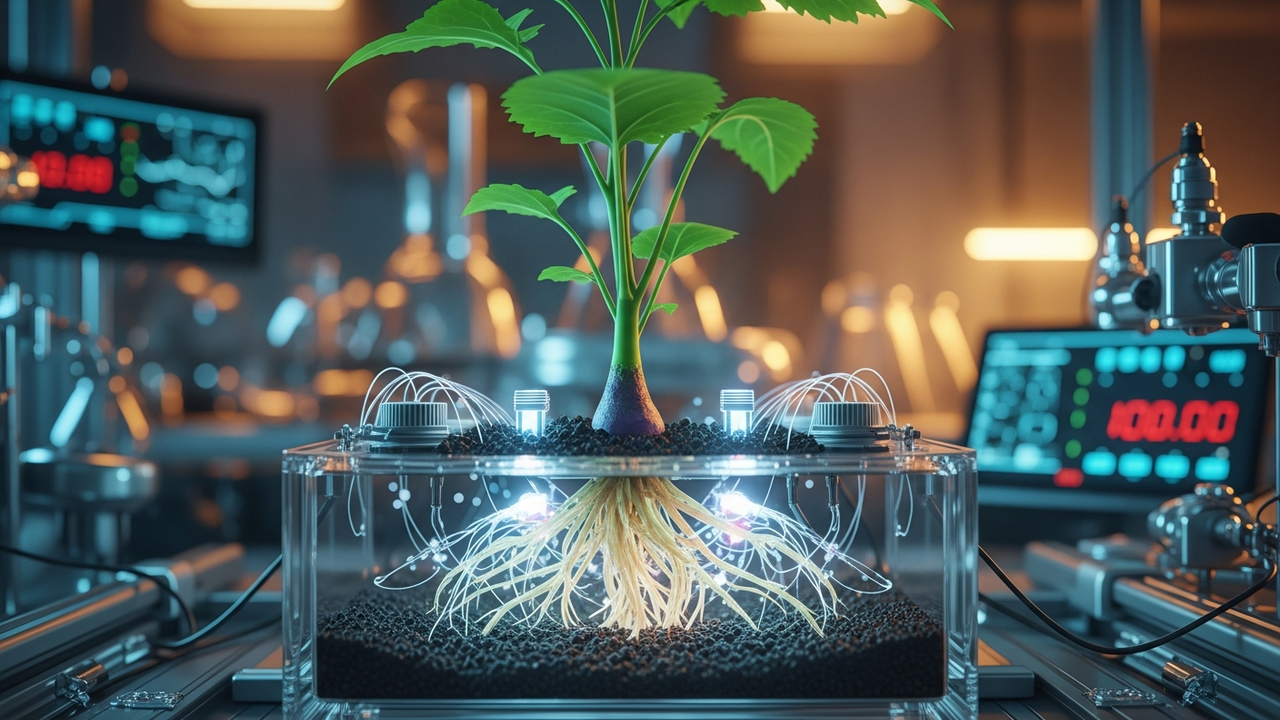
A pioneering study published in the Proceedings of the National Academy of Sciences (PNAS) on July 23, 2026, details the development of engineered *A. thaliana* plants that function as sophisticated environmental biosensors. These ‘sentinel plants’ are capable of quantitative and long-term monitoring of bioavailable nitrate in soils and microbial environments, offering a novel approach to precision agriculture and ecological monitoring.
Technical / Clinical Details
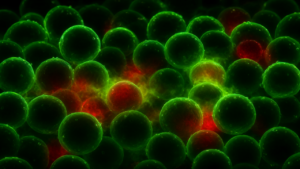
The engineered plant biosensors incorporate a robust architecture featuring modular promoter design and ratiometric normalization. The modular promoter design allows for the precise regulation of reporter gene expression in response to specific environmental stimuli, such as varying nitrate concentrations. When nitrate levels change, the plant cells express fluorescent proteins, providing a visual and quantifiable signal. Ratiometric normalization further enhances the reliability and accuracy of these measurements by comparing two distinct fluorescent signals, thereby mitigating potential errors caused by environmental fluctuations or instrumental variations. This allows researchers and farmers to obtain highly accurate, real-time data on localized nitrate availability, which is superior to traditional, labor-intensive soil sampling methods that provide only sporadic data. Importantly, this flexible sensor architecture provides a foundational framework that can be adapted to detect a wide array of other crucial nutrients, metabolites, or environmental cues, making it a versatile tool for agricultural ecosystem management.
Background & Context
Sustainable agriculture faces a critical challenge in balancing crop productivity with environmental protection. Overuse of nitrogen fertilizers, a common practice to boost yields, leads to significant environmental issues, including groundwater contamination, eutrophication of aquatic systems, and increased greenhouse gas emissions. Current methods for assessing plant-available nutrients in soil are often indirect, time-consuming, and imprecise, leading to inefficient fertilizer application. The concept of utilizing plants themselves as living, in-situ biosensors offers a powerful solution by directly sensing the available nutrients in the complex soil matrix. This aligns with global efforts toward smart farming and IoT in agriculture, aiming to create more efficient and environmentally friendly food production systems.
Strategic Significance & Outlook
The development of these engineered plant biosensors signifies a new era for real-time environmental monitoring within agricultural ecosystems. For the agricultural sector, this technology promises a transformative shift towards truly data-driven fertilizer management, enabling farmers to optimize nutrient delivery, reduce input costs, enhance crop yields, and significantly lower their environmental footprint. Beyond nitrate, the adaptable framework suggests future applications for monitoring soil moisture, pathogen presence, or even specific contaminants. While initial development used *A. thaliana* as a model, the eventual goal is to translate this technology to commercial crop species. Future research will focus on field-scale validation, enhancing sensor stability, and broadening the spectrum of detectable targets, positioning this innovation as a key enabler for resilient and sustainable global food systems in the face of climate change and increasing demand.
Source: https://www.pnas.org/doi/10.1073/pnas.2609666123
Get our weekly technology intelligence — free
Receive an infographic that lets you judge at a glance whether each field’s analysis report is worth reading.
Subscribe Free — Weekly Tech Intelligence
By subscribing, you’ll receive Troy-Technical’s weekly technology intelligence newsletter.
- Your email and selected fields are used only to deliver the newsletter.
- We never share your information with third parties.
- You can unsubscribe anytime via the link in each email.
See our Privacy Policy for details.
Takes about a minute · Unsubscribe anytime