Key Findings: FDA Grants Accelerated Approval to BCMA-CD3 Bispecific Antibody Linvoseltamab (LYNOZYFIC) for Relapsed/Refractory Multiple Myeloma
According to the International Myeloma Foundation, LYNOZYFIC (linvoseltamab-gcpt), a bispecific antibody immunotherapy targeting both B-cell maturation antigen (BCMA) and CD3, received accelerated approval from the U.S. Food and Drug Administration (FDA) in July 2025. This groundbreaking approval provides a new treatment option for adult patients with relapsed or refractory multiple myeloma who have received at least four prior lines of therapy, including a proteasome inhibitor, an immunomodulatory agent, and an anti-CD38 monoclonal antibody.
Technical and Clinical Details: T-Cell Redirection for Multiple Myeloma Cell Elimination
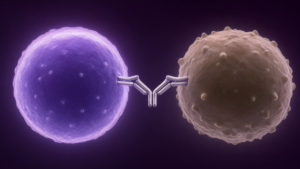
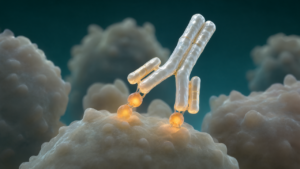
As a bispecific antibody, LYNOZYFIC is designed to simultaneously bind to BCMA, which is highly expressed on the surface of multiple myeloma cells, and CD3, expressed on the surface of T cells. This dual binding allows the drug to ‘redirect’ T cells close to multiple myeloma cells, activating the T cells to specifically recognize and eliminate cancer cells. This mechanism of action not only directly attacks cancer cells but also leverages the patient’s own immune system, potentially leading to a more potent and sustained anti-tumor effect.
The FDA’s accelerated approval pathway expedites the approval of drugs for serious conditions where there is an unmet medical need, based on preliminary clinical data. Linvoseltamab is believed to have demonstrated high response rates and promising durability in its clinical trials for patients with very difficult-to-treat relapsed or refractory multiple myeloma. The targeted patient population consists of individuals for whom many standard treatments have failed, and there was a strong demand for new therapeutic options. As a bispecific antibody, linvoseltamab has the potential to overcome mechanisms of resistance to existing therapies and induce deep cancer responses through the activation of cytotoxic T cells.
Background and Industry Context: Unmet Medical Needs in Multiple Myeloma Treatment
Multiple myeloma is a type of blood cancer characterized by the abnormal proliferation of plasma cells in the bone marrow, affecting many people worldwide each year. While treatment outcomes have improved with the advent of novel agents in recent years, many patients eventually acquire treatment resistance and experience repeated relapses. Particularly for patients who have received ‘at least four prior lines of therapy and are relapsed or refractory,’ existing treatment options are extremely limited, and extending survival and maintaining quality of life remain significant challenges. In this context, new immunotherapies such as BCMA-targeting bispecific antibodies are expected to be crucial advancements in meeting this unmet medical need.
Future Outlook: Expanding Treatment Options and Improving Patient Prognosis
The accelerated FDA approval of LYNOZYFIC brings new hope to patients with relapsed or refractory multiple myeloma. It is expected that the widespread availability of this drug will improve response rates and extend survival for patients who previously had limited treatment options. For the future, to fulfill the conditions of accelerated approval, larger confirmatory clinical trials will be conducted to collect long-term efficacy and safety data. Furthermore, the development of bispecific antibodies targeting novel antigens beyond BCMA, as well as combination therapies with other treatments, is expected to further advance the paradigm of multiple myeloma treatment. Linvoseltamab’s success will play an important role in establishing bispecific antibodies as a major pillar in cancer immunotherapy.
Source: #
Get our weekly technology intelligence — free
Receive an infographic that lets you judge at a glance whether each field’s analysis report is worth reading.
Subscribe Free — Weekly Tech Intelligence
By subscribing, you’ll receive Troy-Technical’s weekly technology intelligence newsletter.
- Your email and selected fields are used only to deliver the newsletter.
- We never share your information with third parties.
- You can unsubscribe anytime via the link in each email.
See our Privacy Policy for details.
Takes about a minute · Unsubscribe anytime