Key Findings
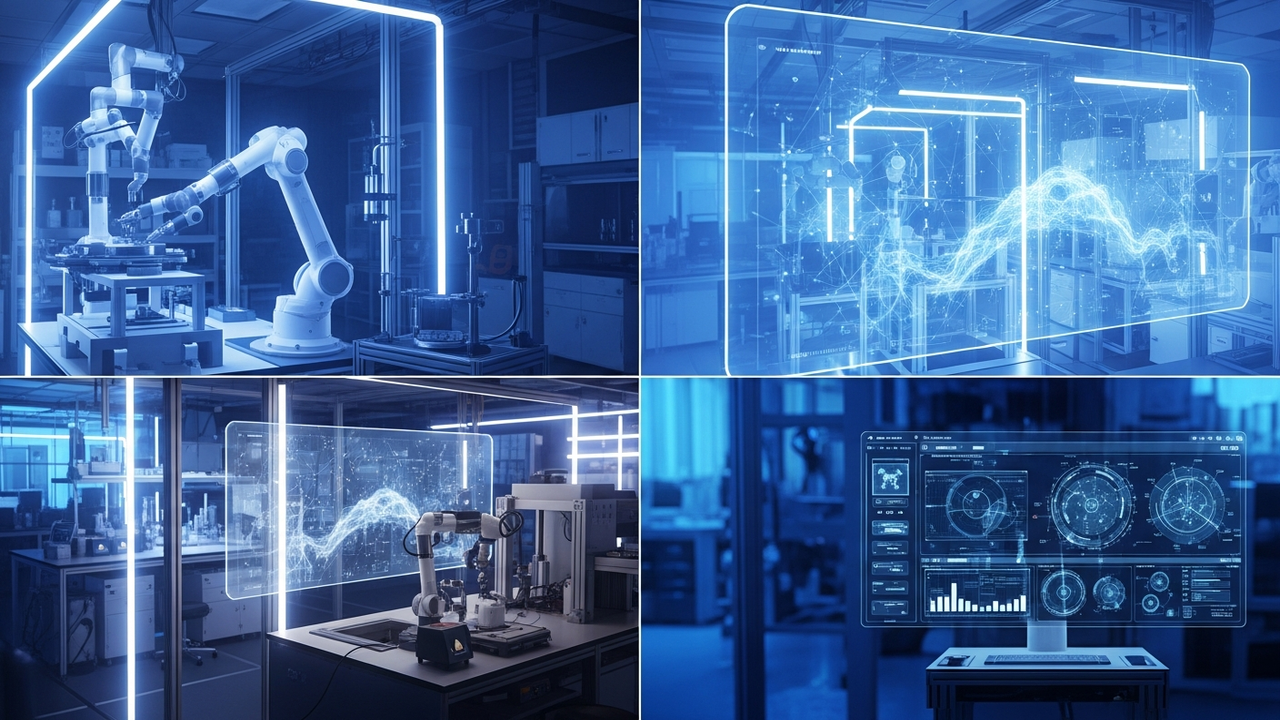
Engineers at Johns Hopkins University have secured a significant $20 million grant to construct a network of ‘self-driving’ laboratories, leveraging the power of robotics and artificial intelligence (AI). This ‘AIMD-Net’ (AI-Driven Materials Discovery Network) program is specifically designed to accelerate the development of advanced materials, particularly those for extreme conditions. The network aims for AI to autonomously design, execute, and analyze experiments, achieving data collection and learning cycles 100 to 1,000 times faster than traditional human-led research.
Technical Details
At the heart of AIMD-Net is the integration of several key technological components:
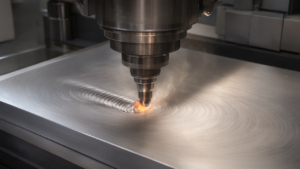
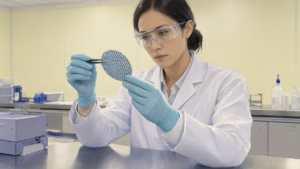
- Robotic Automation: Robotic systems will automate the synthesis, processing, and characterization of materials, enabling high-throughput experimentation with excellent reproducibility. This capability allows for the efficient execution of complex experimental sequences and the screening of vast numbers of samples that would be impractical in conventional laboratory settings.
- AI Guidance Systems: Machine learning algorithms will predict optimal experimental conditions based on existing data, simulation results, and fundamental physical laws, subsequently issuing instructions to the robotic platforms. The AI will learn in real-time from experimental outcomes, autonomously optimizing the entire discovery process from hypothesis generation to validation.
- Robust Data Infrastructure: A strong data backbone will be built to efficiently collect, store, and manage the massive amounts of experimental data generated (e.g., synthesis parameters, characterization results, imaging data). This infrastructure will provide data in formats readily usable for training and improving AI models.
- Extreme Conditions Materials Development: The program specializes in discovering materials that perform under extreme conditions, such as high temperatures, high pressures, or corrosive environments. These materials are critical for aerospace, nuclear energy, and deep-sea exploration. Automation and AI are particularly beneficial here due to the hazardous and time-consuming nature of such experiments.
This integrated system promises to dramatically enhance the pace, precision, and scale of materials research. For example, it could allow for testing thousands of different material compositions or processing conditions overnight, with the AI analyzing the results and proposing the next set of experiments by the following day. This capability is expected to accelerate the discovery of high-performance new materials and significantly shorten traditional development timelines.
Background and Industry Context
Advanced materials form the bedrock of technological innovation across various critical sectors, including defense, energy, healthcare, and transportation. Developing materials for extreme conditions has long been a challenge due to their inherent complexity. Globally, nations are pursuing strategic initiatives like the ‘Materials Genome Initiative (MGI)’ to enhance their competitiveness in materials science by integrating AI and automation. Johns Hopkins’ AIMD-Net will play a crucial role in strengthening U.S. leadership in this global race, driving the research and development of next-generation materials. Such networks of self-driving labs hold the potential to exponentially increase the speed of materials discovery, breaking through traditional scientific bottlenecks.
Future Outlook
AIMD-Net is designed as a large-scale collaborative network involving multiple universities and research institutions, fostering data sharing and open innovation in materials science. Future efforts will focus on standardizing the developed AI tools and data infrastructure to ensure their widespread adoption by other researchers and industry. Further advancements in AI models, particularly integrating fundamental physics with data-driven approaches, and addressing ethical considerations will also be key priorities. The success of this program is anticipated to establish AI and robotics as standard research tools, not only for extreme environment materials but across broad areas of material development, leading to a future where materials with unprecedented functionalities are rapidly brought to fruition.
Get our weekly technology intelligence — free
Receive an infographic that lets you judge at a glance whether each field’s analysis report is worth reading.
Subscribe Free — Weekly Tech Intelligence
By subscribing, you’ll receive Troy-Technical’s weekly technology intelligence newsletter.
- Your email and selected fields are used only to deliver the newsletter.
- We never share your information with third parties.
- You can unsubscribe anytime via the link in each email.
See our Privacy Policy for details.
Takes about a minute · Unsubscribe anytime