Key Findings
Scientists at Penn State University have secured Phase 1 funding from the U.S. Department of Energy’s (DOE) Genesis Mission to spearhead three innovative projects centered on artificial intelligence (AI). These initiatives aim to accelerate the manufacturing of 2D materials essential for next-generation electronics and quantum technologies, and to employ AI-driven ‘digital twins’ for predicting catalytic performance and recommending optimal operating conditions. The overarching goal is to dramatically shorten material development timelines from several months to less than one week, while simultaneously enhancing manufacturing reliability and suitability for industrial applications.
Technical Details
The key projects led by Penn State involve:
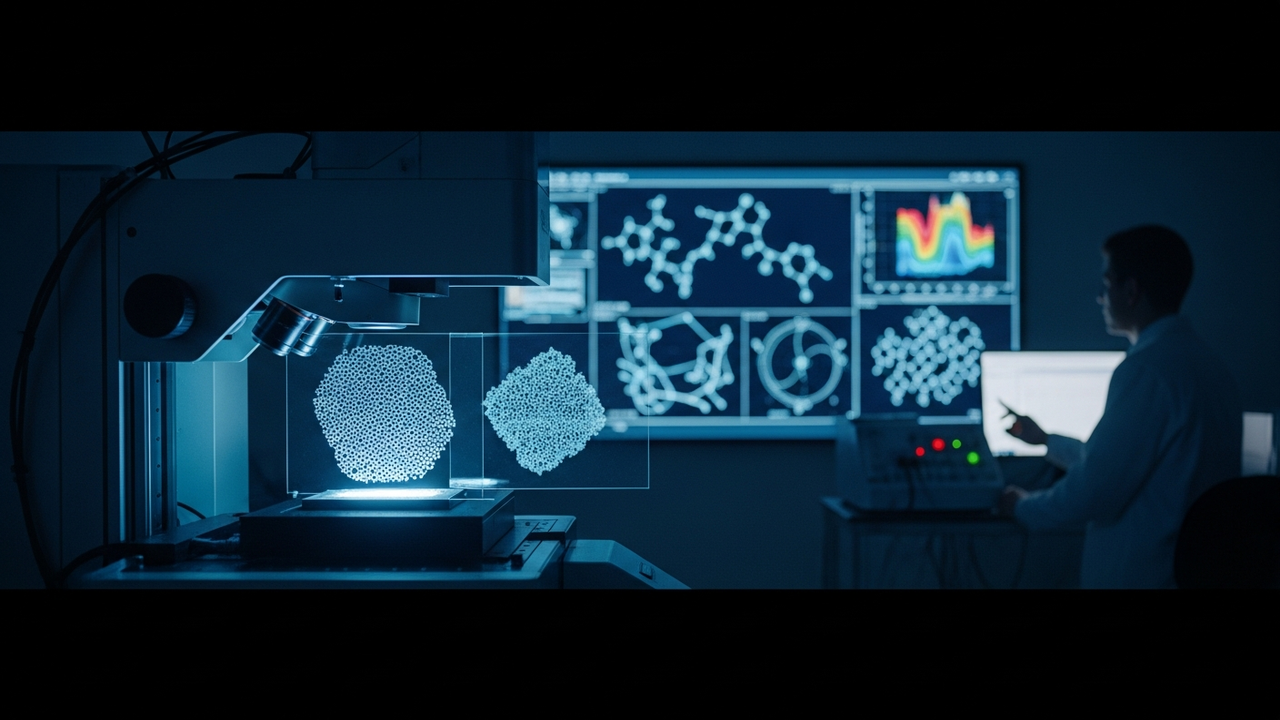
- Accelerated 2D Material Manufacturing: 2D materials, such as graphene and transition metal dichalcogenides, are foundational for future transistors, sensors, and quantum devices due to their unique electrical and optical properties. AI-powered systems will monitor and provide real-time feedback on the synthesis processes of these materials, improving the efficiency and reproducibility of high-quality material fabrication. This enables precise manufacturing of complex multilayer and heterostructured 2D materials.
- AI-Driven ‘Digital Twins’ for Catalytic Performance Prediction: Catalysts are critical in the chemical industry, but predicting and optimizing their performance remains a complex challenge. This project constructs digital twins of catalytic processes by integrating physical simulations, real-time sensor data, and AI. The digital twin accurately predicts aspects like catalyst degradation, reaction pathways, and selectivity in a virtual environment. Based on these predictions, AI recommends optimal operating conditions such as reaction temperature, pressure, and reactant feed rates. This is expected to extend catalyst lifespan, maximize reaction efficiency, and accelerate the development of new catalysts.
These projects seamlessly integrate AI, real-time sensor data, advanced computer simulations, and extensive databases of historical experimental data to accelerate the entire process from material design and synthesis to characterization and application deployment. This integrated approach significantly improves material development efficiency compared to conventional trial-and-error methods, particularly contributing to reducing time-to-market for new products.
Background and Industry Context
The U.S. DOE’s Genesis Mission is a strategic program designed to accelerate the discovery and development of new materials vital for clean energy, national security, and economic competitiveness. Specifically, energy-efficient electronics, high-performance catalysts, and innovative quantum technologies are crucial for addressing contemporary societal challenges, necessitating rapid innovation in foundational materials. Penn State University was selected as a key partner in the Genesis Mission due to its long-standing expertise and achievements in materials science and computational science. This grant is part of a national effort to strengthen U.S. scientific and technological leadership and support the commercialization of next-generation technologies.
Future Outlook
The projects led by Penn State are at the forefront of advancing materials informatics and digital twin technologies. In the future, these AI-driven platforms are expected to be applied not only to 2D materials and catalysts but also to a broader range of material systems, including thermoelectric materials, battery components, and structural materials. The developed tools and methodologies will be widely shared through open-source initiatives and collaborative research, accelerating innovation across the broader materials science community. This has the potential to drastically reduce the time it takes for new materials to transition from the laboratory to market, contributing to the realization of a more sustainable and energy-efficient society.
Source: https://www.psu.edu/news/research/story/penn-state-scientists-lead-three-genesis-mission-projects
Get our weekly technology intelligence — free
Receive an infographic that lets you judge at a glance whether each field’s analysis report is worth reading.
Subscribe Free — Weekly Tech Intelligence
By subscribing, you’ll receive Troy-Technical’s weekly technology intelligence newsletter.
- Your email and selected fields are used only to deliver the newsletter.
- We never share your information with third parties.
- You can unsubscribe anytime via the link in each email.
See our Privacy Policy for details.
Takes about a minute · Unsubscribe anytime