Key Findings
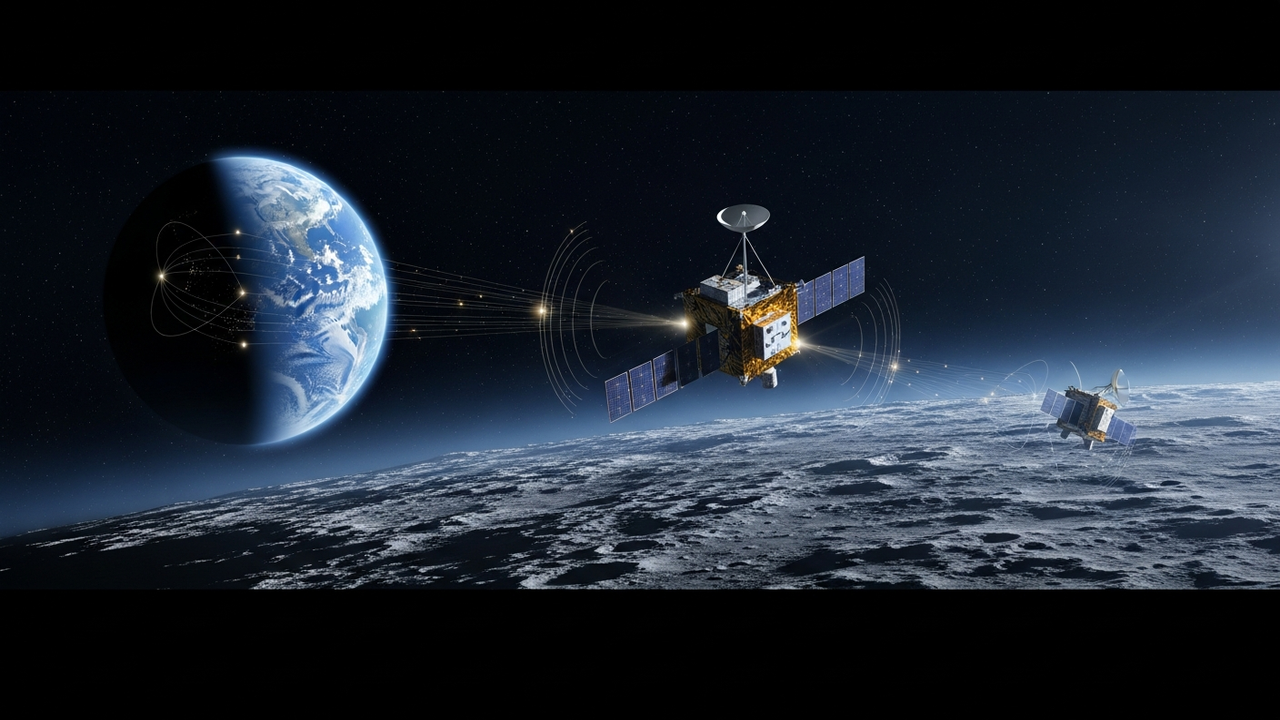
NASA has announced that its CAPSTONE 02 mission, scheduled for launch in 2027, will demonstrate a suite of advanced technologies in cislunar space, including rendezvous and proximity operations (RPO), autonomous navigation, and cislunar communications. This mission aims to lay critical technological foundations for the long-term success of the Artemis program, which seeks to return humans to the Moon, and for the establishment of future lunar bases.
Technical Details
The CAPSTONE 02 mission will employ two identical small spacecraft to perform RPO maneuvers, approaching and separating from each other in lunar orbit. This capability is essential for future complex missions, such as docking resupply vehicles with the lunar Gateway space station, assembling modules on the lunar surface, and in-orbit refueling. Concurrently, the spacecraft will demonstrate autonomous navigation, calculating and correcting its orbital trajectory without relying on real-time ground control from Earth. This is key to dramatically improving mission efficiency and safety in deep space exploration, where communication delays are unavoidable. The mission will also test new communication protocols and network architectures in cislunar space, aiming to enhance data transmission efficiency and reliability between lunar bases and Earth. These technologies will also contribute to establishing precise positioning and navigation in cislunar space, where GPS is currently unavailable.
Background & Context
NASA’s Artemis program is an ambitious initiative aiming to establish a long-term human presence on the Moon and lay the groundwork for eventual missions to Mars, beginning in the late 2020s. The success of this program hinges on sustainable operational capabilities in lunar orbit and on the lunar surface. Technologies such as rendezvous, autonomous navigation, and reliable communications are central to this endeavor. Compared to previous space missions, the Artemis program demands more complex and autonomous systems, making technology demonstration missions like CAPSTONE 02 crucial for validating whether these new technologies can withstand operational deployment.
Strategic Significance & Outlook
The data and experience gained from the CAPSTONE 02 mission will be directly applied to future phases of the Artemis program, particularly human lunar landings and the construction of lunar bases. The demonstrated technologies will not only enhance astronaut safety and improve mission flexibility but also pave new pathways for future deep space exploration. Furthermore, these technologies are expected to find applications in commercial lunar transport and resource exploration activities by private space companies, accelerating the development of a cislunar economy. CAPSTONE 02 is anticipated to be a definitive step in humanity’s continued expansion into the frontiers of space.
Get our weekly technology intelligence — free
Receive an infographic that lets you judge at a glance whether each field’s analysis report is worth reading.
Subscribe Free — Weekly Tech Intelligence
By subscribing, you’ll receive Troy-Technical’s weekly technology intelligence newsletter.
- Your email and selected fields are used only to deliver the newsletter.
- We never share your information with third parties.
- You can unsubscribe anytime via the link in each email.
See our Privacy Policy for details.
Takes about a minute · Unsubscribe anytime