Key Findings
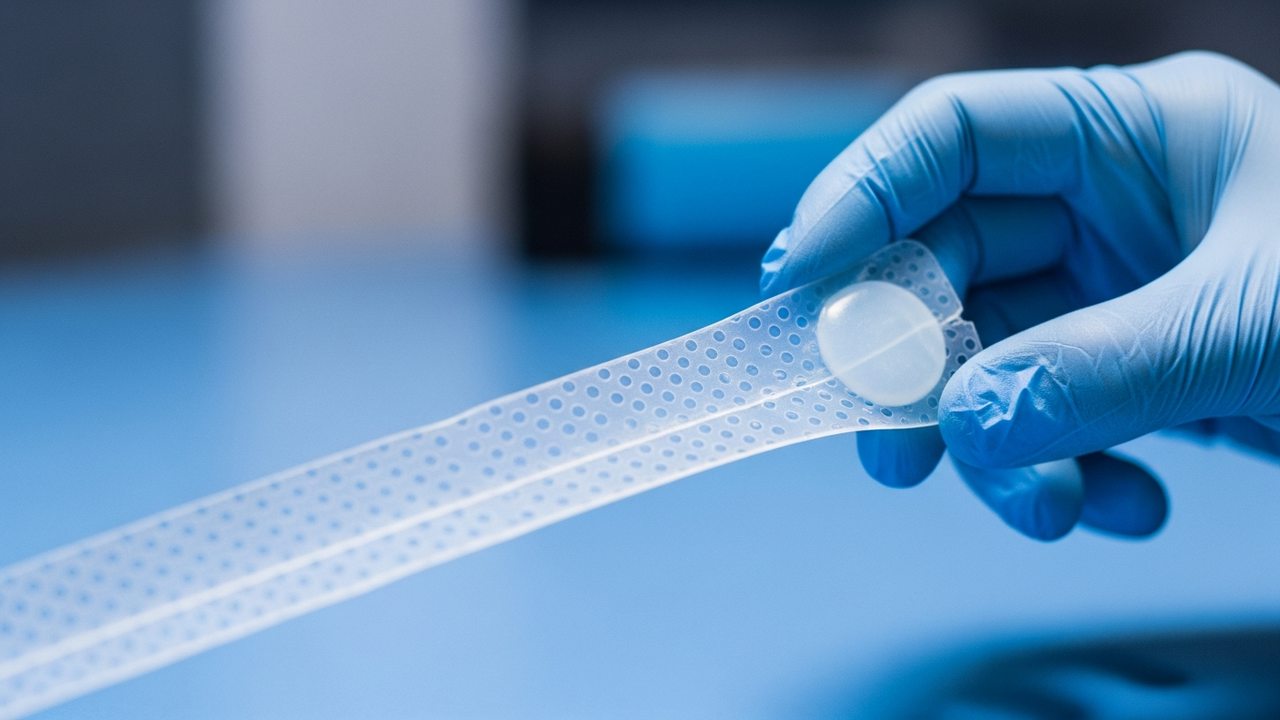
In a groundbreaking development, researchers have engineered a novel graphene-hydrogel electrode capable of maintaining firm adhesion to the skin and providing remarkably stable biosignal monitoring, even under challenging conditions involving sweat, hair, and vigorous physical movement. This advanced material boasts an exceptional elasticity, stretching up to an astounding 8000%, designed to flawlessly conform to the body’s dynamic motions and ensure consistent monitoring accuracy.
Technical / Clinical Details
- The graphene-hydrogel electrode is composed of a composite material featuring graphene integrated within a hydrogel matrix. Graphene contributes high electrical conductivity and flexibility, while the hydrogel ensures excellent biocompatibility and high moisture retention capabilities, mimicking the properties of skin.
- Due to its unique viscoelastic properties, the developed hydrogel adheres intimately to the micro-irregularities of the skin surface and adapts to subtle movements. Critically, its adhesive strength is not compromised by sweat, allowing it to maintain stable signal quality during exercise. This significantly suppresses motion artifacts—noise typically problematic with rigid conventional electrodes—that can obscure accurate data.
- Experimental validation confirmed that multiple key biosignals, including electrocardiograms (ECG), electrooculograms (EOG), and electrodermal activity (EDA), could be recorded continuously and with high fidelity while subjects performed normal activities. This capability offers significant advantages for applications in sports medicine, rehabilitation, and long-term monitoring of chronic conditions.
- The 8000% stretchability is outstanding even when compared to existing flexible electrodes, facilitating application to a broader range of body parts and enabling the design of comfortable wearable devices that do not impede user mobility or comfort.
Background & Context
Despite advancements in wearable biosensors, a persistent challenge has been maintaining consistent electrode contact and signal stability during physical activity and perspiration. Traditional electrodes often suffer from unstable contact with the skin due to movement and moisture, leading to inaccurate data collection. The introduction of these graphene-hydrogel electrodes offers a compelling solution to these issues, poised to dramatically enhance the reliability of wearable devices for both clinical and consumer applications.
Strategic Significance & Outlook
This graphene-hydrogel electrode technology holds immense promise as a foundational component for next-generation wearable biosensors, particularly in medical diagnostic devices and high-performance fitness trackers. Future applications could extend to the detection of a wider array of biomarkers, improving the long-term wearability of medical patches, and even integrating into robotics and artificial skin technologies. This innovation has the potential to establish a new standard in diverse healthcare scenarios where continuous, non-invasive monitoring is essential, driving forward a new era of personalized health management.
Get our weekly technology intelligence — free
Receive an infographic that lets you judge at a glance whether each field’s analysis report is worth reading.
Subscribe Free — Weekly Tech Intelligence
By subscribing, you’ll receive Troy-Technical’s weekly technology intelligence newsletter.
- Your email and selected fields are used only to deliver the newsletter.
- We never share your information with third parties.
- You can unsubscribe anytime via the link in each email.
See our Privacy Policy for details.
Takes about a minute · Unsubscribe anytime