Key Findings
A landmark collaboration between quantum computing leader Quantinuum, AI powerhouse NVIDIA, and a prominent pharmaceutical company has resulted in the first successful demonstration of ‘GenQAI,’ a proof-of-concept framework that synergistically integrates high-performance computing (HPC), generative AI (GenAI), and quantum computing. This groundbreaking framework is designed to optimize computational chemistry processes within pharmaceutical research and development (R&D), potentially revolutionizing future drug discovery methodologies. The demonstration specifically highlighted the efficacy of a hybrid approach: fine-tuning AI models using quantum data simulated on HPC, and subsequently executing the AI-generated, optimized quantum circuits on Quantinuum’s Helios quantum computing system.
Technical and Clinical Details
- Hybrid Framework: GenQAI fuses the computational power of classical supercomputing with the complex molecular simulation capabilities of quantum computing and the data analysis and optimization prowess of generative AI. This integration accelerates the prediction of molecular properties and the screening of new drug candidates, tasks that were previously computationally intractable or prohibitively time-consuming and expensive.
- AI Fine-Tuning with Quantum Data: Generative AI models are trained and fine-tuned using quantum chemistry data derived from HPC simulations. This process allows the AI to learn quantum behaviors with greater accuracy, enabling it to efficiently explore complex chemical structures and reaction pathways relevant to drug discovery.
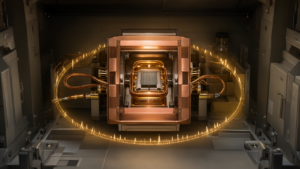
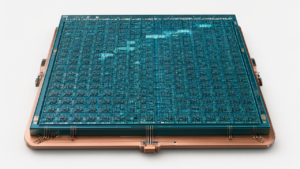
- Quantinuum Helios System Utilization: The quantum circuits generated by the AI are executed on Quantinuum’s Helios system, an ion-trap quantum computer known for its high performance and reliability. This execution validates the practical feasibility of the theoretical framework, moving beyond mere potential to demonstrated capability in an actual quantum machine.
This approach aims to dramatically enhance the precision and speed of critical steps in new drug development, such as lead compound identification, molecular design optimization, and prediction of drug-target interactions. By reducing the need for extensive physical laboratory experiments, GenQAI has the potential to significantly cut R&D costs and timelines.
Background and Context
The pharmaceutical industry continually faces challenges of prolonged development cycles and escalating costs for new drugs, with single drug development often exceeding a decade and billions of dollars. While computational chemistry has long been a vital part of drug discovery, classical computing faces limitations in accurately modeling complex molecular systems and quantum mechanical effects. Quantum computing offers the potential to overcome these limitations, enabling precise simulations at atomic and molecular levels. The rapid advancements in generative AI further accelerate this process through data-driven approaches. This demonstration underscores the critical importance of converging these advanced technologies to shape the future of drug discovery.
Strategic Significance and Outlook
The successful demonstration of the GenQAI framework represents a significant step forward, opening new avenues for hybrid quantum-AI workflows in pharmaceutical R&D. Moving forward, this framework is expected to evolve, applying to more complex molecular systems and leveraging larger quantum computing capabilities to enhance its precision and efficiency. This will enable pharmaceutical companies to identify more effective drug candidates more rapidly, ultimately delivering innovative therapies to patients. The technology’s impact is anticipated to extend beyond drug discovery to other chemistry-dependent scientific fields, including materials science and chemical engineering.
Get our weekly technology intelligence — free
Receive an infographic that lets you judge at a glance whether each field’s analysis report is worth reading.
Subscribe Free — Weekly Tech Intelligence
By subscribing, you’ll receive Troy-Technical’s weekly technology intelligence newsletter.
- Your email and selected fields are used only to deliver the newsletter.
- We never share your information with third parties.
- You can unsubscribe anytime via the link in each email.
See our Privacy Policy for details.
Takes about a minute · Unsubscribe anytime