Key Findings
QuantumCore has announced a strategic partnership with Professor Raafat Mansour from the University of Waterloo, focusing on advancing cryogenic multiplexing technologies for scalable quantum computing infrastructure. This collaboration aims to resolve a critical engineering challenge within the quantum computing industry: the dramatic reduction of wiring complexity and the efficient utilization of limited space and cooling power within ultracold environments, thereby accelerating the industrial-scale realization of quantum computing.
Technical / Clinical Details
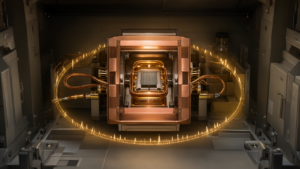
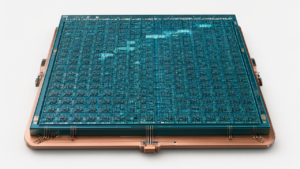
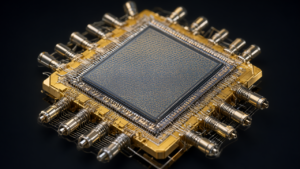
Quantum computing systems, particularly those using superconducting or silicon spin qubits, necessitate operation at extremely low temperatures (on the order of millikelvins). Controlling these qubits requires a vast number of electrical signal lines. In current systems, thousands of wires severely constrain the internal volume and cooling capacity of dilution refrigerators. This wiring bottleneck is a major impediment to increasing qubit counts. QuantumCore and Professor Mansour’s team are concentrating on developing cryogenic multiplexing technologies to address this challenge. Multiplexing techniques allow multiple control signals to be transmitted over a smaller number of physical wires, drastically reducing wire count. This enables more efficient use of space within the dilution refrigerator and lessens the cooling load. It also improves scalability for controlling more qubits, ultimately facilitating the development of larger, higher-performance quantum processors.
Background & Context
The advancement of quantum computing depends not only on increasing the number of qubits but also on the ability to control them efficiently and reliably. The wiring complexity issue has long been recognized as a primary bottleneck for scalability within the industry. In current quantum systems, where multiple control lines are often required per qubit, systems with hundreds or more qubits become technologically and economically impractical due to wiring. The University of Waterloo is a global hub for quantum information science research, and Professor Mansour possesses extensive expertise in microwave circuit design and cryogenic electronics. The partnership between QuantumCore and the University of Waterloo exemplifies an essential collaboration model where academic fundamental research converges with industrial applied development, accelerating the commercialization of quantum computing. This represents a crucial step in the transition of quantum technology from the laboratory stage to large-scale industrial applications.
Strategic Significance & Outlook
The advancement of cryogenic multiplexing technologies through the QuantumCore-University of Waterloo partnership is poised to be a critical breakthrough for realizing scalable quantum computing infrastructure. Resolving the wiring complexity issue will enable increasing qubit counts from hundreds to thousands, or even more, paving the way for the construction of truly practical quantum computers. This technology will also contribute to reducing the manufacturing cost of quantum hardware and improving overall system reliability. Ultimately, it will accelerate the application of quantum computing across numerous industrial sectors grappling with complex computational problems, including finance, pharmaceutical development, materials science, and artificial intelligence, thereby creating new business opportunities. This initiative is expected to play a significant role in strengthening Canada’s technological leadership in the global race for industrial-scale quantum computing.
Get our weekly technology intelligence — free
Receive an infographic that lets you judge at a glance whether each field’s analysis report is worth reading.
Subscribe Free — Weekly Tech Intelligence
By subscribing, you’ll receive Troy-Technical’s weekly technology intelligence newsletter.
- Your email and selected fields are used only to deliver the newsletter.
- We never share your information with third parties.
- You can unsubscribe anytime via the link in each email.
See our Privacy Policy for details.
Takes about a minute · Unsubscribe anytime