Key Findings: Sanofi Launches ‘Dual-Targeting Library 2.0’ to Accelerate Bispecific Therapeutic Development
French pharmaceutical giant Sanofi has announced its ‘Dual-Targeting Library (DTL) 2.0’ approach, a groundbreaking strategy poised to revolutionize the design of novel bispecific therapeutics. This data-driven platform aims to discover unpredictable, novel bispecific molecules that could not be found by conventional screening methods, by combining different binding modules like monospecific antibodies and nanobodies. The goal is to advance these molecules into the development pipeline, accelerating the creation of highly functional biological drugs that can simultaneously act on multiple disease targets.
Technical and Clinical Details: Comprehensive Library Construction through Monospecific Antibody and Nanobody Fusion
The core of the DTL 2.0 approach lies in its ability to efficiently construct and evaluate highly diverse libraries of bispecific molecules. Specifically, this strategy incorporates the following key elements:
- Combination of Binding Modules: It utilizes established monospecific antibodies (e.g., monoclonal antibodies binding to disease-related proteins) and ‘nanobodies’ (single-domain antibodies derived from camelids) which are small and possess high affinity. Nanobodies, due to their small size, offer advantages in accessing complex target spaces and enhancing the structural flexibility of bispecific molecules.
- Construction of Large-Scale Libraries: These diverse binding modules are combined via various linkers to generate an enormous number of potential bispecific molecules. This library is constructed using computational biology and high-throughput cloning techniques, covering a broad chemical space.
- Evaluation in Disease-Relevant Biological Systems: The constructed libraries are evaluated not just through in vitro binding assays, but also using cell-based assays and complex biological systems that faithfully mimic disease pathophysiology. This enables early identification of functional activity, specificity, cytotoxicity, and off-target effects of candidate molecules.
This data-driven approach leverages AI and machine learning to analyze screening results and identify optimal molecular design patterns, thereby efficiently narrowing down the most promising candidates for development.
Background and Industry Context: Addressing Complex Disease Pathways and Advancing Personalized Medicine
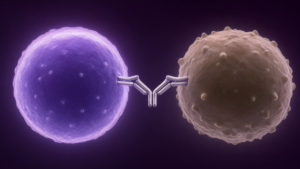
Many diseases, particularly cancers and autoimmune disorders, involve complex biological pathways that cannot be adequately addressed by inhibiting a single therapeutic target. Bispecific antibodies offer the potential for more potent therapeutic effects or entirely novel mechanisms of action (e.g., T-cell redirection) by simultaneously acting on two different targets (e.g., an antigen on cancer cells and an activation receptor on immune cells). Platforms like Sanofi’s DTL 2.0 are designed to meet this need, aiming for therapeutic effects that were unattainable with conventional monoclonal antibodies. This represents a significant step towards advancing personalized medicine and enabling more precise interventions into the complex underlying mechanisms of diseases.
Future Outlook: Strengthening New Drug Pipeline and Enhancing Competitiveness
Sanofi’s DTL 2.0 approach is expected to significantly strengthen its bispecific antibody pipeline and enhance its competitive edge. Novel molecules emerging from this platform could become new treatment options across a wide range of disease areas, including cancer, immune disorders, and infectious diseases. The future outlook will focus on these lead molecules progressing into preclinical and clinical trials, validating their therapeutic value. Furthermore, such innovative design and screening technologies are likely to accelerate the overall bispecific antibody development race within the pharmaceutical industry, contributing to the rapid market introduction of better therapeutics for patients.
Source: #
Get our weekly technology intelligence — free
Receive an infographic that lets you judge at a glance whether each field’s analysis report is worth reading.
Subscribe Free — Weekly Tech Intelligence
By subscribing, you’ll receive Troy-Technical’s weekly technology intelligence newsletter.
- Your email and selected fields are used only to deliver the newsletter.
- We never share your information with third parties.
- You can unsubscribe anytime via the link in each email.
See our Privacy Policy for details.
Takes about a minute · Unsubscribe anytime