Key Findings
The year 2026 has been marked as a pivotal period for quantum computing, transitioning from its theoretical foundations to tangible physical manufacturing. In response, the U.S. Department of Commerce announced a substantial federal incentive package totaling $2.013 billion under the CHIPS and Science Act. This significant capital injection is poised to accelerate a hardware-driven patent race within the burgeoning quantum intellectual property (IP) market. A substantial portion, $1.6 billion, has been allocated to corporate partners of the Chicago Quantum Exchange (CQE), while IBM received a monumental $1 billion specifically for the construction of ‘Anderson,’ slated to be America’s first commercial quantum foundry. Additionally, The Bloch Quantum Tech Hub secured $30 million, and PsiQuantum received an extra $125 million from DARPA’s quantum benchmark initiative, further solidifying the push for quantum technology industrialization and supply chain resilience.
Technical and Funding Allocation Details
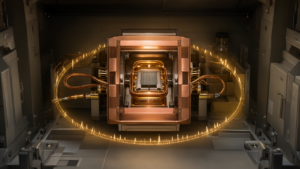
- IBM Anderson Quantum Foundry: The $1 billion awarded to IBM is earmarked for establishing the ‘Anderson’ foundry, which will be the first full-scale quantum chip manufacturing facility in the U.S. This initiative is critical for significantly enhancing the scalability and manufacturing reliability of quantum processors, marking a major milestone towards the mass production of quantum hardware.
- Chicago Quantum Exchange (CQE): The $1.6 billion allocated to CQE partners, a consortium of research institutions and companies centered around the University of Chicago, will fuel R&D and commercialization efforts in quantum computing, networking, and sensing. This is expected to strengthen the regional quantum ecosystem and accelerate innovation.
- PsiQuantum DARPA Grant: PsiQuantum’s $125 million from DARPA focuses on advancing photonics-based quantum computing technology and establishing performance benchmarks. DARPA’s objective is to validate the feasibility of large-scale, fault-tolerant quantum computers.
- The Bloch Quantum Tech Hub: The $30 million funding will contribute to building a hub that enhances expertise and collaboration in specific quantum technology areas.
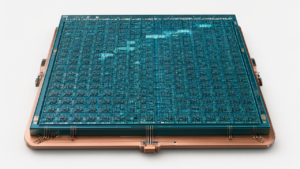
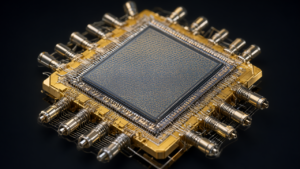
These investments are crucial for addressing fundamental technical challenges such as qubit physical stability, error correction techniques, and the integration and manufacturing yield of quantum processors. The large-scale funding is part of a strategic effort by the U.S. to establish global leadership in quantum technologies and ensure autonomy within the future quantum computing supply chain.
Background and Context
Quantum computing is widely recognized as the next frontier for national security, economic competitiveness, and scientific discovery. While the initial years were dominated by fundamental research, the focus has now shifted to building physical prototypes and scaling these systems. The U.S. CHIPS and Science Act, enacted in 2022 to bolster domestic semiconductor R&D and manufacturing, has seen its scope extend to quantum hardware production with this announcement. This move is interpreted as a strategic response to enhance the U.S.’s international competitiveness in quantum, particularly as rival nations like China rapidly advance in this domain.
Strategic Significance and Outlook
This $2.013 billion federal investment will profoundly impact the quantum IP market, driving a new wave of patent applications across hardware, software, algorithms, and application development. The establishment of domestic manufacturing sites like IBM’s Anderson foundry will mitigate supply chain vulnerabilities and boost the U.S.’s strategic autonomy in quantum technology. Investors and companies anticipate that this funding will accelerate the practical application of quantum computing, enabling breakthroughs in fields such as materials science, drug discovery, financial modeling, and artificial intelligence. Moving forward, the transition from fundamental research to commercial products is expected to intensify, with quantum technologies progressively integrating into societal infrastructure.
Get our weekly technology intelligence — free
Receive an infographic that lets you judge at a glance whether each field’s analysis report is worth reading.
Subscribe Free — Weekly Tech Intelligence
By subscribing, you’ll receive Troy-Technical’s weekly technology intelligence newsletter.
- Your email and selected fields are used only to deliver the newsletter.
- We never share your information with third parties.
- You can unsubscribe anytime via the link in each email.
See our Privacy Policy for details.
Takes about a minute · Unsubscribe anytime