Key Findings
Researchers at the University of California San Diego have developed a groundbreaking battery-free wearable sensor capable of continuously and in real-time monitoring levodopa concentrations in sweat, a crucial medication for Parkinson’s disease. This innovative fingertip patch operates on the principle of a biofuel cell, generating its own power from the chemical reaction between enzymes embedded in the sensor and the drug present in sweat. This self-powered design eliminates the need for external batteries or recharging, significantly expanding the possibilities for personalized therapeutic management by allowing patients to non-invasively track drug level fluctuations in their daily lives.
Technical and Clinical Details
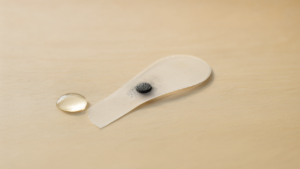
The wearable sensor is designed as a small patch that adheres to a patient’s fingertip. The core of the sensor features enzymes embedded in a hydrogel, which selectively react with levodopa in sweat, generating a small electrical signal. This electrical signal simultaneously powers the device, functioning as a biofuel cell. The research team successfully demonstrated that this device can track changes in levodopa concentrations with accuracy comparable to conventional clinical tests, such as blood tests. It precisely captures dynamic changes, including the rise in drug concentration after administration and its decline over time. This real-time monitoring capability provides invaluable information for Parkinson’s patients, whose levodopa efficacy is often short-lived and unstable, aiding in determining optimal dosing times and amounts.
Background and Industry Context
For Parkinson’s disease patients, managing appropriate levodopa dosage and timing is critically important. However, blood levodopa concentrations vary significantly between individuals and fluctuate over time, leading many patients to experience ‘wearing-off’ effects (when medication effects diminish) or ‘on-off phenomena’ (sudden fluctuations in drug efficacy). Current drug monitoring relies on periodic blood tests, which are invasive, burdensome for patients, and insufficient for capturing real-time fluctuations. The development of this battery-free wearable sensor addresses these challenges, offering support for patients to achieve a more stable quality of life. Furthermore, as a self-powered device, it contributes to reducing environmental impact, embodying aspects of sustainable medical technology.
Strategic Significance and Outlook
This battery-free wearable sensor has the potential to revolutionize personalized drug management for Parkinson’s disease. In the future, this monitoring system could be integrated with automated drug delivery systems to evolve into a ‘closed-loop therapeutic system,’ where levodopa administration is automatically adjusted based on real-time drug concentration data. This is expected to minimize symptom fluctuations and significantly improve patients’ quality of life. Applications for monitoring medications in other neurological and chronic diseases are also within sight. For commercialization, challenges related to long-term skin compatibility, data reliability, security, and regulatory approval must be addressed. Despite these hurdles, its potential societal contribution is exceptionally high.
Get our weekly technology intelligence — free
Receive an infographic that lets you judge at a glance whether each field’s analysis report is worth reading.
Subscribe Free — Weekly Tech Intelligence
By subscribing, you’ll receive Troy-Technical’s weekly technology intelligence newsletter.
- Your email and selected fields are used only to deliver the newsletter.
- We never share your information with third parties.
- You can unsubscribe anytime via the link in each email.
See our Privacy Policy for details.
Takes about a minute · Unsubscribe anytime