Key Findings
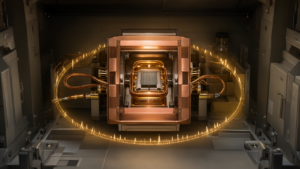
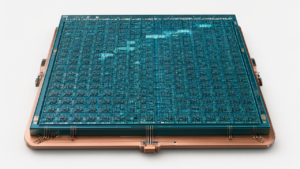
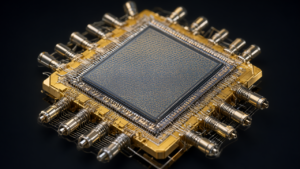
BlueQubit, Qedma, IBM, and Japan’s RIKEN have collaboratively announced the establishment of “Quantum Advantage” in predicting complex material behaviors, utilizing error-mitigated quantum processors. This pioneering achievement distinctly demonstrates the capability of quantum computers to accurately process problems that classical supercomputers have struggled to solve.
Technical / Clinical Details
The research focused on quantum chemistry simulations, specifically targeting the prediction of molecular properties and interactions of heterogeneous materials. Error mitigation techniques were crucial for enhancing the accuracy of quantum computations on current noisy intermediate-scale quantum (NISQ) devices. The team executed simulations on quantum processors, demonstrating that the results surpassed the limitations of classical supercomputer simulations and theoretical calculations. The credibility of this finding is further underpinned by rigorous scientific validation processes and independent third-party verification, underscoring quantum computers’ superior capability in specific scientific computations compared to classical methods.
Background & Context
In materials science, the discovery of new materials and the improvement of existing ones are vital for advancements across diverse industries, including energy, electronics, and medicine. However, simulations predicting complex behaviors at atomic and molecular levels have faced inherent limitations with classical computers due to their immense computational demands. The achievement of “Quantum Advantage” signifies overcoming this barrier, suggesting that quantum computers hold the potential to dramatically accelerate the new material development process. This progression implies that for industries such as chemical, pharmaceutical, and materials manufacturing, quantum computing is transitioning from a mere subject of research to a tangible R&D tool.
Strategic Significance & Outlook
This demonstration of quantum advantage represents a groundbreaking instance where quantum computing has proven its worth as a commercial research and development tool. Moving forward, BlueQubit, Qedma, IBM, and RIKEN are expected to further develop this technology and apply it to a broader range of materials and molecular systems. This could accelerate the development of energy-efficient catalysts, high-performance battery materials, and innovative pharmaceuticals. Moreover, this achievement will likely catalyze the creation of specific use cases in other fields where quantum computers can outperform classical computational methods. As the scope of problems solvable by quantum computers expands, expectations for their societal implementation are set to rise significantly.
Get our weekly technology intelligence — free
Receive an infographic that lets you judge at a glance whether each field’s analysis report is worth reading.
Subscribe Free — Weekly Tech Intelligence
By subscribing, you’ll receive Troy-Technical’s weekly technology intelligence newsletter.
- Your email and selected fields are used only to deliver the newsletter.
- We never share your information with third parties.
- You can unsubscribe anytime via the link in each email.
See our Privacy Policy for details.
Takes about a minute · Unsubscribe anytime