Key Findings
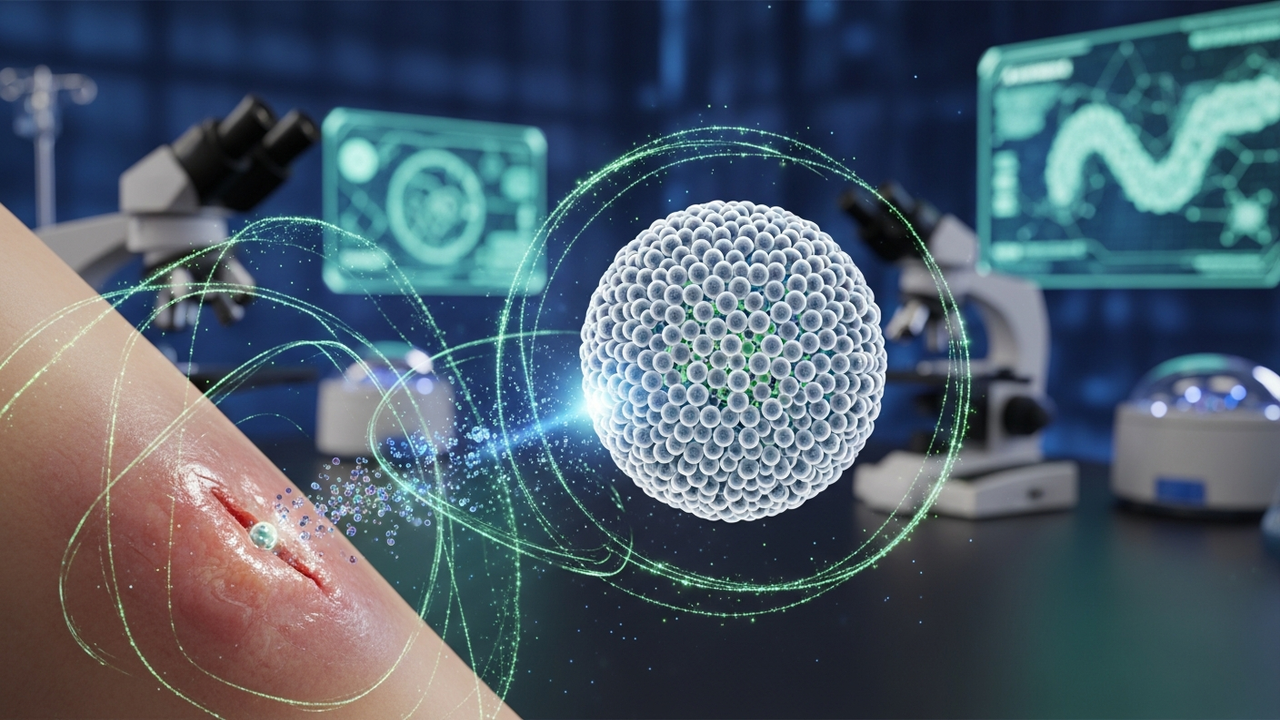
Cell membrane-coated nanoparticles (CMNPs) are emerging as an innovative and promising platform for drug and therapeutic agent delivery in modern medicine, with particular attention focused on their application in diabetic wound healing. CMNPs not only enable controlled and sustained drug release but also significantly extend their circulation half-life in vivo, holding the potential to improve therapeutic outcomes for chronic wounds that have been challenging to treat with conventional methods.
Technical and Clinical Details
- Cell Membrane Coating Mechanism: CMNPs are nanoparticles cloaked with isolated membranes from biological cells such as platelets, red blood cells, or cancer cells. This cellular membrane confers biocompatibility, immune evasion capabilities, and specific targeting characteristics derived from the original cell. For instance, nanoparticles coated with platelet membranes can accumulate at damaged vascular sites, which may be advantageous for wound healing.
- Controlled and Sustained Release: CMNPs encapsulate drugs within the nanoparticle core, with the surface cell membrane acting as a protective layer, preventing drug degradation and ensuring stable release. This design allows drug concentrations to be maintained within the therapeutic window for extended periods, reducing dosing frequency and maximizing therapeutic effects.
- Extended Circulation Lifetime: Bare nanoparticles tend to be rapidly cleared by the immune system in the body. However, coating them with cell membranes helps disguise the nanoparticles from host immune responses, dramatically extending their circulation half-life. This is crucial for increasing the opportunity for drugs to reach target sites and reducing systemic toxicity.
- Application in Diabetic Wound Healing: Diabetic wounds are notoriously difficult to heal due to multiple interacting factors such as chronic inflammation, reduced blood flow, and bacterial infections. CMNPs can potentially deliver anti-inflammatory agents, antimicrobials, and growth factors locally and sustainably, addressing these inhibitory factors and promoting wound closure.
Background and Industry Context
Diabetic wounds represent a serious complication affecting millions of patients worldwide, sometimes leading to amputation in severe cases. Conventional treatments have faced challenges due to difficulties in local drug delivery, systemic side effects from widespread drug distribution, and rapid degradation of drugs at the wound site. Nanomedicine is anticipated to offer new tools to overcome these challenges. Specifically, the development of biomimetic nanomaterials is a critical direction for improving the in vivo behavior of drugs and enhancing therapeutic efficacy.
Future Outlook
While CMNPs hold great promise in diabetic wound healing, several challenges remain for clinical translation. One of the most significant is overcoming biological barriers, particularly factors that hinder efficient delivery and accumulation at the wound site. To address this, approaches involving embedding multifunctional nanoparticles into biocompatible scaffold materials like hydrogels are being explored to enhance retention at the disease site and maximize drug efficacy. Further research into the safety, efficacy, and scalable manufacturing processes of CMNPs could lead to innovative treatments that offer new hope to patients suffering from chronic wounds.
Source: https://pmc.ncbi.nlm.nih.gov/articles/PMC13135139/
Get our weekly technology intelligence — free
Receive an infographic that lets you judge at a glance whether each field’s analysis report is worth reading.
Subscribe Free — Weekly Tech Intelligence
By subscribing, you’ll receive Troy-Technical’s weekly technology intelligence newsletter.
- Your email and selected fields are used only to deliver the newsletter.
- We never share your information with third parties.
- You can unsubscribe anytime via the link in each email.
See our Privacy Policy for details.
Takes about a minute · Unsubscribe anytime