Key Findings
China’s commercial aerospace industry is rapidly advancing, with domestic commercial space launches projected to surpass 30 in 2026, setting a record pace. This vibrant activity not only signifies quantitative expansion but also clearly demonstrates China’s significant advancements in autonomous space technology and commercial competitiveness.
Technical Details
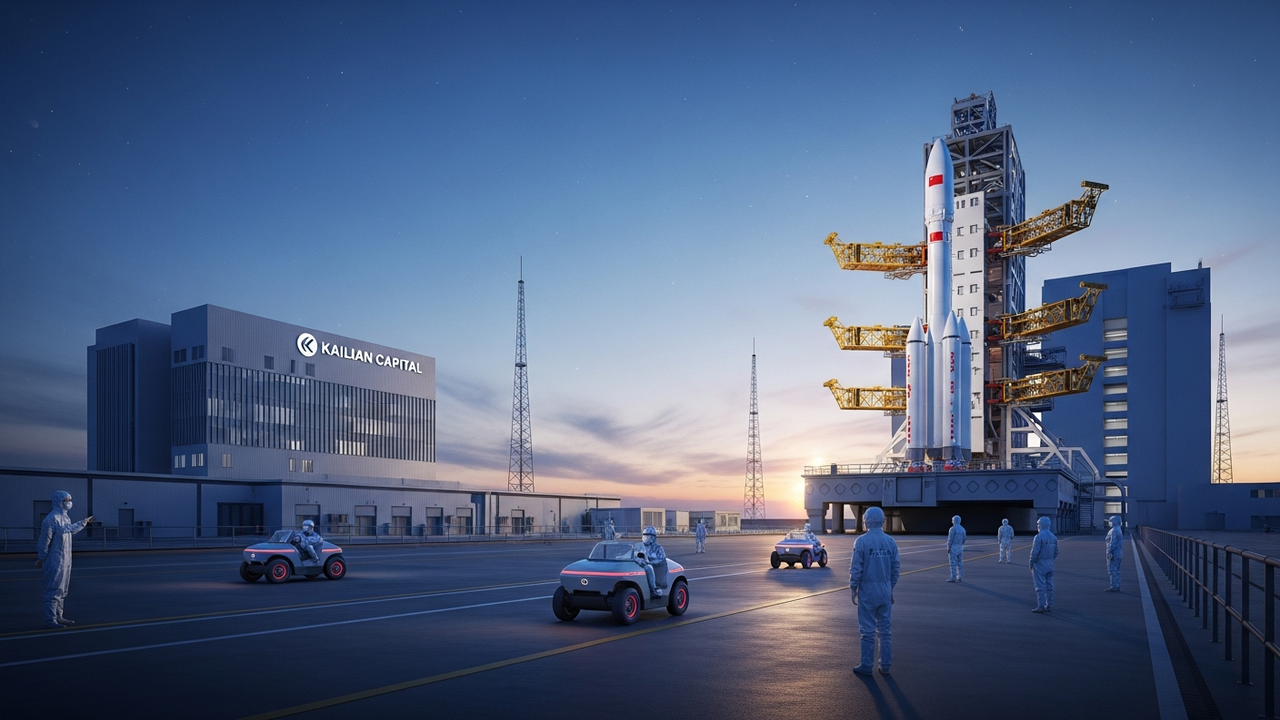
A recent illustrative event was the successful mission on July 30, 2026, when a Long March 6A carrier rocket accurately placed the “Communication Technology Test Satellites 27A/B” into their designated orbit. This serves as concrete evidence of China’s mature engineering R&D and implementation systems within its aerospace sector. Furthermore, private commercial aerospace companies such as Galactic Energy and Orienspace have achieved multiple successful launches, showing rapid progress in reusable rocket technology and the development of low-cost launch solutions. On the investment front, major investment firms like Kailian Capital are actively making strategic investments in companies developing critical aerospace core components (e.g., advanced propulsion systems, satellite buses, and payload technologies), thereby contributing to strengthening the overall technological foundation of the industry.
Background & Context
Since the liberalization of private investment in 2014, the Chinese government has prioritized nurturing its commercial space industry. This policy support has spurred technological innovation and market competition, fostering the birth and growth of numerous space startups. As the global space economy shifts towards the establishment of Low Earth Orbit (LEO) satellite constellations and space-based data services, China is leveraging its robust supply chain and vast domestic market to establish leadership in this domain. This reflects an intensifying technological and economic competition with traditional space powers like the United States and Europe.
Strategic Significance & Outlook
The continued growth of China’s commercial space industry holds the potential to significantly alter the global space industry landscape. Increased launch frequency and the maturation of reusable rocket technology will further drive down the cost of space access, accelerating the realization of more diverse space applications (e.g., in-space manufacturing, space-based AI data centers, and space tourism). Strategic investments by firms like Kailian Capital indicate China’s aim to strengthen its entire space industry value chain and further enhance its international competitiveness. The international community will need to closely monitor China’s rapid advancements and carefully manage the balance between technological cooperation and competition.
Source: https://eu.36kr.com/en/p/3927674259052418
Get our weekly technology intelligence — free
Receive an infographic that lets you judge at a glance whether each field’s analysis report is worth reading.
Subscribe Free — Weekly Tech Intelligence
By subscribing, you’ll receive Troy-Technical’s weekly technology intelligence newsletter.
- Your email and selected fields are used only to deliver the newsletter.
- We never share your information with third parties.
- You can unsubscribe anytime via the link in each email.
See our Privacy Policy for details.
Takes about a minute · Unsubscribe anytime