Key Findings
Advances in modern chemical processing techniques have made it possible to recover an impressive up to 95% of valuable metals, specifically lithium and cobalt, from shredded electric vehicle (EV) battery packs. This high-efficiency recovery allows these critical materials to be effectively re-entered into the supply chain for new battery manufacturing, promoting resource circularity. U.S. EV battery regulations are heavily reliant on economic incentives, such as the Inflation Reduction Act (IRA), which actively encourages domestic sourcing by granting ‘domestic’ status to recycled North American battery materials. This policy approach has fueled the rapid development of domestic recycling infrastructure, successfully transforming what was once a waste product into a highly valuable commodity for automakers to meet their sourcing thresholds.
Technical / Clinical Details
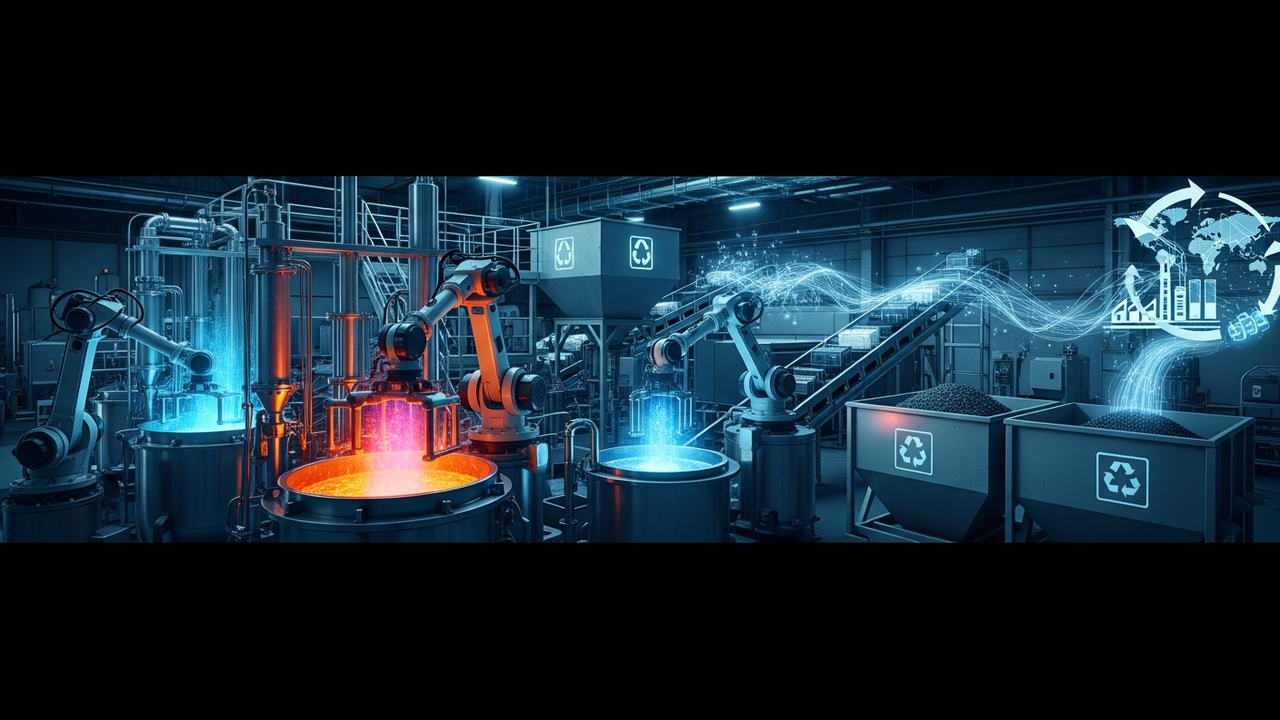
The core chemical processing technologies in EV battery recycling primarily include hydrometallurgy and pyrometallurgy. Hydrometallurgy involves dissolving and separating metals using chemical solutions like acids or bases, suitable for recovering high-purity materials. Pyrometallurgy processes batteries at high temperatures, recovering metals as alloys or oxides. These methods offer significant advantages over traditional landfilling or simple shredding, by reducing environmental impact and recovering a greater proportion of valuable materials. The Inflation Reduction Act (IRA) sends strong market signals by offering tax credits to EV purchasers, contingent on domestic sourcing of battery components and critical minerals. By deeming recycled materials as domestically sourced, the U.S. aims to accelerate the establishment of a domestic battery material ecosystem and reduce vulnerability to international supply chain volatility.
Background & Context
The rapid proliferation of electric vehicles has brought with it a new challenge: the management of end-of-life EV batteries. These batteries are rich in valuable resources like lithium, cobalt, and nickel, but also contain environmentally hazardous substances. For the sustainable development of the EV industry, establishing a circular economy model that safely and efficiently recycles these batteries and reuses their resources is essential. In the U.S., stabilizing the supply of critical minerals and enhancing the competitiveness of domestic industries are national priorities, and policies like the IRA serve as crucial instruments to achieve these goals.
Strategic Significance & Outlook
Continued advancements in EV battery recycling technology and supportive policy frameworks will significantly enhance the sustainability of resources and resilience of supply chains in battery manufacturing. The development of high-efficiency recycling processes will reduce reliance on new mining operations and minimize environmental impact. Incentives like the IRA are likely to further stimulate investment in the domestic recycling industry, potentially creating new jobs and economic opportunities within local communities. In the future, a ‘design-for-recycling’ principle is expected to be more widely adopted, where battery design considerations incorporate ease of recycling from the outset, further reducing the environmental footprint across the entire EV battery lifecycle. This movement is an indispensable component for realizing a sustainable future of electric mobility.
Source: https://carbuzz.com/ev-battery-recycling/
Get our weekly technology intelligence — free
Receive an infographic that lets you judge at a glance whether each field’s analysis report is worth reading.
Subscribe Free — Weekly Tech Intelligence
By subscribing, you’ll receive Troy-Technical’s weekly technology intelligence newsletter.
- Your email and selected fields are used only to deliver the newsletter.
- We never share your information with third parties.
- You can unsubscribe anytime via the link in each email.
See our Privacy Policy for details.
Takes about a minute · Unsubscribe anytime