Key Findings
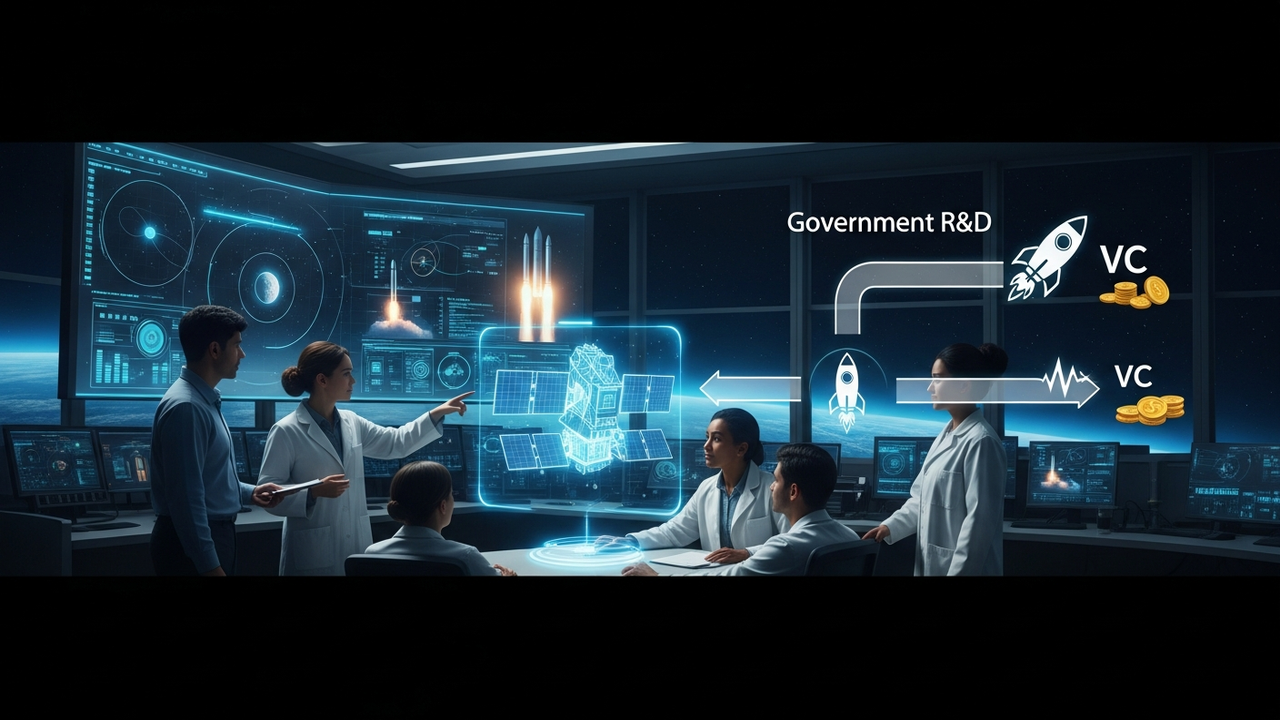
A strong argument is being made within the industry that government seed-stage Research and Development (R&D) funding programs are more suitable for space startups than traditional Venture Capital (VC) funding, given the specific characteristics of their development lifecycle. Notably, government funding like the U.S. SBIR (Small Business Innovation Research) / STTR (Small Business Technology Transfer) programs, which do not entail equity dilution and focus on long-term technological progress, are seen as enabling a more effective “inverted capital stack” to address the inherent challenges of space hardware development.
Technical Details
Space hardware development typically involves exceptionally long development periods, high upfront investment costs, and significant technical risks. For instance, the development of new rocket engines or satellite platforms can often take anywhere from several years to decades from conceptual design to demonstration and commercial operation. VCs usually seek quicker returns and market validation, and such long-term investment cycles and high technical risks often do not align with VC investment criteria. In contrast, SBIR/STTR programs provide phased support from basic research to applied development, emphasizing the achievement of technical milestones, making them an ideal support model for deep tech startups in the space sector.
Background & Context
Over the past decade, private investment in the space industry has dramatically increased, but much of it has been concentrated in software, data services, or relatively mature hardware technologies. However, to build truly innovative rockets, satellites, and space infrastructure, investment in hardware technologies requiring breakthroughs is essential. The government plays a crucial role in supporting such high-risk, high-reward early-stage R&D, thereby creating a foundation that private investment can follow. This promotes innovation in strategically important technological areas for national security and helps maintain international competitiveness.
Strategic Significance & Outlook
If the “inverted capital stack” model, where government funding programs support the early-stage growth of space startups, is established, it will increase the likelihood of more groundbreaking space technologies being commercialized. This will expand the frontiers of space exploration and accelerate the creation of new space services and products that contribute to solving Earth’s challenges. Investors may begin to consider new strategic approaches, investing at a more mature stage after technical risks have been mitigated by government funding. This trend holds immense significance for ensuring the healthy growth and diversity of the space economy.
Source: https://www.thespacereview.com/article/5278/1
Get our weekly technology intelligence — free
Receive an infographic that lets you judge at a glance whether each field’s analysis report is worth reading.
Subscribe Free — Weekly Tech Intelligence
By subscribing, you’ll receive Troy-Technical’s weekly technology intelligence newsletter.
- Your email and selected fields are used only to deliver the newsletter.
- We never share your information with third parties.
- You can unsubscribe anytime via the link in each email.
See our Privacy Policy for details.
Takes about a minute · Unsubscribe anytime