Key Findings
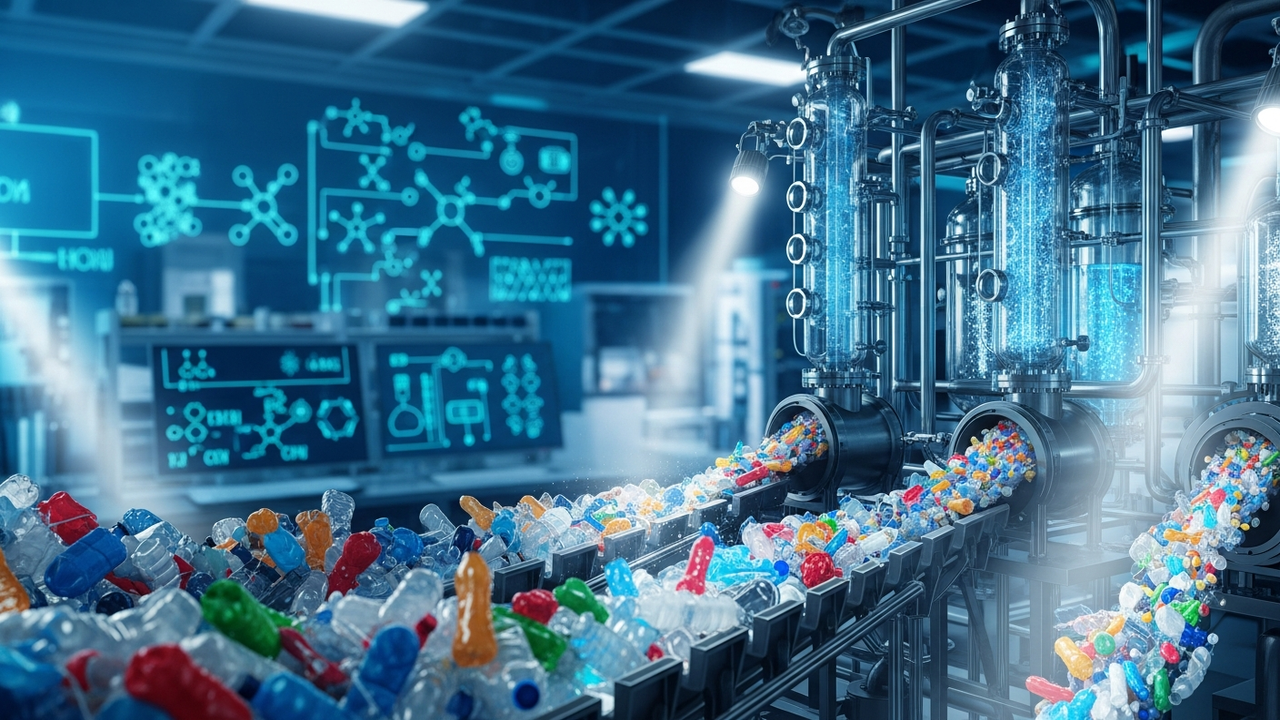
A recent academic review published by MDPI meticulously details groundbreaking advancements in the chemical upcycling of plastic waste. This review goes beyond traditional ‘recycling,’ revealing diverse pathways to transform post-consumer plastics into high-value monomers, functional chemicals, and even bioactive substances or pharmaceutical precursors. This innovative approach is key to achieving a truly circular economy, balancing high performance with sustainability.
Technical / Clinical Details
The review particularly highlights aminolysis-based upcycling of polyethylene terephthalate (PET) waste. This process involves breaking down PET to generate new monomers or oligomers, which are then re-synthesized into high-performance materials that are both durable and degradable. This method allows for the creation of new polymers with properties distinct from conventional plastics, or specialized chemicals tailored for specific applications, all derived from waste materials like PET bottles. Other chemical conversion technologies discussed include catalytic degradation of polyolefins (PE, PP) to produce fuels or waxes, and depolymerization of polyurethanes (PU) to recover polyols, addressing a wide range of plastic waste types. These technologies aim not merely at material recycling but at creating products with higher economic and functional value from waste through molecular-level reconstruction.
Background & Context
Plastic pollution is a global environmental crisis. Traditional mechanical recycling faces challenges such as material degradation (downcycling) and limitations in processing capacity. Chemical upcycling offers an innovative approach to overcome these issues, reframing plastic waste as an infinite resource. This technology is expected to significantly contribute to building a sustainable society by reducing dependence on fossil fuel resources for virgin material production and minimizing landfilling and incineration of waste. Governments, industries, and academia are collaborating actively on R&D to commercialize and scale up this technology.
Strategic Significance & Outlook
While still a developing field, the potential of chemical upcycling of plastic waste is immense. Future research will likely focus on catalytic systems capable of processing a wider variety of plastic wastes, energy-efficient reaction processes, and maximizing product quality and yield. Upcycling of bioplastics and composite materials will also be crucial themes. If commercially realized, this technology is expected to fundamentally alter plastic manufacturing and accelerate the transition to a truly circular economy by maximizing resource circulation. For investors, it presents a dual opportunity: creating new high-value product markets and contributing to the solution of critical environmental problems.
Source: https://www.mdpi.com/2673-4079/7/3/43
Get our weekly technology intelligence — free
Receive an infographic that lets you judge at a glance whether each field’s analysis report is worth reading.
Subscribe Free — Weekly Tech Intelligence
By subscribing, you’ll receive Troy-Technical’s weekly technology intelligence newsletter.
- Your email and selected fields are used only to deliver the newsletter.
- We never share your information with third parties.
- You can unsubscribe anytime via the link in each email.
See our Privacy Policy for details.
Takes about a minute · Unsubscribe anytime