Key Findings
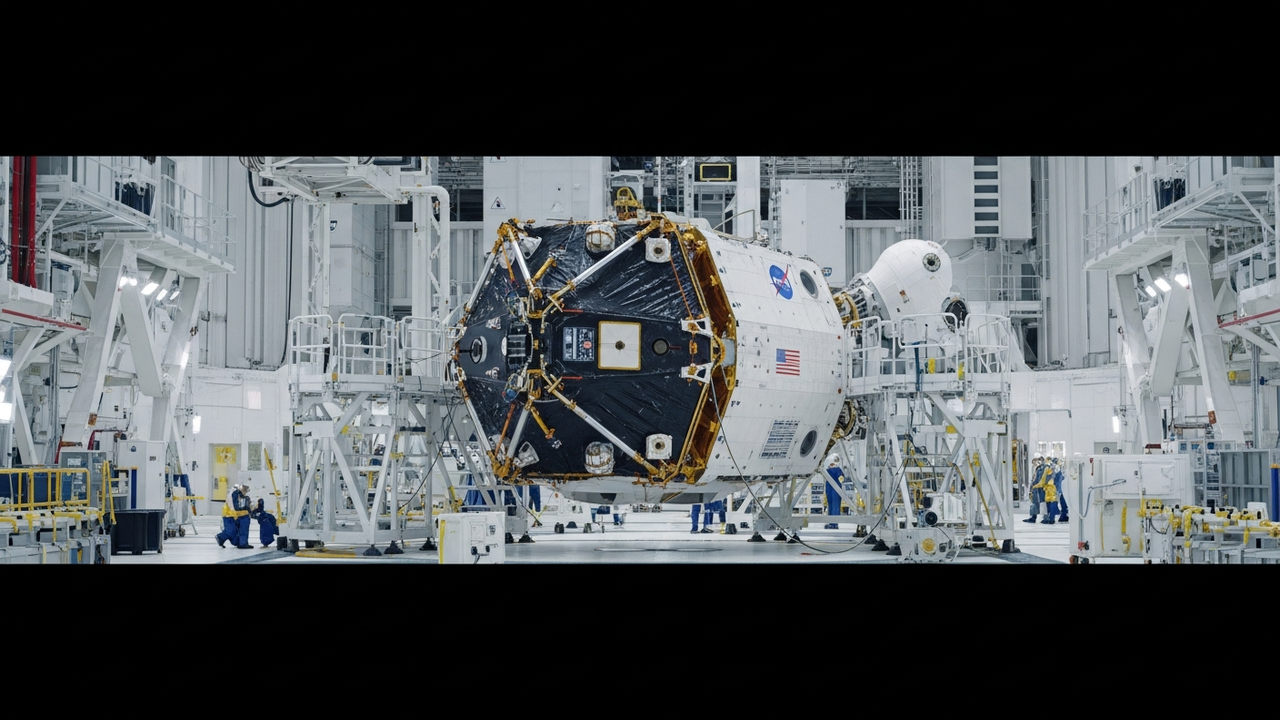
NASA successfully completed the integration of the Orion spacecraft’s core components—the Crew Module and Service Module—on July 30, 2026, marking a critical advancement for the Artemis III mission, which aims to return humans to the lunar surface. This integration signifies decisive progress towards the planned 2027 launch of Artemis III, preparing the spacecraft to transport astronauts to lunar orbit and demonstrate rendezvous and docking capabilities with commercial lunar landing systems developed by private companies.
Technical Details
The Orion Crew Module serves as the habitable living space for astronauts and the reentry capsule designed for safe return to Earth. The Service Module provides essential life support systems, including propulsion, power, water, and oxygen. The integration of these two modules is a complex process involving the establishment of electrical, mechanical, and fluidic connections, directly impacting the mission’s operational capabilities in space. Artemis III is slated to perform rendezvous and docking with test versions of two distinct commercial lunar landing systems: Blue Origin’s Blue Moon lander and SpaceX’s Starship Human Landing System, ensuring flexibility for future diverse lunar activities.
Background & Context
The Artemis program aims to resume lunar exploration after the Apollo era and establish a sustainable human presence on the Moon. Artemis III, in particular, is a historic mission that intends to land humans on the Moon for the first time in nearly half a century. NASA emphasizes commercial partnerships within this program, actively leveraging the technology and innovation of private companies like Blue Origin and SpaceX. This approach holds strategic significance for enhancing cost-efficiency and improving lunar transportation capabilities and operational frequency.
Strategic Significance & Outlook
The completion of Orion module integration is a vital milestone for the 2027 launch of Artemis III, accelerating subsequent final system integration, testing, and launch preparations. The success of Artemis III will be a firm step towards realizing the long-term space exploration roadmap, leading to the construction of a lunar base where humans can live, work, and explore, and eventually to crewed missions to Mars. This mission transcends mere technical achievement, opening a new chapter in humanity’s endeavor into space.
Get our weekly technology intelligence — free
Receive an infographic that lets you judge at a glance whether each field’s analysis report is worth reading.
Subscribe Free — Weekly Tech Intelligence
By subscribing, you’ll receive Troy-Technical’s weekly technology intelligence newsletter.
- Your email and selected fields are used only to deliver the newsletter.
- We never share your information with third parties.
- You can unsubscribe anytime via the link in each email.
See our Privacy Policy for details.
Takes about a minute · Unsubscribe anytime