Key Findings
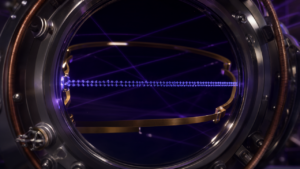
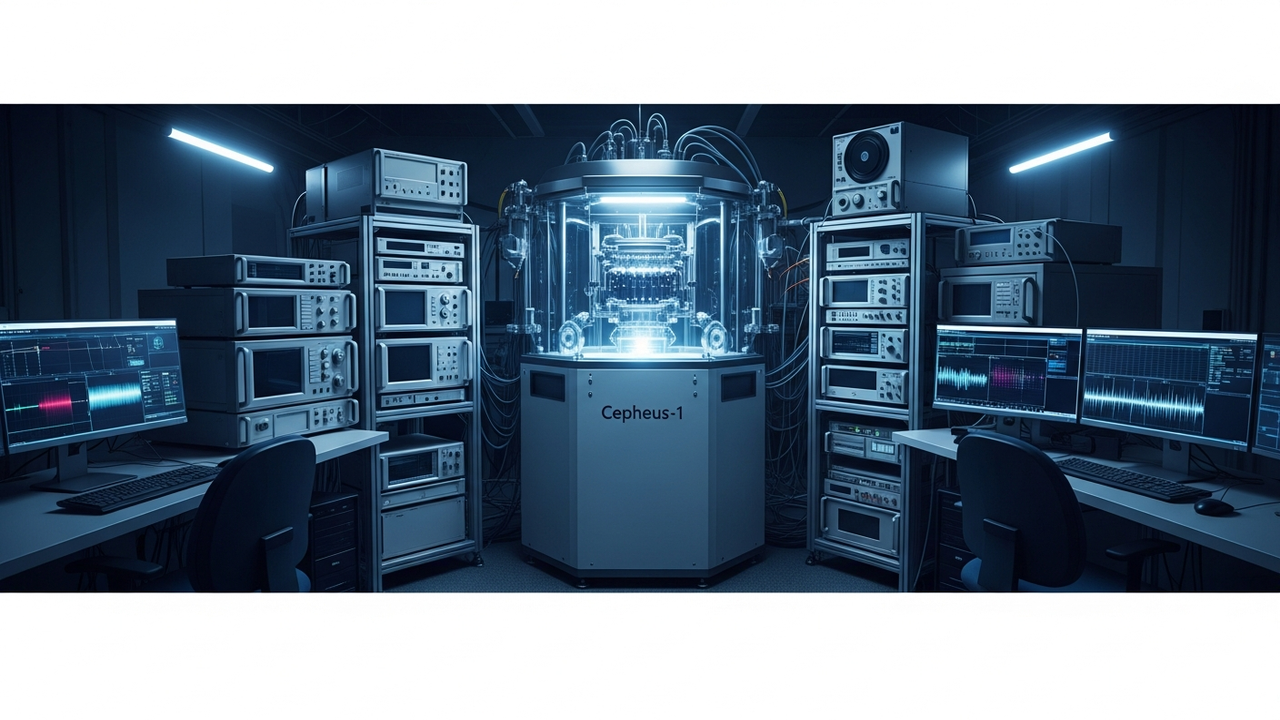
Rigetti Computing has released its financial results for the second quarter of 2026, reporting sustained progress in key technological milestones essential for achieving quantum advantage. The company specifically highlighted its 108-qubit ‘Cepheus-1’ system, which demonstrated a high median two-qubit gate fidelity of 99.1%.
Technical / Clinical Details
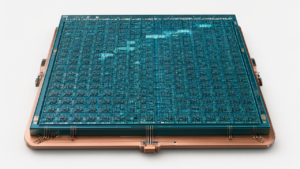
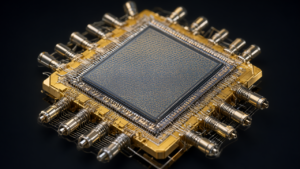
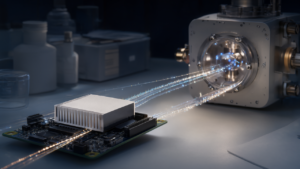
Rigetti’s report details advancements across crucial performance indicators, including qubit count, two-qubit gate fidelity, and gate speed. The ‘Cepheus-1-108Q’ system exhibits advanced performance among current commercial quantum computers, with a 99.1% two-qubit gate fidelity indicating a very low error rate in quantum computations. The company has set an ambitious target of developing a system with approximately 1,000 qubits and an even higher 99.9% two-qubit gate fidelity within the next three years. To achieve this, Rigetti is bolstering its investments in quantum hardware infrastructure and adopting a chiplet-based architecture to enhance scalability and performance. The chiplet architecture is a promising method for building larger, more complex quantum processors by integrating individual quantum chips.
Background & Context
In the field of quantum computing, increasing qubit count is not the sole determinant; the fidelity of gate operations, which control interactions between qubits, is considered one of the most critical factors for realizing practical quantum computers. Higher fidelity leads to fewer errors during quantum computations, enabling the accurate execution of more complex algorithms. Rigetti’s report indicates consistent progress in addressing this core technological challenge, solidifying its presence in the race toward universal quantum computers. Achieving 99.1% fidelity on an existing system with over 100 qubits is particularly noteworthy, as it pushes the boundaries of Noisy Intermediate-Scale Quantum (NISQ) devices.
Strategic Significance & Outlook
Rigetti’s ambitious goal of achieving 1,000 qubits and 99.9% gate fidelity within the next three years is crucial for accelerating the path to fault-tolerant quantum computing. If this level of performance is attained, it significantly increases the potential for quantum computers to be genuinely applied to complex, real-world problems intractable for current classical computers, spanning fields such as materials science, drug discovery, financial modeling, and artificial intelligence. The success of the chiplet-based architecture will serve as a vital solution for quantum hardware scalability, contributing to reduced manufacturing costs and broader adoption of quantum computers. Rigetti’s ongoing technological advancements are expected to positively impact the entire ecosystem moving towards the commercialization of quantum computing.
Get our weekly technology intelligence — free
Receive an infographic that lets you judge at a glance whether each field’s analysis report is worth reading.
Subscribe Free — Weekly Tech Intelligence
By subscribing, you’ll receive Troy-Technical’s weekly technology intelligence newsletter.
- Your email and selected fields are used only to deliver the newsletter.
- We never share your information with third parties.
- You can unsubscribe anytime via the link in each email.
See our Privacy Policy for details.
Takes about a minute · Unsubscribe anytime