Key Findings
Cevostamab (RG6160), an investigational FcRH5 x CD3 bispecific antibody developed by Roche, has demonstrated encouraging efficacy in a Phase 1 trial (NCT03275103) for patients with relapsed/refractory multiple myeloma (R/R MM). The study reported an overall response rate (ORR) of 42.1% across all dose levels (n=324), with 25.1% of patients achieving a very good partial response (VGPR) or better. These results underscore the potential of FcRH5 as a novel therapeutic target, particularly for patients who have progressed after B-cell maturation antigen (BCMA)-directed therapies.
Technical / Clinical Details
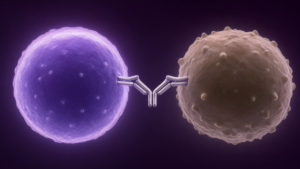
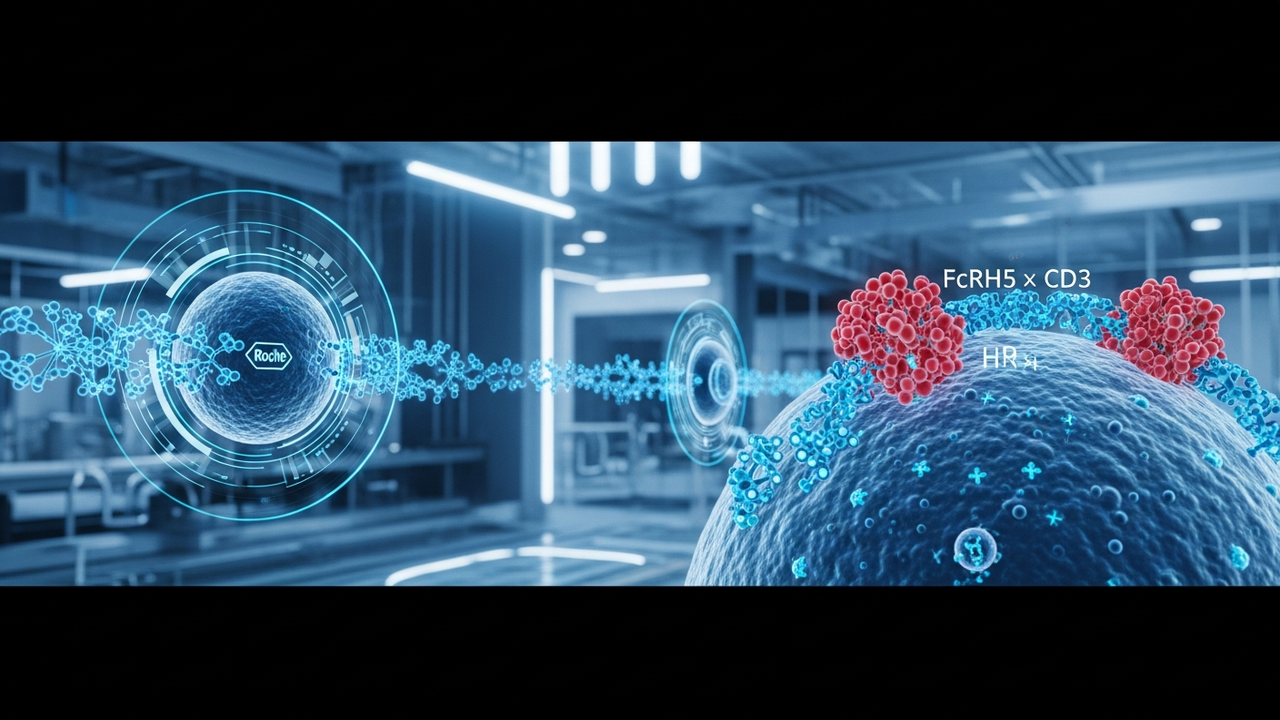
Cevostamab is designed to engage both FcRH5, a cell surface protein highly expressed on multiple myeloma cells, and CD3, a component of the T-cell receptor complex. This dual targeting mechanism aims to redirect T-cells to specifically recognize and kill myeloma cells. The Phase 1 trial enrolled 324 patients with R/R MM who had received a median of five prior lines of therapy. Beyond the overall ORR of 42.1% across all dose levels, the subgroup of patients receiving the recommended Phase 2 dose (RP2D) of 160 mg once daily (n=79) showed an even higher ORR of 44.3%, with a median duration of response (mDOR) of 10.4 months. The safety profile revealed that cytokine release syndrome (CRS) was the most frequent treatment-emergent adverse event, occurring in 75.6% of patients of any grade, but was predominantly Grade 1 or 2, with Grade 3 or higher CRS observed in only 3.7%. Neurologic toxicity was reported in 9.9% of patients across all grades, indicating a manageable safety profile in this heavily pretreated population.
Background & Context
Multiple myeloma remains an incurable hematologic malignancy, characterized by cycles of remission and relapse. While significant advancements have been made with BCMA-targeting immunotherapies, including CAR T-cell therapies and bispecific antibodies, resistance or relapse after these treatments represents a growing clinical challenge with limited subsequent options. FcRH5 has emerged as a promising alternative target due to its high and specific expression on myeloma cells, distinct from BCMA. Cevostamab’s data provides critical evidence supporting FcRH5 as a viable target, potentially offering a new therapeutic avenue for patients who have exhausted BCMA-directed therapies, thereby addressing a significant unmet medical need in the multiple myeloma treatment landscape.
Strategic Significance & Outlook
The positive Phase 1 results for cevostamab are a crucial milestone for its development, setting the stage for further clinical exploration. The demonstration of efficacy in a challenging patient population post-BCMA therapy highlights its potential to expand treatment options and improve outcomes for R/R MM patients. Roche is actively planning further studies, including Phase 2 trials, to confirm the efficacy and safety profile in larger cohorts. If approved, cevostamab could become an important new agent in the evolving treatment algorithm for multiple myeloma, potentially allowing for deeper and more durable responses, and contributing to the goal of achieving longer survival and improved quality of life for patients. Its success could also validate FcRH5 as a key target for future immunotherapeutic innovations.
Get our weekly technology intelligence — free
Receive an infographic that lets you judge at a glance whether each field’s analysis report is worth reading.
Subscribe Free — Weekly Tech Intelligence
By subscribing, you’ll receive Troy-Technical’s weekly technology intelligence newsletter.
- Your email and selected fields are used only to deliver the newsletter.
- We never share your information with third parties.
- You can unsubscribe anytime via the link in each email.
See our Privacy Policy for details.
Takes about a minute · Unsubscribe anytime