Key Findings
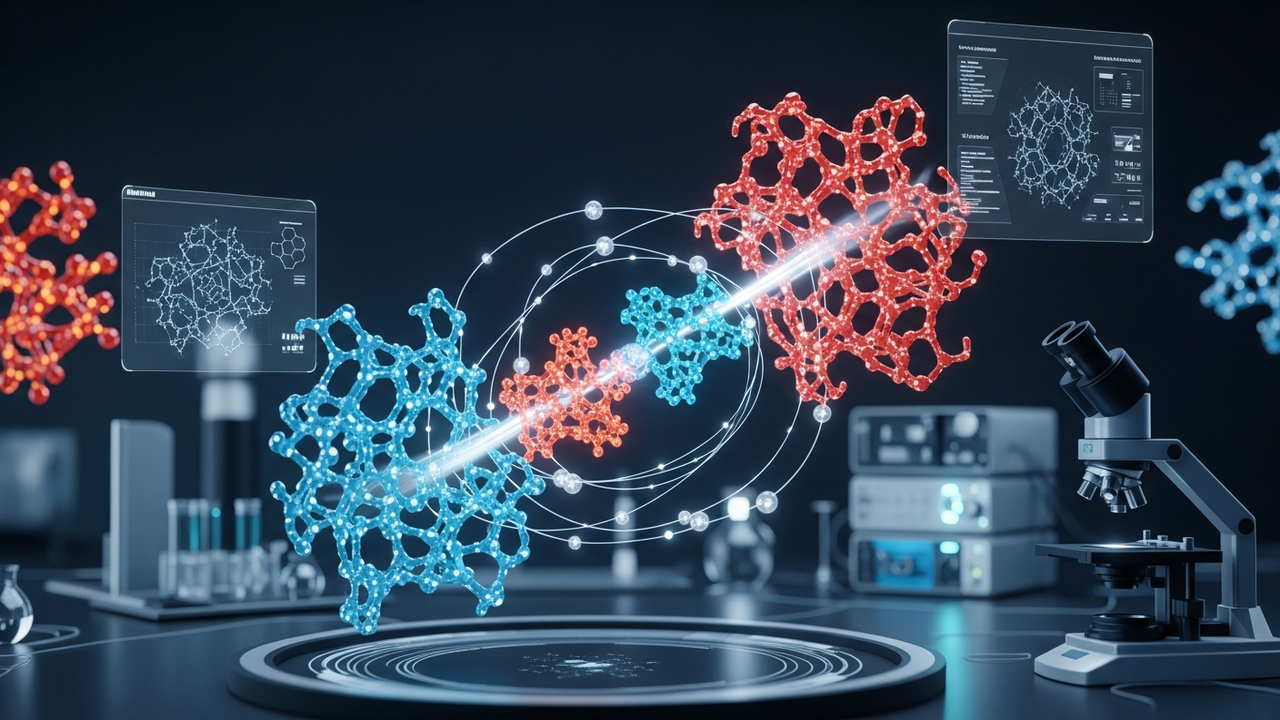
Structure-aware Artificial Intelligence (AI) systems are emerging as a pivotal technology, accelerating next-generation drug discovery by deeply integrating 3D molecular geometry and protein-ligand interaction data. Utilizing advanced techniques such as graph neural networks, Transformer-based models, and diffusion-based generative models, these AI platforms are capable of highly accurate prediction of drug-target interactions, efficient estimation of binding affinities, and the de novo design of novel molecules and biomolecular binders, including antibodies. This represents a significant expansion of AI’s role in drug discovery, moving beyond traditional small-molecule tasks to sophisticated generative biomolecular design.
Technical / Clinical Details
Unlike earlier AI approaches that primarily relied on 2D molecular descriptors, structure-aware AI directly incorporates the three-dimensional spatial information of molecules and the intricate structural context of target proteins. Graph neural networks (GNNs) represent molecules as graphs, learning relationships between atoms and bonds to predict properties with high precision. Transformer-based models, inspired by their success in natural language processing, are adept at recognizing patterns in molecular and protein sequences, facilitating the generation of new compounds or the modification of existing ones. A key innovation is the application of generative AI, such as diffusion models, which can de novo design molecules that precisely fit into protein binding pockets or generate specific antibody sequences from scratch. This enables the efficient exploration of vast chemical spaces and the creation of promising drug candidates with a speed and accuracy previously unattainable by traditional high-throughput screening or experimental methods. The technology also contributes to optimizing pharmacokinetics and toxicity prediction, enhancing the efficiency of preclinical development.
Background & Context
Drug discovery has long been characterized by its time-consuming, expensive, and high-failure-rate nature, with accurately predicting how a molecule interacts with its target being a major bottleneck. The 2020 breakthrough of AlphaFold2 in protein structure prediction significantly elevated the scientific community’s recognition of AI’s potential in biology. Structure-aware AI builds upon this by not only predicting but also ‘generating’ novel molecules with desired functionalities. This evolution marks a transition from empirical, trial-and-error drug discovery to a more rational, engineering-driven design process, promising to enhance the overall productivity and innovation within the pharmaceutical industry. Regulatory bodies are also actively developing guidelines for AI-driven drug development, signaling broad acceptance and integration of these advanced tools.
Strategic Significance & Outlook
Structure-aware AI is positioned to be a primary driver of next-generation drug discovery, with its applications expanding significantly in the coming years. The evolution of generative capabilities in biomolecular design, including antibody engineering, peptide therapeutics, and viral vector optimization for gene therapies, is particularly noteworthy. Furthermore, the development of integrated platforms that combine in silico design with robust in vitro and in vivo validation is expected to boost the clinical success rates of AI-designed candidates. As regulatory frameworks for AI-enabled drug development mature, this technology will facilitate faster and safer drug development. Ultimately, structure-aware AI is anticipated to strengthen the foundation for personalized and precision medicine, delivering groundbreaking therapies for diseases with high unmet needs and profoundly impacting global healthcare.
Source: https://academic.oup.com/bib/article/27/4/bbag421/8750281
Get our weekly technology intelligence — free
Receive an infographic that lets you judge at a glance whether each field’s analysis report is worth reading.
Subscribe Free — Weekly Tech Intelligence
By subscribing, you’ll receive Troy-Technical’s weekly technology intelligence newsletter.
- Your email and selected fields are used only to deliver the newsletter.
- We never share your information with third parties.
- You can unsubscribe anytime via the link in each email.
See our Privacy Policy for details.
Takes about a minute · Unsubscribe anytime