Key Findings
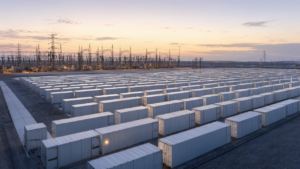
The U.S. Department of Energy (DOE) is actively supporting a comprehensive program aimed at the widespread commercial deployment of Long-Duration Energy Storage (LDES) systems, defined as those capable of supplying power for 10 hours or more. This initiative is designed to bolster the reliability and resilience of the national electricity grid by proactively addressing and removing existing technical and institutional barriers hindering LDES adoption.
Technical & Clinical Details
The DOE’s LDES program is broad in scope, supporting a diverse array of technological approaches rather than being limited to a single solution. This includes advanced battery systems (e.g., flow batteries, novel battery chemistries), thermal energy storage, compressed air energy storage (CAES), gravity-based energy storage, and hydrogen storage, among others. Each of these technologies presents unique cost profiles, efficiencies, storage durations, and deployment requirements, with the expectation that they will be optimized for specific regional and grid needs. The program prioritizes research and development to enhance the performance, reduce the costs, and ensure the safety of these LDES systems, while also accelerating technology readiness through demonstration projects. The ultimate goal is to establish the capacity to provide stable, on-demand power in a future grid heavily reliant on renewable energy sources.
Background & Context
In recent years, the U.S. has seen a rapid increase in the integration of renewable energy sources like solar and wind power. However, the inherent intermittency of these sources, with their output fluctuating based on weather conditions, poses challenges to grid stability and complicates the balancing of electricity supply and demand. The growing need for energy storage that can span longer durations (beyond the few hours typically offered by conventional batteries) has made LDES an indispensable component for achieving both decarbonization and stabilization of the power system. The DOE’s LDES program represents a comprehensive national approach to this challenge, combining technological innovation with policy support. Through this effort, the U.S. aims to accelerate its transition to a clean energy economy and strengthen its energy security.
Strategic Significance & Outlook
The U.S. Department of Energy’s LDES program holds the potential to revolutionize the design and operation of future electricity grids. As technical and institutional barriers are overcome, and LDES systems achieve widespread commercial deployment, the grid’s capacity to integrate renewable energy will dramatically improve, further reducing reliance on fossil fuels. This program is also expected to stimulate the creation of new industries, generate high-skill jobs, and reinforce U.S. leadership in technological innovation. Over the coming years, more LDES demonstration projects will be launched across the nation, with diverse technologies proving their value in the electricity market, thereby realizing a cleaner and more resilient energy future.
Source: https://www.energy.gov/cmei/oced/long-duration-energy-storage
Get our weekly technology intelligence — free
Receive an infographic that lets you judge at a glance whether each field’s analysis report is worth reading.
Subscribe Free — Weekly Tech Intelligence
By subscribing, you’ll receive Troy-Technical’s weekly technology intelligence newsletter.
- Your email and selected fields are used only to deliver the newsletter.
- We never share your information with third parties.
- You can unsubscribe anytime via the link in each email.
See our Privacy Policy for details.
Takes about a minute · Unsubscribe anytime