Key Findings
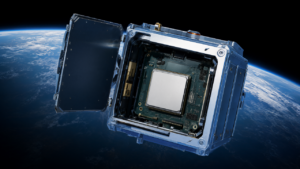
A briefing submitted to the U.S. Senate Committee emphasizes that In-Space Manufacturing (ISM) is a revolutionary technology capable of producing innovative materials and products that are difficult or entirely impossible to create on Earth. This is achieved by leveraging the unique environmental conditions of space, including microgravity, extreme temperature fluctuations, and a pristine vacuum. This technology holds the potential to introduce a paradigm shift in the design and operation of space missions.
Technical Details
In-space manufacturing offers fundamental advantages over traditional manufacturing processes. For instance, in a microgravity environment, the effects of buoyancy and convection, caused by Earth’s gravity, are eliminated. This enables the production of more uniform and defect-free crystals (for semiconductors and pharmaceuticals), ultra-high-purity optical fibers, and complex-shaped metal components. The clean vacuum environment minimizes contamination, contributing to the formation of high-quality thin films and coatings. Specifically, a wide range of applications is anticipated, including on-demand manufacturing of satellite components, in-situ construction of space stations and lunar infrastructure, and the repair and upgrade of malfunctioning spacecraft.
Background & Context
Historically, space activities have primarily involved launching Earth-manufactured components and systems for orbital operation. However, this method incurs high costs, is constrained by launchable mass and volume, and makes in-orbit repair and upgrades challenging. In-space manufacturing is emerging as a strategic approach to overcome these issues, enhancing the sustainability and economic viability of space activities. The U.S. government views ISM as a critical investment area for ensuring technological superiority in space and fostering the commercial space ecosystem.
Strategic Significance & Outlook
Advancements in in-space manufacturing technology will enable the establishment of a distributed space manufacturing infrastructure, driving an “industrial revolution in space” where things are produced where they are needed. This will make the construction of large-scale space structures (e.g., space-based solar power satellites, orbital factories) a reality and dramatically enhance the autonomy and flexibility of deep-space exploration missions. In the long term, combined with the utilization of space resources, ISM will contribute to the establishment of permanent bases on the Moon and Mars, and even provide new value to the Earth’s economy, exponentially expanding the size of the space economy. The technological development and commercialization in this field represent one of the most exciting frontiers for researchers, engineers, and investors alike.
Source: https://www.sbc.senate.gov/public/?a=Files.Serve&File_id=EA774C45-34CF-4A2C-94FF-AC3F17704AD6
Get our weekly technology intelligence — free
Receive an infographic that lets you judge at a glance whether each field’s analysis report is worth reading.
Subscribe Free — Weekly Tech Intelligence
By subscribing, you’ll receive Troy-Technical’s weekly technology intelligence newsletter.
- Your email and selected fields are used only to deliver the newsletter.
- We never share your information with third parties.
- You can unsubscribe anytime via the link in each email.
See our Privacy Policy for details.
Takes about a minute · Unsubscribe anytime