Key Findings
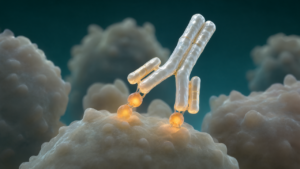
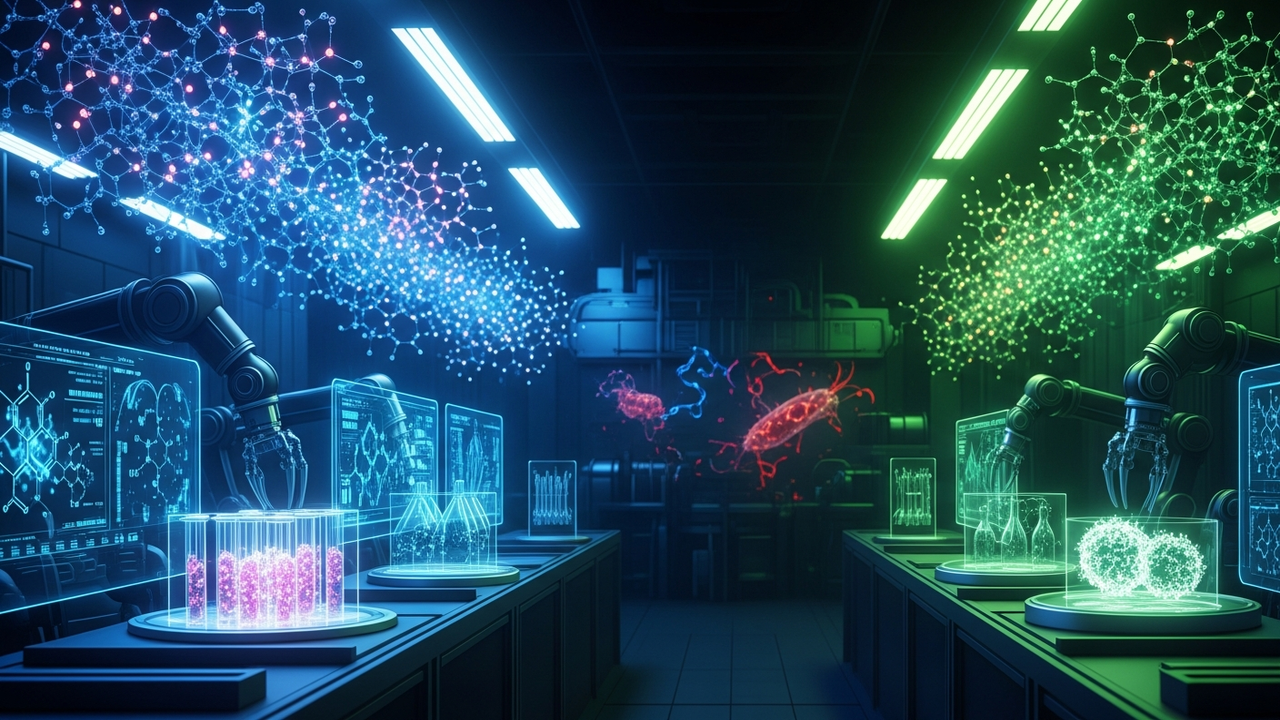
AI-driven drug discovery, despite significant advancements, is reportedly encountering new challenges. While chemical models have demonstrated success in accelerating R&D through efficient target identification and the generation of novel molecular structures, biological models still face the critical ‘valley of death’ – the difficult transition from basic research to practical application – in determining a drug’s ultimate value. Progress in biological models is now highlighted as pivotal for the industry’s success, indicating a crucial bottleneck in the current AI drug discovery pipeline.
Technical / Clinical Details
AI’s success in chemical modeling primarily manifests in in silico compound design, synthesis pathway prediction, and pharmacokinetic (ADME) property forecasting. Deep learning models, for instance, can rapidly generate molecules with high affinity for specific targets and propose structures optimized for synthesizability, significantly reducing the time and cost associated with wet lab experiments. Conversely, the challenge in biological models lies in accurately predicting whether AI-generated molecules will elicit the desired biological responses in cells and organisms, and crucially, if they possess off-target effects. Accurately modeling complex biological pathways, multifactorial diseases, and individual variability remains a substantial R&D hurdle for AI.
Background & Context
AI drug discovery is anticipated as a breakthrough solution to overcome the inefficiencies and high failure rates plaguing traditional drug development. Initial successes have largely centered on chemical aspects, addressing ‘what drugs can be designed.’ However, the industry’s true need is for AI to inform ‘what drugs should be developed,’ focusing on biological and clinical value. This difficulty in biological validation represents a major barrier for AI drug discovery pipelines to advance into clinical stages. Bridging this gap requires the construction of high-quality biological datasets, improved interpretability of AI models, and close collaboration between biologists and AI researchers.
Strategic Significance & Outlook
For AI drug discovery to truly realize its full potential, it is imperative to translate the successes of chemical models into advancements in biological models, thereby traversing the ‘valley of death.’ Future AI research will likely focus on improving the accuracy of in silico biological response predictions, modeling complex disease mechanisms, and integrating in vitro/in vivo experimental data. This convergence is expected to lead to a higher probability of clinical success for AI-designed molecules. Overcoming this challenge is a critical step for AI to rapidly and efficiently develop next-generation medicines, shaping the future of the entire pharmaceutical industry and delivering transformative therapies to patients worldwide.
Get our weekly technology intelligence — free
Receive an infographic that lets you judge at a glance whether each field’s analysis report is worth reading.
Subscribe Free — Weekly Tech Intelligence
By subscribing, you’ll receive Troy-Technical’s weekly technology intelligence newsletter.
- Your email and selected fields are used only to deliver the newsletter.
- We never share your information with third parties.
- You can unsubscribe anytime via the link in each email.
See our Privacy Policy for details.
Takes about a minute · Unsubscribe anytime