Key Findings
Rigetti Computing, a pioneer in superconducting quantum computing, announced its second-quarter 2026 financial results, concurrently reporting continuous progress on key technological milestones towards achieving quantum advantage. Its “Cepheus-1-108Q” system achieved approximately 99.9% median single-qubit gate fidelity and, critically, 99.1% median two-qubit gate fidelity with a rapid gate speed of 60 nanoseconds. These advancements demonstrate the company’s steady execution of its roadmap to leverage a chiplet-based, open modular architecture for a system with approximately 1,000 qubits within three years.
Technical and Financial Details
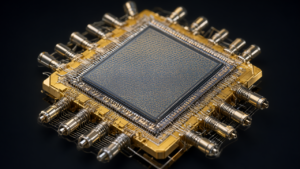
Rigetti’s latest quantum processor, the Cepheus-1-108Q system, features 108 superconducting qubits, placing its performance at the forefront of the industry. The 99.9% single-qubit gate fidelity signifies highly reliable individual qubit operations. However, the true complexity of quantum computation is unlocked by the fidelity of two-qubit gates, which link multiple qubits. The achieved 99.1% two-qubit gate fidelity indicates low error rates, enabling deeper quantum circuits, an essential component for paving the way to fault-tolerant quantum computing. Furthermore, the rapid 60-nanosecond gate speed allows for more computational steps within limited coherence times, enhancing the capability to execute practical quantum algorithms.
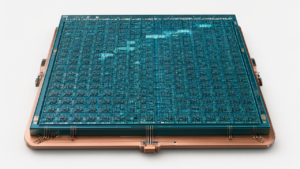
From a financial perspective, specific revenue and net income figures were not explicitly disclosed, but the company maintains investor confidence through its technological roadmap progress. Rigetti’s strategy emphasizes its proprietary manufacturing process and a modular architecture that combines chiplets (small, independent chips) to build larger processors. This approach provides flexibility in system design and manufacturing, facilitating easier scaling of qubit counts.
Background and Industry Context
The quantum computing field is characterized by multiple technological modalities (superconducting, ion traps, neutral atoms, etc.) competing to improve performance and scaling. Superconducting qubits are widely adopted by major players like Google and IBM, boasting strengths in high-speed operation and potential for integration. Rigetti’s achievements demonstrate consistent progress in this competitive arena, particularly in both gate fidelity and qubit count. High fidelity and sufficient qubit counts are indispensable for achieving quantum advantage, and Rigetti’s technological developments are crucial towards these goals.
Strategic Significance and Outlook
Rigetti’s roadmap, aiming to develop systems with approximately 1,000 qubits and even higher gate fidelities within three years, signals the next major leap in quantum computing. Its chiplet-based, open modular architecture offers a flexible pathway for future scaling to thousands or even millions of qubits. This technological progress will accelerate the practical application of quantum computers for complex problems across various industries, including chemistry, materials science, finance, and machine learning. Rigetti’s continuous innovation is expected to push the boundaries of superconducting quantum computing and play a significant role in making the era of quantum advantage a reality.
Get our weekly technology intelligence — free
Receive an infographic that lets you judge at a glance whether each field’s analysis report is worth reading.
Subscribe Free — Weekly Tech Intelligence
By subscribing, you’ll receive Troy-Technical’s weekly technology intelligence newsletter.
- Your email and selected fields are used only to deliver the newsletter.
- We never share your information with third parties.
- You can unsubscribe anytime via the link in each email.
See our Privacy Policy for details.
Takes about a minute · Unsubscribe anytime