Background
Egypt, blessed with abundant solar resources, is aggressively pursuing ambitious targets to escalate the proportion of renewable energy within its national grid. The nation’s burgeoning economy and growing population demand increasingly reliable and sustainable power sources. Pioneering projects like Obelisk are instrumental in achieving energy independence, diversifying power generation away from fossil fuels, and meeting crucial national decarbonization objectives. This development perfectly aligns with a global trend favoring hybrid renewable energy plants capable of offering comprehensive grid services and a firm, dispatchable power output.
Key Findings
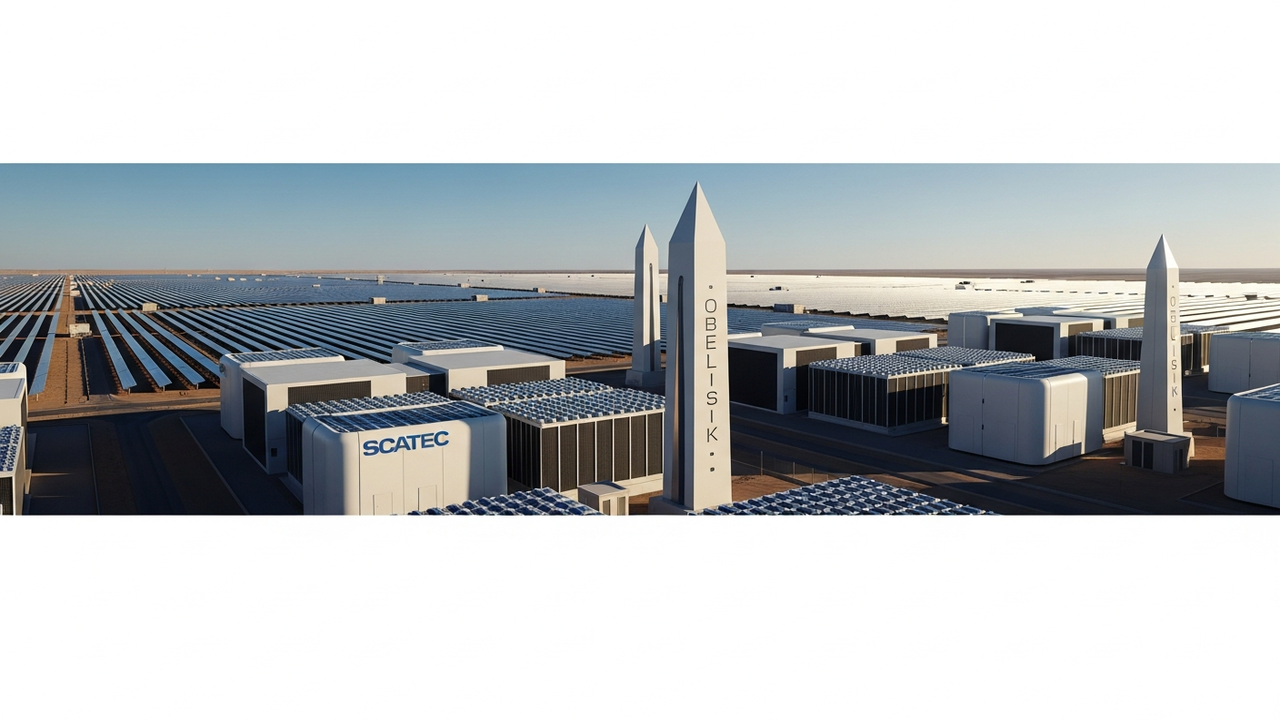
Scatec, a prominent provider of renewable energy solutions, has officially commenced full commercial operations for its gigawatt-scale Obelisk solar-plus-storage project in Egypt. This monumental undertaking, which integrates 1.125 GW of solar photovoltaic (PV) capacity with a robust Battery Energy Storage System (BESS), now stands as one of Africa’s largest hybrid solar and battery installations.
Engineered for optimal renewable energy integration and enhanced grid stability, the Obelisk project’s hybrid design is a cornerstone of its operational efficacy. Key technical specifications include 1.125 gigawatts (GW) of installed solar PV panels designed for efficient energy generation across its vast footprint. While specific BESS capacity figures are not fully disclosed, its ‘gigawatt-scale’ integration strongly implies substantial storage capabilities crucial for mitigating the inherent intermittency of solar generation. This enables the facility to deliver consistent and reliable power, even during non-sunlight hours or periods of peak demand. The sophisticated hybrid system facilitates dynamic power dispatch, storing surplus solar energy when generation surpasses demand and releasing it precisely when needed, thereby significantly bolstering the grid’s operational flexibility and overall reliability.
The generated electricity will be sold to Egypt Aluminium under a long-term, 25-year power purchase agreement (PPA), which not only secures a stable revenue stream for the project but also provides predictable energy costs for the industrial off-taker, underpinning the project’s long-term financial robustness and viability. Such hybrid configurations are becoming indispensable for accelerating renewable energy adoption, providing firm and dispatchable power that traditional intermittent sources cannot offer alone.
Recognizing Egypt as a pivotal long-term growth market, Scatec plans significant further expansion, aiming to add an additional 4.3 GW of renewable energy capacity and 4.1 GWh of BESS within the country. This strategic commitment underscores Egypt’s burgeoning potential as a leading hub for advanced renewable energy and storage technology adoption across Africa and globally. The success and eventual expansion of the Obelisk project are expected to serve as a scalable blueprint for other African nations pursuing large-scale integration of renewables with storage, attract further international investment into Egypt’s rapidly growing clean energy sector, and substantially strengthen the national grid’s resilience, thereby supporting continued industrial growth and public services. Ultimately, this project represents a critical advancement in the region’s energy transition, demonstrating the transformative potential of large-scale, integrated renewable solutions.
Get our weekly technology intelligence — free
Receive an infographic that lets you judge at a glance whether each field’s analysis report is worth reading.
Subscribe Free — Weekly Tech Intelligence
By subscribing, you’ll receive Troy-Technical’s weekly technology intelligence newsletter.
- Your email and selected fields are used only to deliver the newsletter.
- We never share your information with third parties.
- You can unsubscribe anytime via the link in each email.
See our Privacy Policy for details.
Takes about a minute · Unsubscribe anytime