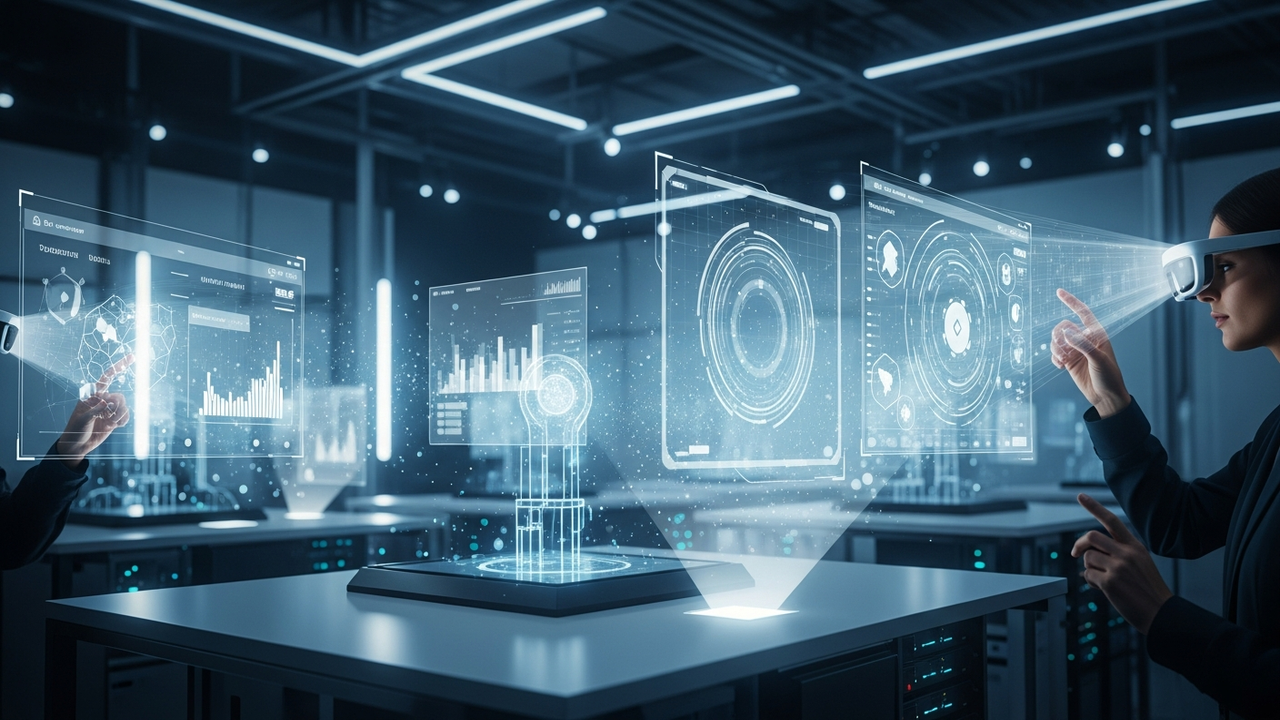
Spatial computing is emerging as the next-generation computing paradigm that enables the fusion of the physical and digital worlds. This revolutionary approach is realized through the integration of a wide array of advanced technologies, including Artificial Intelligence (AI), computer vision, Augmented Reality (AR), Virtual Reality (VR), Mixed Reality (MR), sophisticated sensor technology, cameras, spatial mapping, edge computing, and cloud computing. At its core, spatial computing allows digital systems to not merely display information but to perceive, comprehend, and meaningfully interact with the physical environment in real-time.
Technological Components and Functionality
The successful implementation of spatial computing relies on several critical technologies:
- **AI and Computer Vision**: Identify and interpret objects, people, and environments within physical spaces, enabling systems to understand real-world context.
- **AR/VR/MR**: Provide interfaces for users to overlay digital content onto the physical world or to experience full immersion, enhancing visual engagement and interaction quality.
- **Sensors and Cameras**: Collect real-time environmental data, supplying information for spatial mapping. This includes LiDAR, depth sensors, and Inertial Measurement Units (IMUs).
- **Spatial Mapping**: Construct digital twins of physical spaces, allowing systems to localize themselves and navigate within the environment, ensuring stable placement of digital objects in physical space.
- **Edge and Cloud Computing**: Efficiently distribute real-time processing and large-scale data analysis and storage. This involves immediate processing on edge devices working in tandem with complex computations in the cloud.
The integration of these technologies enables novel applications previously considered impossible. Examples include factory workers receiving real-time diagnostic information on machinery via AR headsets, architects visualizing building designs overlaid onto real spaces, or autonomous vehicles navigating safely by fully understanding their surroundings.
Major Tech Investments and Market Trends
Recognizing the immense potential of this field, leading technology companies are making strategic investments worth billions of dollars into spatial computing platforms. Companies such as Apple, Meta, Microsoft, and Google are competing to build their own hardware (e.g., AR/VR headsets) and software (e.g., spatial mapping SDKs) ecosystems. Market research forecasts exponential growth for the spatial computing market in the coming years, indicating its transformative potential across industries including entertainment, healthcare, manufacturing, retail, and education.
Future Outlook
Spatial computing is more than a mere technological advancement; it holds the potential to fundamentally transform human-digital interaction. As the physical world becomes the ‘interface’ and digital information seamlessly blends into the environment, users will experience more intuitive and immersive interactions. This ‘next computing revolution’ is expected to profoundly impact all aspects of our work, learning, play, and daily lives.
Source: https://www.ekascloud.com/our-blog/spatial-computing-the-next-computing-revolution/3805
Get our weekly technology intelligence — free
Receive an infographic that lets you judge at a glance whether each field’s analysis report is worth reading.
Subscribe Free — Weekly Tech Intelligence
By subscribing, you’ll receive Troy-Technical’s weekly technology intelligence newsletter.
- Your email and selected fields are used only to deliver the newsletter.
- We never share your information with third parties.
- You can unsubscribe anytime via the link in each email.
See our Privacy Policy for details.
Takes about a minute · Unsubscribe anytime