Key Findings
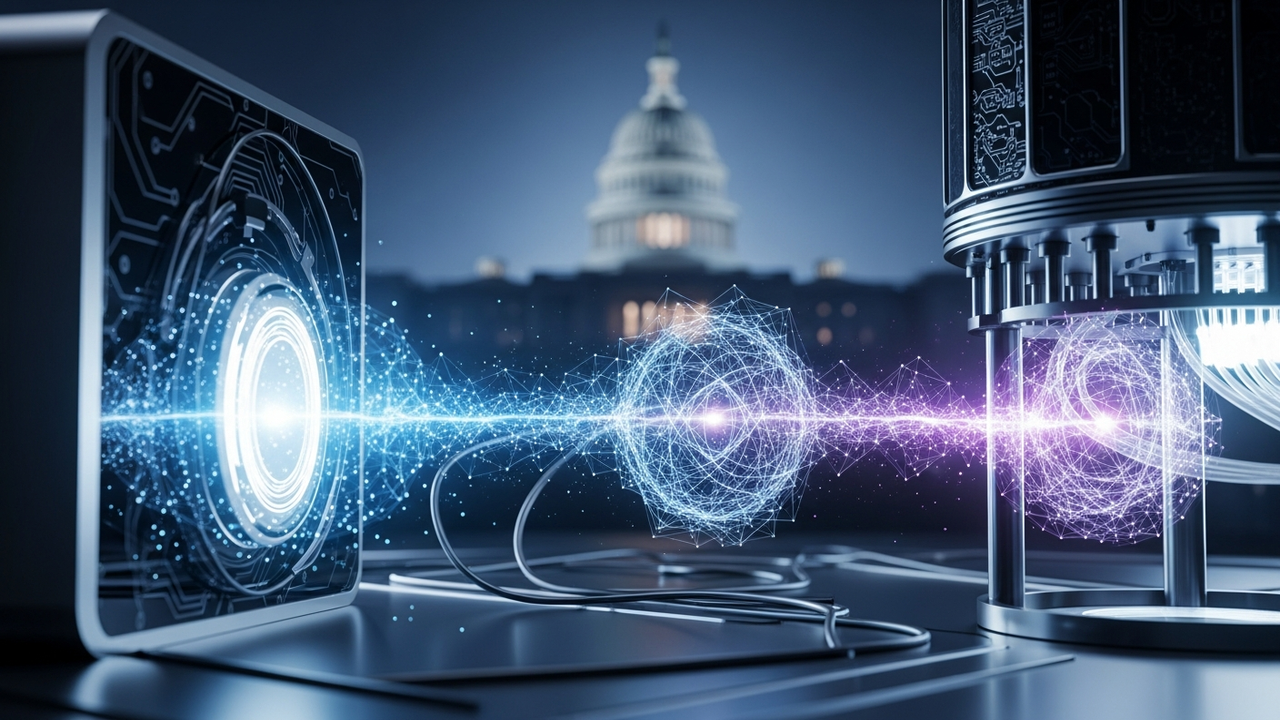
The U.S. Congress is demonstrating a significant move to substantially increase federal funding for quantum research and development, driven by intensifying international competition in quantum technology. Specifically, the proposed House defense bill includes a plan to boost annual military-related quantum technology spending by 68%, reaching $567 million. This bipartisan effort aims to fortify U.S. leadership in quantum technologies to ensure national security and economic supremacy.
Policy and Funding Details
This increased allocation follows over $2 billion in federal quantum investments announced by the previous administration in May 2026. The specific budget earmark of $567 million in the defense bill will provide critical resources for the Department of Defense to accelerate cutting-edge research in areas such as quantum computing, quantum sensing, and quantum communications. These technologies hold immeasurable potential for military applications, including cryptographic decryption, intelligence gathering, precision navigation, and secure communication networks.
Bipartisan members of Congress recognize that U.S. allies and competitors are making substantial investments in quantum technologies, and there is a consensus that strategic funding is necessary to prevent the U.S. from falling behind in this crucial domain. These funds are slated to strengthen collaboration among universities, federal laboratories, and private companies, fostering innovation across the entire quantum ecosystem.
Background and Context
Quantum Information Science and Technology is positioned as one of the most transformative technologies of the 21st century, and its development race is central to the international struggle for technological hegemony. China, the European Union, and the United Kingdom, among others, have each launched multi-billion dollar national programs to vigorously advance quantum technology development. In the U.S., the National Quantum Initiative Act has supported federal quantum research, but this additional funding will accelerate both its pace and scale. Significant investment from the defense budget clearly indicates that quantum technology is seen not just as a realm of scientific research, but as an urgent national security imperative.
Strategic Significance and Outlook
The substantial increase in federal funding for quantum development will have a profound impact on the U.S. quantum ecosystem. This is expected to strengthen the entire supply chain, from basic research to applied research and prototype development, thereby accelerating the commercialization of quantum technologies. Investment in the military sector, in particular, will stimulate the creation of new defense technologies, potentially dramatically enhancing U.S. defense capabilities. This bipartisan effort will serve as a powerful impetus for the U.S. to establish scientific, economic, and strategic leadership in the quantum era.
Source: https://quantumzeitgeist.com/bipartisan-congress-moves-to-boost-quantum-funding/
Get our weekly technology intelligence — free
Receive an infographic that lets you judge at a glance whether each field’s analysis report is worth reading.
Subscribe Free — Weekly Tech Intelligence
By subscribing, you’ll receive Troy-Technical’s weekly technology intelligence newsletter.
- Your email and selected fields are used only to deliver the newsletter.
- We never share your information with third parties.
- You can unsubscribe anytime via the link in each email.
See our Privacy Policy for details.
Takes about a minute · Unsubscribe anytime