Key Findings
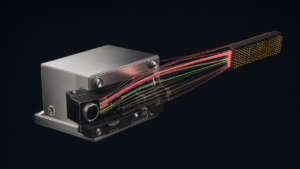
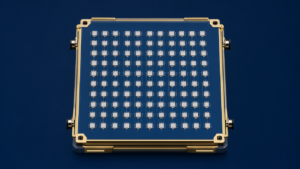
Infleqtion has announced a groundbreaking achievement in quantum computing, successfully generating 30 entangled logical qubits from a mere 80 physical qubits on its Sqale neutral atom quantum computing platform. This accomplishment establishes a pivotal milestone on the path to fault-tolerant quantum computing, promising significant advancements in hardware efficiency and the reliability of quantum operations.
Technical Details
This remarkable feat was realized through an innovative approach combining AI-assisted discovery with tightly integrated hardware-software co-design. Specifically, this co-design methodology led to a halving of the physical gates required to execute key logical operations. According to Infleqtion, the achieved 30 logical qubits exhibit a signal strength approximately 1000 times more powerful than the background noise, providing robust experimental verification of their stability and performance. Neutral atom systems are recognized as a promising quantum modality due to their high scalability and coherence times, and this achievement further validates their potential.
Background & Context
Building fault-tolerant quantum computers necessitates correcting errors in physical qubits and forming more stable logical qubits. Historically, constructing a single logical qubit has typically required hundreds to thousands of physical qubits, making efficient utilization of physical qubits a significant challenge across the industry. Infleqtion’s success dramatically improves the efficiency of this physical-to-logical qubit conversion, offering a powerful solution to an existing bottleneck. This efficient realization of logical qubits on a neutral atom platform could enhance Infleqtion’s competitive standing against other mainstream hardware technologies like superconducting and ion traps.
Strategic Significance & Outlook
The achievement of 30 entangled logical qubits represents a critical step towards the realization of larger, more useful fault-tolerant quantum computers. This technology lays the groundwork for performing complex computations in areas such as quantum chemistry simulation, novel materials discovery, and drug development with significantly higher precision and reliability. Infleqtion aims to leverage this progress to further scale logical qubit counts and accelerate the development of practical quantum applications. The AI and co-design approach itself holds the potential to become a standard methodology in future quantum hardware development, fostering industry-wide innovation.
Get our weekly technology intelligence — free
Receive an infographic that lets you judge at a glance whether each field’s analysis report is worth reading.
Subscribe Free — Weekly Tech Intelligence
By subscribing, you’ll receive Troy-Technical’s weekly technology intelligence newsletter.
- Your email and selected fields are used only to deliver the newsletter.
- We never share your information with third parties.
- You can unsubscribe anytime via the link in each email.
See our Privacy Policy for details.
Takes about a minute · Unsubscribe anytime