Key Findings
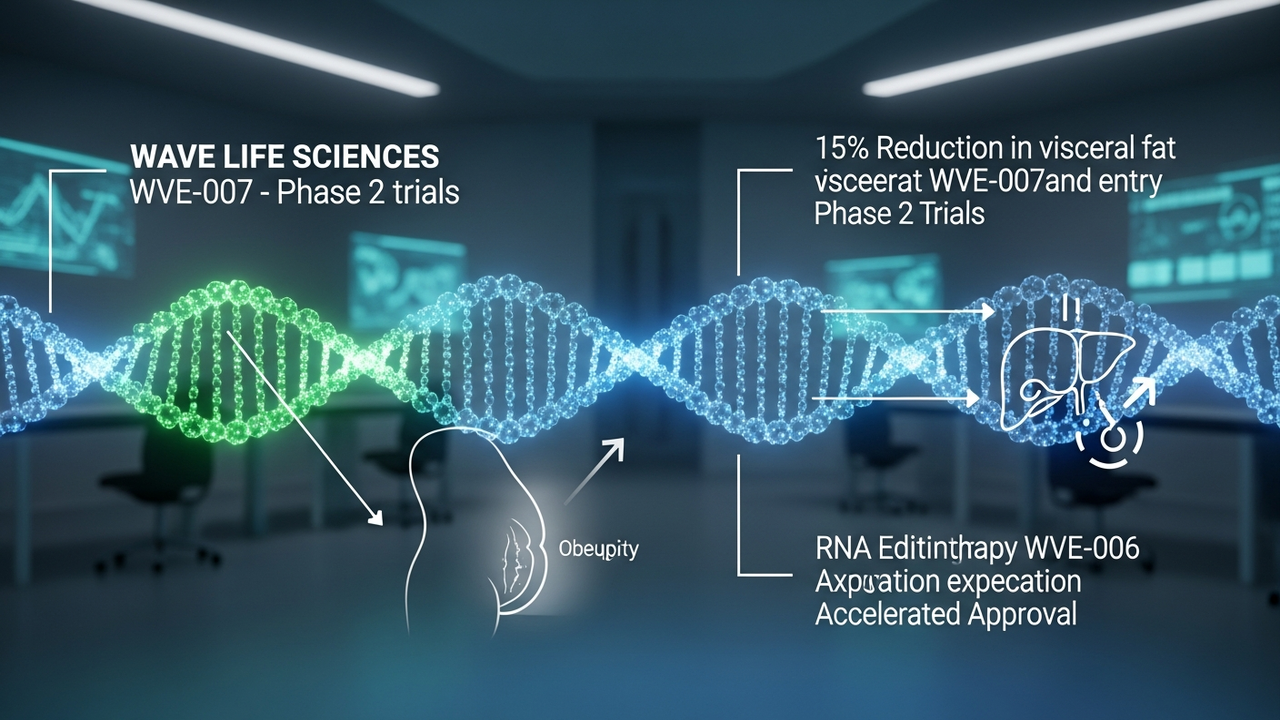
Wave Life Sciences has announced groundbreaking data for its obesity therapeutic candidate, siRNA therapy WVE-007, which demonstrated a 15% reduction in visceral fat after a single injection in its Phase 1 trial, leading to its progression into Phase 2a. This agent targets the INHBE gene in the liver and offers a novel mechanism for fat reduction without impacting appetite. Furthermore, the company’s RNA editing therapy, WVE-006, for Alpha-1 antitrypsin deficiency (AATD) shows potential for accelerated approval, and WVE-N531 for Duchenne muscular dystrophy (DMD) has yielded promising clinical data, underscoring Wave’s robust pipeline in RNA-based therapeutics.
Technical / Clinical Details
WVE-007 utilizes siRNA (small interfering RNA) technology to suppress the expression of the INHBE gene in the liver. The INHBE gene is believed to play a role in regulating adipocyte proliferation and differentiation, and its suppression is expected to lead to a reduction in visceral fat. Phase 1 data suggested a potential duration of action of 6-12 months after a single injection, indicating a highly convenient treatment option for patients. WVE-006 is a GalNAc-conjugated RNA editing therapy (AIMers) for AATD, designed to correct misfolded protein transcripts without altering the underlying DNA sequence. This unique mechanism aims to reduce the production of mutant protein responsible for the disease and restore normal Alpha-1 antitrypsin levels. WVE-N531 targets splicing anomalies in DMD patients. Wave’s PRISM® RNA medicine platform integrates diverse modalities including RNAi, RNA editing, antisense silencing, and splicing, enabling highly personalized genetic therapeutic approaches.
Background & Context
Obesity is a global health crisis, demanding new therapeutic options that are effective, safe, and provide sustained weight loss. WVE-007’s mechanism, independent of appetite suppression, offers a distinct approach compared to existing GLP-1 receptor agonists and could serve as a complementary treatment option. AATD is a rare genetic disorder causing severe lung and liver diseases, and disease-modifying therapies like WVE-006 hold the potential to dramatically improve patients’ quality of life. RNA-based therapies have garnered significant attention post-COVID-19 vaccine successes, with broad applications anticipated from genetic to chronic diseases. Wave Life Sciences, with its diverse RNA platform, stands at the forefront of this rapidly evolving field.
Strategic Significance & Outlook
Should WVE-007 achieve positive results in its Phase 2 trials and continue clinical development, it could introduce a new paradigm in the obesity treatment market. Its appetite-independent mechanism, in particular, may enable combination therapies with existing drugs or application to new patient populations. The potential for accelerated approval of WVE-006 signifies earlier access to a crucial treatment option for AATD patients, elevating the importance of RNA editing technology in rare disease therapy. Wave Life Sciences’ PRISM® platform, with its multifaceted RNA modalities, holds promise for developing innovative therapies in other high unmet need disease areas. Future clinical trial data and regulatory decisions will be pivotal in defining the market position of Wave’s RNA portfolio.
Source: https://finance.biggo.com/news/fdd76dd75d8ccff5
Get our weekly technology intelligence — free
Receive an infographic that lets you judge at a glance whether each field’s analysis report is worth reading.
Subscribe Free — Weekly Tech Intelligence
By subscribing, you’ll receive Troy-Technical’s weekly technology intelligence newsletter.
- Your email and selected fields are used only to deliver the newsletter.
- We never share your information with third parties.
- You can unsubscribe anytime via the link in each email.
See our Privacy Policy for details.
Takes about a minute · Unsubscribe anytime