Background
Quantum computing, with its immense computational power, holds the potential to revolutionize diverse fields, from drug discovery and materials science to financial modeling. However, a fundamental challenge lies in the inherent instability of quantum qubits, which are highly susceptible to environmental noise and prone to frequent errors. Overcoming this error problem through robust quantum error correction (QEC) is one of the most critical hurdles to building practical quantum computers. Reducing the error rates of logical qubits—where multiple physical qubits combine to form a more stable computational unit—is paramount for improving computational reliability and ultimately enabling the realization of large-scale, fault-tolerant quantum machines. Research institutions and companies worldwide are intensely competing to surmount this challenge, making every advancement a significant step in the global quantum technology race.
Key Findings and Innovations
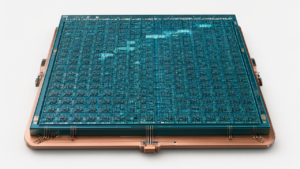
A research team at the University of Arizona has made a pivotal breakthrough in quantum error correction, successfully realizing a substantial reduction in logical qubit error rates. This achievement directly addresses one of the most formidable challenges in scalable quantum computing, paving the way for the eventual development of fault-tolerant quantum computers. Their progress is rooted in the surface code technique, a leading approach in quantum error correction that combines multiple physical qubits to form a single ‘logical qubit.’ By detecting and correcting errors that occur on individual physical qubits, the surface code significantly enhances overall computational reliability. The Arizona team has successfully lowered the logical qubit error rate to unprecedented levels using this method, a critical step that enables the execution of longer and more complex quantum algorithms without being hampered by noise.
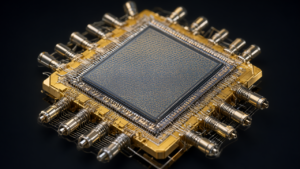
In a parallel development, Canadian startup Nord Quantique has announced the development of a novel qubit design. They claim this new architecture holds the potential to significantly reduce the number of physical qubits required to construct fault-tolerant quantum computers. Such an advancement could dramatically lower the cost and complexity of quantum hardware, accelerating the path to commercially viable quantum systems. These reductions in logical qubit error rates, coupled with hardware efficiency innovations, represent an essential advancement for quantum computing to transition from laboratory demonstrations to practical technologies applicable to real-world problems. The maturation of these technologies will help overcome the limitations of current NISQ (Noisy Intermediate-Scale Quantum) devices, bringing closer the day when truly fault-tolerant quantum computers become a reality and unlocking groundbreaking applications with widespread societal impact.
Get our weekly technology intelligence — free
Receive an infographic that lets you judge at a glance whether each field’s analysis report is worth reading.
Subscribe Free — Weekly Tech Intelligence
By subscribing, you’ll receive Troy-Technical’s weekly technology intelligence newsletter.
- Your email and selected fields are used only to deliver the newsletter.
- We never share your information with third parties.
- You can unsubscribe anytime via the link in each email.
See our Privacy Policy for details.
Takes about a minute · Unsubscribe anytime