Key Findings
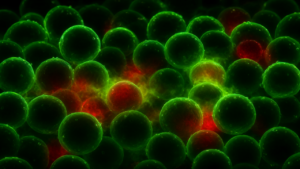
A recent preprint published on bioRxiv introduces ‘ELDR-Glo,’ a novel genetically-encoded fluorescent biosensor capable of estimating the relative age of cells or the time elapsed since their last cell cycle completion. This innovative tool represents a significant advancement in cell biology for better understanding cellular aging and quiescent states.
Technical and Clinical Details
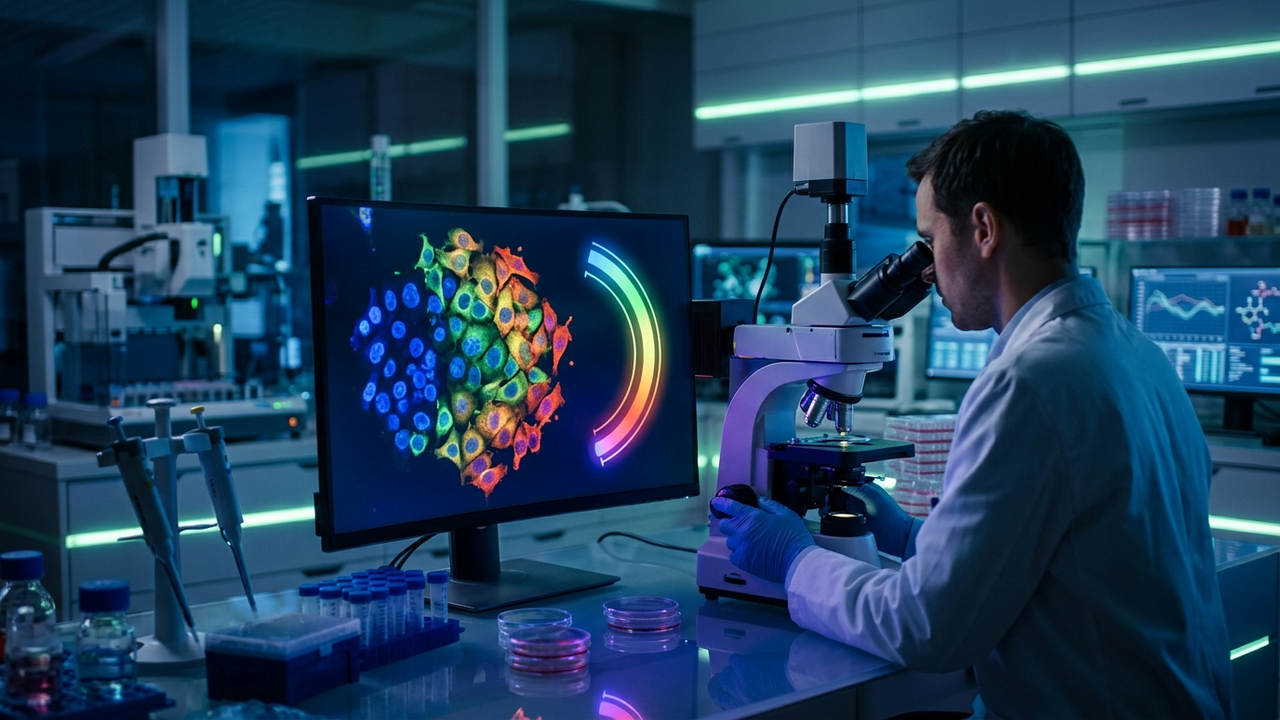
The ELDR-Glo biosensor ingeniously integrates a protein degradation mechanism coupled with DNA replication during the S phase, a slowly maturing mCherry fluorescent protein, and a normalization module. As a cell enters S phase, the fluorescent signal is degraded. Subsequently, as the cell completes division and enters the G0 (quiescent) phase, the mCherry protein slowly accumulates, with its fluorescence intensity serving as a direct marker for the time elapsed since the cell cycle. This characteristic allows ELDR-Glo to effectively differentiate between ‘early G0 cells,’ which have recently divided, and ‘late G0 cells,’ which have been in quiescence for an extended period. The research demonstrates its compatibility with established cell analysis techniques such as multiplexed immunofluorescence and flow cytometry, allowing for easy integration into existing experimental workflows.
Background and Industry Context
Cellular aging and quiescent states (G0 phase) play pivotal roles in various biological phenomena, including cancer progression, tissue regeneration, and the aging process itself. However, quantitative and high-precision tools to assess when and for how long cells have been quiescent have been limited. Traditional methods primarily rely on measuring the absence of cell division markers or expression levels of specific RNAs and proteins, which do not directly indicate the passage of time since the last cycle. The development of ELDR-Glo overcomes these challenges by essentially capturing the cell’s ‘memory’ as a fluorescent signal. This provides researchers with a powerful means to unravel the mechanisms underlying cell fate decisions, stem cell behavior, and age-related disease progression in greater detail.
Strategic Significance and Outlook
Genetically-encoded biosensors like ELDR-Glo are poised to have a broad impact across fundamental and applied research. They are expected to provide invaluable insights into stem cell differentiation and self-renewal, the mechanisms of cancer cell reactivation from quiescence, and the exploration of causes for age-related tissue degradation. In the future, this technology could be leveraged for developing diagnostic tools that track physiological cell states in real-time, predict disease progression, and improve cell quality control systems in regenerative medicine. ELDR-Glo holds the potential to deepen our understanding of dynamic life processes at the cellular level and accelerate the development of new therapies and diagnostic methods.
Source: https://www.biorxiv.org/content/10.64898/2026.07.04.736063v2
Get our weekly technology intelligence — free
Receive an infographic that lets you judge at a glance whether each field’s analysis report is worth reading.
Subscribe Free — Weekly Tech Intelligence
By subscribing, you’ll receive Troy-Technical’s weekly technology intelligence newsletter.
- Your email and selected fields are used only to deliver the newsletter.
- We never share your information with third parties.
- You can unsubscribe anytime via the link in each email.
See our Privacy Policy for details.
Takes about a minute · Unsubscribe anytime