Key Findings
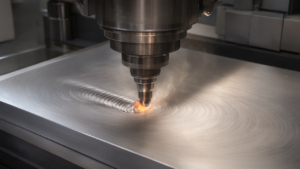
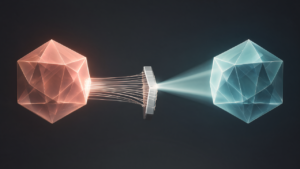
The FabDreamer project has established a pioneering “image-to-physical workflow” that converts visual content created by generative AI into physically manufacturable artifacts. This innovative system integrates AI-assisted design decomposition, editing, and structural integrity checks to ensure that complex shapes generated by AI reliably meet physical constraints, such as those imposed by additive manufacturing (3D printing), and can indeed be fabricated. This bridges the significant gap between the freedom of digital design and the constraints of real-world manufacturability, opening new creative possibilities for designers and engineers.
Technical / Clinical Details
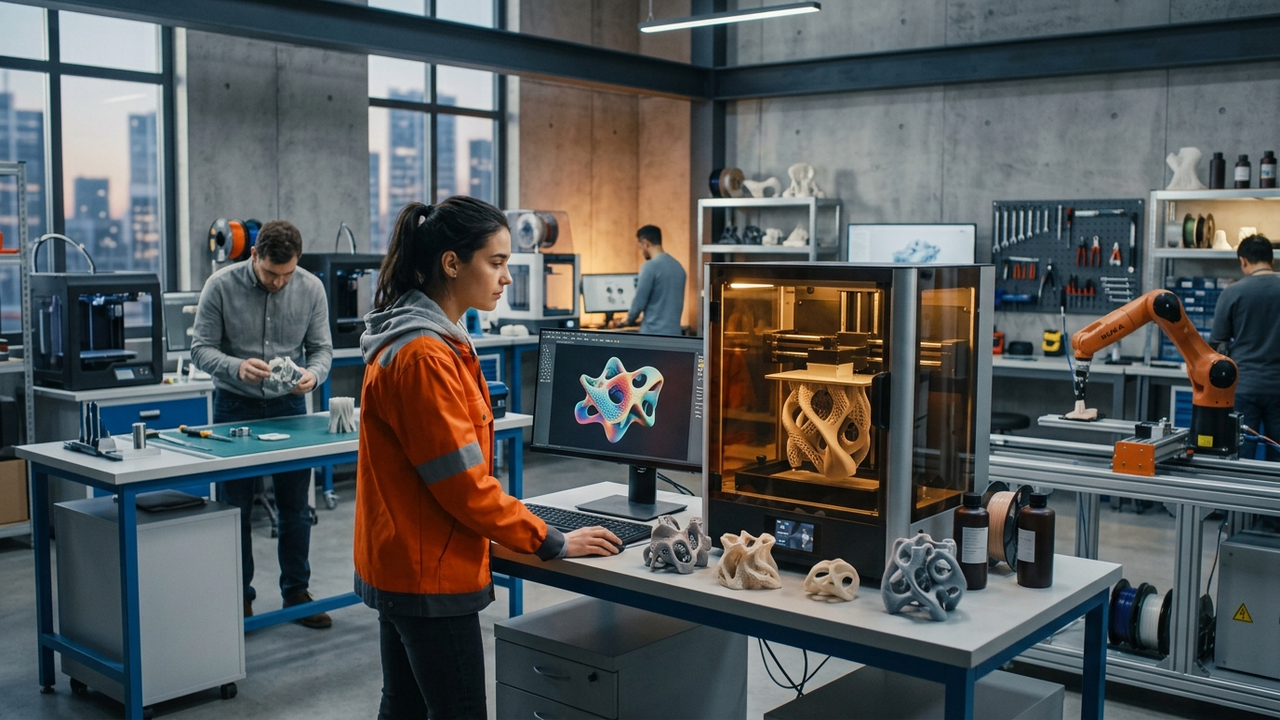
The FabDreamer workflow comprises several stages. Initially, users input text prompts or images, and a generative AI (such as a Stable Diffusion-like model) creates conceptual 3D shapes or 2D images. Next, this AI-generated visual content is evaluated for “physical manufacturability” by FabDreamer’s AI-assisted tools. Specifically, the generated designs are decomposed into layered structures suitable for additive manufacturing, and then edited to meet physical stability and strength requirements. For instance, the system automatically adds support structures to prevent unsupported sections from collapsing under gravity or thickens overly thin walls. Structural integrity checks utilize simulations and physics-based rendering to verify if the design is practically assemblable and functional. This iterative process refines the initial aesthetic ideas from AI into physically feasible objects. The system is particularly effective for designs with complex geometries or those requiring optimization considering material properties.
Background & Context
Generative AI has demonstrated astonishing capabilities in creating various digital content, including images, text, and 3D models. However, these AI-generated designs do not always account for physical manufacturability or practical constraints (e.g., material strength, manufacturing costs, ease of assembly). This has presented a significant disconnect between digital design and physical production. The emergence of systems like FabDreamer bridges this gap, directly channeling AI’s creative potential into real-world product development. Especially with advancements in additive manufacturing (AM) making complex geometries easier to produce, the integration of AI with manufacturing processes promises to drastically shorten the design-to-production timeline and enable the market introduction of more innovative products.
Strategic Significance & Outlook
FabDreamer’s achievements indicate a future where generative AI is not merely a design tool but is deeply integrated into the physical product manufacturing process. In the coming years, such “image-to-physical workflows” are expected to become prevalent across a wide array of fields, including architectural design, industrial design, fashion, and robotics. This will enable designers and engineers to collaborate with AI to create products with unprecedented functionality and aesthetic appeal. Furthermore, integration with materials science could allow AI to automatically generate manufacturable designs that account for specific material properties, accelerating sustainable manufacturing and personalized product production.
Source: https://arxiv.org/html/2608.13665v1
Get our weekly technology intelligence — free
Receive an infographic that lets you judge at a glance whether each field’s analysis report is worth reading.
Subscribe Free — Weekly Tech Intelligence
By subscribing, you’ll receive Troy-Technical’s weekly technology intelligence newsletter.
- Your email and selected fields are used only to deliver the newsletter.
- We never share your information with third parties.
- You can unsubscribe anytime via the link in each email.
See our Privacy Policy for details.
Takes about a minute · Unsubscribe anytime