Key Findings
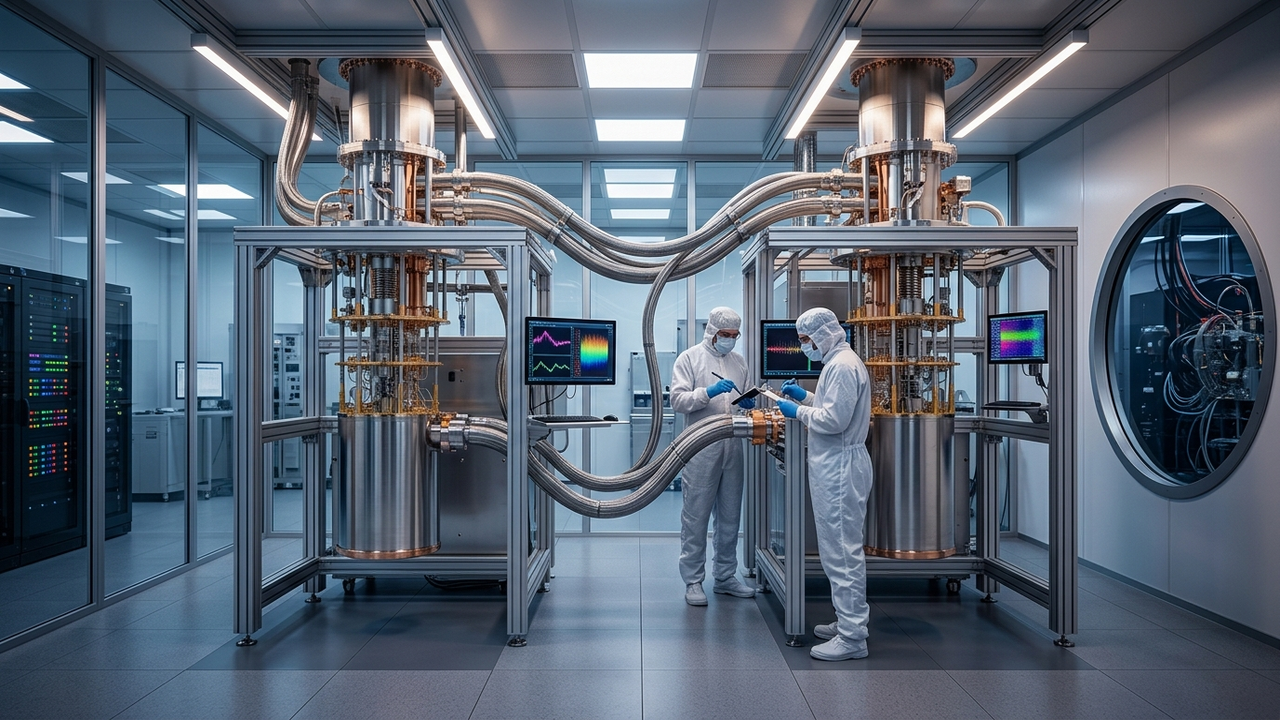
IBM has taken a pivotal step in its roadmap towards fault-tolerant quantum computing by successfully coupling two independent cryogenic modules within a single cooling environment. This achievement paves the way for the scalable physical infrastructure required to build large-scale quantum processors.
Technical / Clinical Details
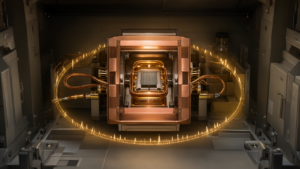
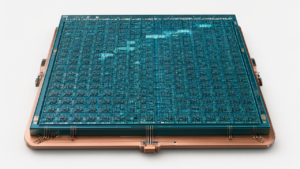
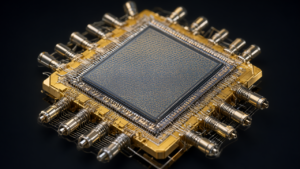
Quantum computers, particularly those based on superconducting qubits, necessitate operation in extremely cold cryogenic conditions. Traditionally, individual quantum chips have been cooled within their respective dilution refrigerators. However, to integrate hundreds or thousands of quantum chips into a fault-tolerant system, efficient connection and control within a single, larger cryogenic environment are essential. IBM’s demonstration addresses this challenge by physically and thermally coupling multiple cryogenic cooling units, maintaining stable ultracold conditions, and enabling communication between qubits. This modular approach provides the foundation for incrementally building massive quantum computers capable of housing millions of physical qubits in the future. Such systems are crucial for executing more complex quantum circuits and ultimately achieving quantum advantage.
Background & Context
In the field of quantum computing, the ultimate goal is not only to increase the number of qubits but also to construct ‘fault-tolerant’ systems that can withstand and correct errors. Achieving fault tolerance requires a vast number of physical qubits, leading to a exponential increase in the scale of cooling and control systems. Cryogenic cooling is indispensable for minimizing qubit decoherence, and its efficient scaling has been identified as one of the primary bottlenecks in the realization of fault-tolerant quantum computing. IBM has publicly announced its plan to deliver a fault-tolerant quantum computer, the ‘IBM Quantum Starling’ system, by 2029, and this recent achievement steadfastly advances that ambitious timeline.
Strategic Significance & Outlook
This progress in modular cryogenic system integration is critically important for IBM’s fault-tolerant quantum computing roadmap. This technology will enable future quantum computers to house significantly more qubits than current devices, allowing them to tackle more complex and practical problems. This holds the potential for groundbreaking discoveries in diverse fields such as materials science, drug discovery, and financial modeling. In parallel with hardware evolution, IBM is also focusing on quantum software and algorithm development to accelerate the maturity of the quantum ecosystem, aiming to deliver high-commercial-value quantum solutions.
Source: https://itinfrastructure.report/latest-news/ibm-quantum-systems
Get our weekly technology intelligence — free
Receive an infographic that lets you judge at a glance whether each field’s analysis report is worth reading.
Subscribe Free — Weekly Tech Intelligence
By subscribing, you’ll receive Troy-Technical’s weekly technology intelligence newsletter.
- Your email and selected fields are used only to deliver the newsletter.
- We never share your information with third parties.
- You can unsubscribe anytime via the link in each email.
See our Privacy Policy for details.
Takes about a minute · Unsubscribe anytime