Background
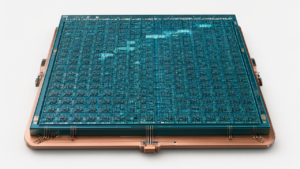
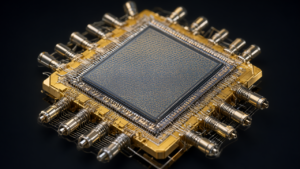
A primary hurdle in the practical realization of quantum computing is the inherent fragility of qubits, making them highly susceptible to noise-induced errors. To mitigate these errors and enable reliable computations, fault-tolerant quantum computers are essential. Fault tolerance is achieved by encoding information into ‘logical qubits,’ which are formed from an ensemble of physical qubits, and implementing sophisticated quantum error correction protocols. This, however, necessitates advanced engineering to integrate hundreds to thousands of physical qubits and maintain their stable, coherent operation within ultra-cryogenic environments. IBM has consistently pushed the boundaries of qubit count and performance with processors such as ‘Quantum Condor’ and ‘Nighthawk.’ This recent success in modular connection represents a crucial stride towards scaling these individual chips into truly large-scale systems. The ambitious 2029 target for their first fault-tolerant system is poised to significantly shape the industry’s broader roadmap.
Key Findings
IBM has successfully reached a critical engineering milestone on its path to realizing fault-tolerant quantum systems. The company demonstrated the successful connection and cryogenic cooling of two quantum computing modules within a single integrated environment. This achievement clearly paves the way for ‘IBM Quantum Starling,’ their first planned fault-tolerant quantum computer, anticipated to become operational by 2029.
Technical Details & Engineering Breakthrough
This breakthrough validates the efficacy of IBM’s innovative modular architecture for quantum computing. Each quantum module integrates individual quantum processors, which are then interconnected using IBM’s proprietary ‘L-coupler’ technology. This enables efficient and high-fidelity quantum state transfer between multiple chips. The L-coupler design is critical for maintaining quantum coherence across modules while ensuring robust, low-loss connectivity between distinct quantum computing units. The demonstrated integrated system achieves a stable cryogenic temperature of 4 Kelvin, approaching absolute zero, within a mere five days. This rapid cooldown is an essential operational requirement for large-scale quantum hardware deployments. Furthermore, the design allocates ample physical space for the complex wiring harnesses and control electronics, explicitly addressing scalability for integrating an increasing number of qubits in future iterations. This achievement underscores IBM’s comprehensive strategy: not only advancing individual quantum processor performance but also tackling the more formidable engineering challenge of integrating these components into truly large-scale, fault-tolerant quantum systems.
Strategic Significance & Outlook
IBM’s latest engineering milestone represents a critical inflection point for quantum computing, marking its transition from laboratory-scale experiments to the brink of commercially viable, large-scale systems. This successful modular design paradigm is foundational for the eventual construction of fault-tolerant quantum computers housing millions of physical qubits. Such systems promise to unlock solutions for previously intractable problems across domains such as drug discovery, advanced materials science, and complex financial optimization. The anticipated operational launch of ‘IBM Quantum Starling’ in 2029 is poised to accelerate the era of ‘quantum advantage,’ where quantum computing delivers demonstrable, real-world utility. This advancement is expected to significantly stimulate further investment in quantum technology and catalyze innovation across a broad spectrum of related industries.
Get our weekly technology intelligence — free
Receive an infographic that lets you judge at a glance whether each field’s analysis report is worth reading.
Subscribe Free — Weekly Tech Intelligence
By subscribing, you’ll receive Troy-Technical’s weekly technology intelligence newsletter.
- Your email and selected fields are used only to deliver the newsletter.
- We never share your information with third parties.
- You can unsubscribe anytime via the link in each email.
See our Privacy Policy for details.
Takes about a minute · Unsubscribe anytime