Key Findings
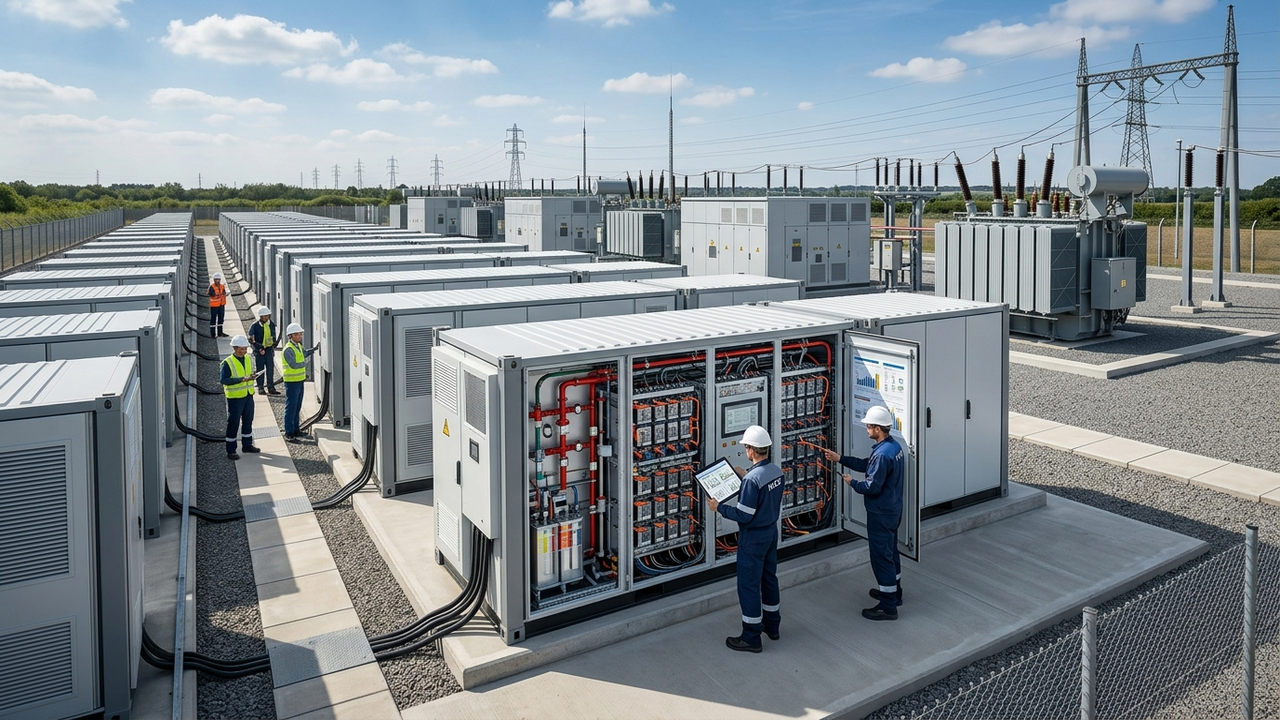
The battery energy storage system (ESS) industry is entering a significant period of transformation from 2026 onwards, marked by new regulatory requirements and structural shifts in the market. Specifically, the implementation of the new fire safety standard NFPA 855 (2026 edition) and the mandated advanced grid-forming (GFM) capabilities by ERCOT will dictate the direction of future projects.
Technical Details
- **Enhanced Fire Safety via NFPA 855 (2026 Edition)**: The new NFPA 855 standard mandates large-scale fire testing to prevent fire propagation between ESS units. This measure responds to the increasing number of ESS-related fire incidents and requires developers to prioritize thermal runaway containment and propagation prevention from the design stage. This regulation directly impacts the physical layout of battery systems, enclosure designs, and the selection of fire suppression systems.
- **ERCOT’s Advanced Grid Support Requirements and Grid-Forming (GFM) Capabilities**: Effective April 1, 2026, ERCOT’s (Electric Reliability Council of Texas) Advanced Grid Support requirements mandate the inclusion of grid-forming (GFM) capabilities in new storage projects. GFM functionality refers to the ability of a battery inverter to autonomously control grid voltage and frequency, providing ‘inertia’ and ‘short-circuit current’ to the system. Unlike traditional ‘grid-following’ inverters, GFM enables active contribution to grid stability.
- **Surging Data Center Demand**: These regulatory changes are occurring against a backdrop of rapidly escalating power demand from data centers driven by the explosion of AI workloads. Data centers require stable power supply, and GFM capabilities, which contribute to grid stability, are becoming indispensable as renewable energy integration advances.
- **Impact on Design and Procurement**: The new regulations and requirements compel developers to make different procurement and design decisions regarding battery chemistry selection, system configuration, safety measures, and inverter technology compared to previous years. GFM capabilities, in particular, may increase inverter cost and complexity but provide added value through grid stabilization contributions.
Background and Industry Context
As renewable energy integration advances globally, maintaining grid stability and reliability has become a major challenge. With the loss of grid-stabilizing features such as ‘inertia’ and ‘short-circuit current’ typically provided by conventional fossil fuel power plants, battery storage systems are expected to partially replace these functions. In regions with independent grids like Texas, GFM functionality is critically important for enhancing grid resilience. Furthermore, strengthening regulations to ensure ESS safety is an essential step towards improving overall industry reliability.
Strategic Significance and Outlook
NFPA 855 and ERCOT’s GFM requirements will significantly influence technological trends and the regulatory environment in the North American and, eventually, global ESS markets. Developers will need to adopt more advanced technologies and designs to comply with these requirements. This is expected to accelerate innovation for building safer and more robust grids. In the long term, GFM-enabled ESS are likely to become standard, and power grids will evolve to be more flexible and stable, centered around renewable energy and distributed energy resources.
Source: https://www.energy-storage.news/seven-trends-reshaping-battery-energy-storage-in-2026-and-beyond/
Get our weekly technology intelligence — free
Receive an infographic that lets you judge at a glance whether each field’s analysis report is worth reading.
Subscribe Free — Weekly Tech Intelligence
By subscribing, you’ll receive Troy-Technical’s weekly technology intelligence newsletter.
- Your email and selected fields are used only to deliver the newsletter.
- We never share your information with third parties.
- You can unsubscribe anytime via the link in each email.
See our Privacy Policy for details.
Takes about a minute · Unsubscribe anytime