Key Findings
Artificial Intelligence (AI) has revolutionized drug discovery over the past five years, delivering unprecedented speed and precision through breakthroughs in protein structure prediction, generative chemistry, and phenotypic screening. This technological leap is fundamentally transforming the R&D landscape, moving from slow, iterative processes to rapid, data-driven innovation.
Technical & Clinical Details
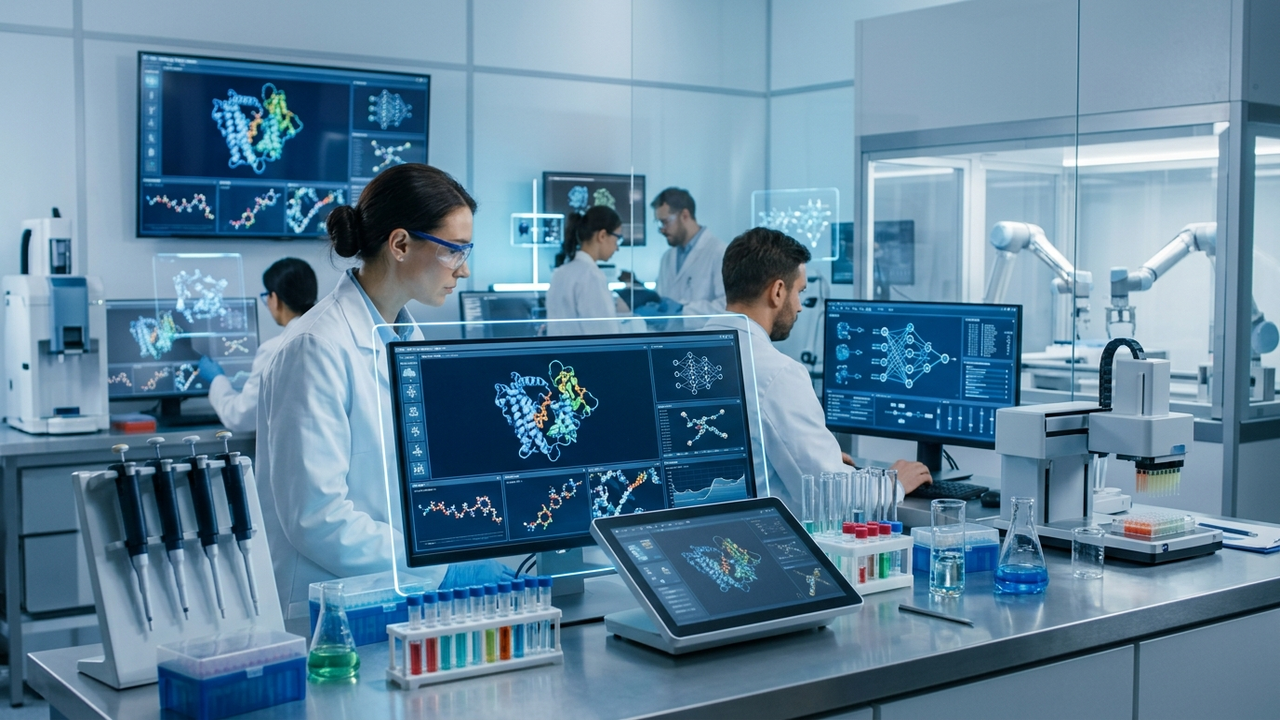
- Protein Structure Prediction: DeepMind’s AlphaFold, a seminal AI tool, has achieved near-experimental accuracy in predicting protein structures from amino acid sequences. This capability has eliminated a major bottleneck in structural biology, providing researchers with atomic-level insights into disease targets and facilitating the design of highly specific drug molecules.
- Generative Chemistry: AI companies such as Insilico Medicine and Exscientia are leveraging generative models (e.g., GANs, deep learning) to autonomously design and synthesize novel chemical compounds. These algorithms efficiently explore vast chemical spaces, learning from existing drug data to propose candidates with optimized properties, often bypassing traditional trial-and-error experimental approaches.
- Phenotypic Screening & Optimization: AI enhances phenotypic screening by enabling the high-throughput analysis of cellular responses to drug candidates, revealing complex biological interactions. Furthermore, AI is applied across the entire drug development pipeline, from early-stage target identification and lead optimization to predicting toxicity and optimizing clinical trial designs, thereby compressing timelines and improving success rates.
Background & Context
The traditional drug discovery paradigm is notoriously costly, time-consuming, and plagued by high failure rates. Against this backdrop, the pharmaceutical industry has increasingly turned to AI as a transformative solution. AI’s ability to process and derive insights from massive, complex biological and chemical datasets empowers researchers to identify patterns and predict molecular behaviors far beyond human capabilities. This data-driven approach promises to mitigate the inherent risks of drug development and propel a greater number of viable drug candidates into clinical stages.
Strategic Significance & Outlook
The future of drug discovery will likely feature a “hybrid workflow” that seamlessly integrates cutting-edge AI-native approaches with conventional experimental validation. Strategic partnerships between established pharmaceutical giants and agile AI biotechs are expected to proliferate, expanding AI’s application across therapeutic areas. AI is also poised to play a crucial role in advancing personalized medicine through precise biomarker identification and in tackling previously intractable diseases, marking a new era of intelligent medicine. The rapid progression from AI-designed molecules to clinical trials underscores the profound and enduring impact AI will have on the pharmaceutical industry.
Source: https://healthaiinsiders.com/ai-drug-discovery-update-2026/
Get our weekly technology intelligence — free
Receive an infographic that lets you judge at a glance whether each field’s analysis report is worth reading.
Subscribe Free — Weekly Tech Intelligence
By subscribing, you’ll receive Troy-Technical’s weekly technology intelligence newsletter.
- Your email and selected fields are used only to deliver the newsletter.
- We never share your information with third parties.
- You can unsubscribe anytime via the link in each email.
See our Privacy Policy for details.
Takes about a minute · Unsubscribe anytime


Comments