Key Findings
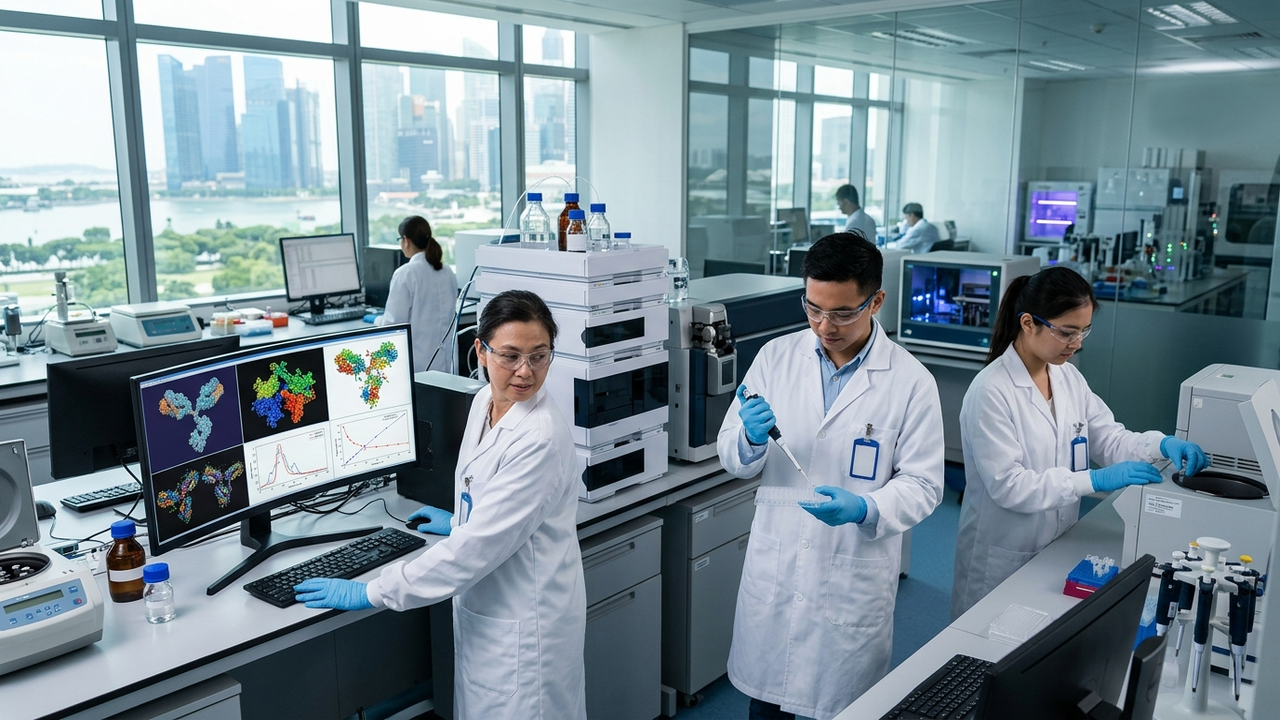
Researchers at the Bioprocessing Technology Institute (BTI) within Singapore’s Agency for Science, Technology and Research (A*STAR) have made a pivotal discovery for overcoming a major challenge in the manufacturing of next-generation bispecific antibodies (BsAbs). They successfully identified ‘labile regions’ within the complex structures of BsAbs that make them prone to degradation, thereby paving the way for the rational design and development of more stable and robust antibody therapeutics.
Technical & Clinical Details
- Challenges in BsAb Development: BsAbs are highly promising therapeutics due to their ability to simultaneously bind two different targets, offering greater specificity and diverse therapeutic effects than conventional monoclonal antibodies. However, their intricate molecular structures pose significant challenges in terms of manufacturing optimization, maintaining stability during storage, and predicting their degradation profiles in vivo post-administration. Instability issues such as aggregation and fragmentation directly impact product safety and efficacy.
- Behavior Under Stress Conditions: The BTI research team rigorously investigated the behavior of model bispecific antibodies under various stress conditions, including heat, pH fluctuations, oxidation, and shear stress. These accelerated degradation studies revealed that specific structural regions were significantly more susceptible to degradation than others.
- Identification of Vulnerable Regions: Utilizing advanced analytical techniques such as mass spectrometry and high-resolution liquid chromatography, the researchers confirmed that amide bond hydrolysis and specific side-chain modifications preferentially occurred at these identified ‘hot spots.’ These vulnerable regions serve as critical targets for stability enhancement in BsAb design. For example, particular hinge regions or specific antigen-binding sites were shown to carry higher risks of aggregation or fragmentation.
- Impact on Design: This discovery enables BsAb molecular design to strategically avoid these labile regions or incorporate stabilizing modifications, such as amino acid substitutions or conjugation strategies, early in the development process. This proactive approach can significantly improve the overall stability and manufacturability of the therapeutic product.
Background & Context
Bispecific antibodies hold immense therapeutic potential across a wide range of diseases, including cancer (e.g., T-cell engagers), autoimmune disorders, and infectious diseases. However, their manufacturing cost and stability challenges have historically been barriers to large-scale production and market entry. A*STAR’s research is crucial for addressing a key bottleneck in biopharmaceutical development and accelerating the commercialization of next-generation antibody drugs. Identifying and addressing stability issues during early development is particularly valuable, as it prevents costly late-stage failures and drastically reduces overall development timelines and expenses, offering substantial economic benefits to the pharmaceutical industry.
Strategic Significance & Outlook
The findings from BTI have broad applicability, extending beyond BsAbs to the design and development of other complex biopharmaceuticals, such as Antibody-Drug Conjugates (ADCs), fusion proteins, and gene therapy vectors. Future efforts will focus on leveraging this knowledge to develop BsAbs that are more stable, have longer shelf lives, and can be manufactured more efficiently. Furthermore, integrating these insights with predictive modeling and in silico design tools will enable proactive assessment and optimization of stability risks during the molecular design phase. This is expected to accelerate the emergence of innovative biopharmaceuticals for areas with high unmet medical needs.
Get our weekly technology intelligence — free
Receive an infographic that lets you judge at a glance whether each field’s analysis report is worth reading.
Subscribe Free — Weekly Tech Intelligence
By subscribing, you’ll receive Troy-Technical’s weekly technology intelligence newsletter.
- Your email and selected fields are used only to deliver the newsletter.
- We never share your information with third parties.
- You can unsubscribe anytime via the link in each email.
See our Privacy Policy for details.
Takes about a minute · Unsubscribe anytime







Comments