Background
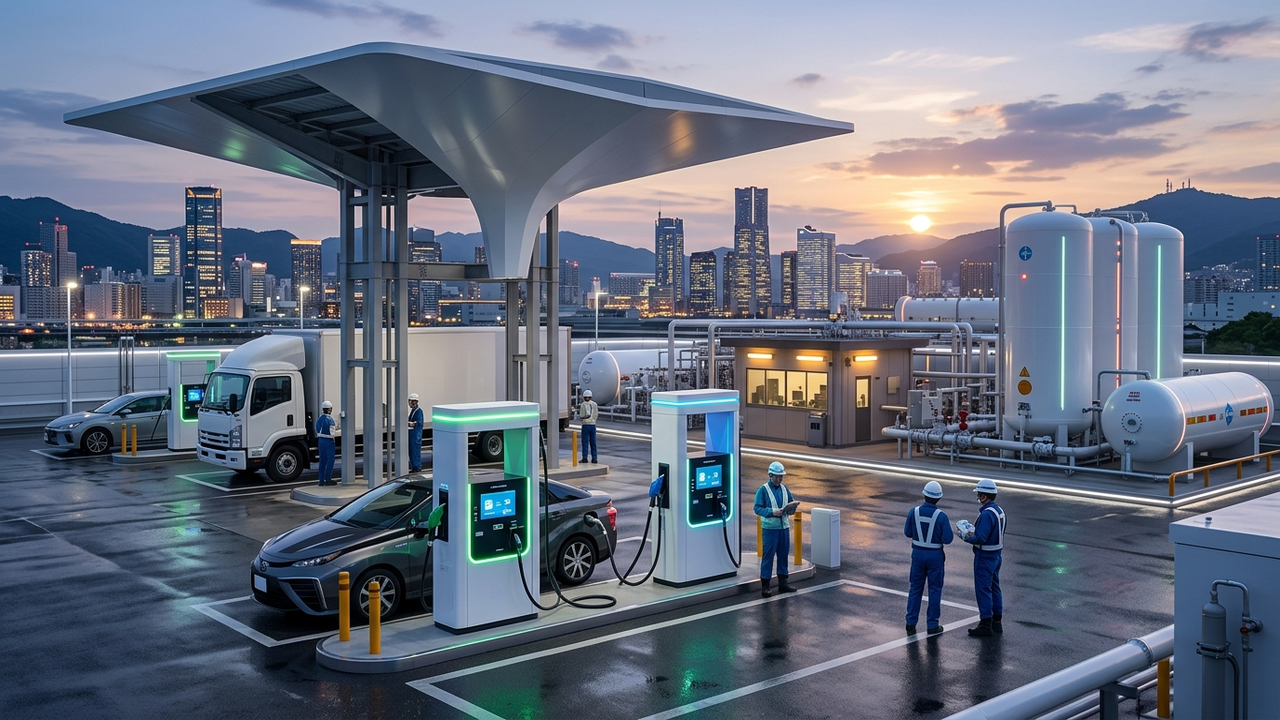
Japan has consistently positioned itself as a global leader in the development and early adoption of fuel cell vehicle technology. Despite this leadership, the slow build-out of hydrogen refueling stations has emerged as one of the primary bottlenecks hindering widespread FCV penetration. To address this, the Japanese government has set an ambitious target to increase the number of operational hydrogen stations from several dozens to 1,000 by 2030, and Iwatani Corporation’s current initiative will significantly contribute to achieving this national strategic goal. As a pioneer in the hydrogen business since the 1970s, Iwatani operates the largest hydrogen station network in Japan, playing a central and critical role in the nation’s hydrogen supply infrastructure. This expansion is thus an indispensable step in accelerating the commercialization and societal integration of hydrogen energy.
Key Findings
Iwatani Corporation has unveiled plans for a significant expansion of its hydrogen refueling station network throughout Japan. This initiative aims to robustly support the steady increase in Fuel Cell Vehicle (FCV) adoption domestically and substantially enhance convenience for hydrogen mobility users, encompassing both individual drivers and commercial businesses. This strategic infrastructure investment is positioned as a key pillar in the Japanese government’s drive toward realizing a hydrogen society.
Technical Details
The announced expansion plan for hydrogen refueling stations includes the installation of new stations in major metropolitan areas and along key arterial roads. Iwatani Corporation, a recognized leader in liquefied hydrogen storage technology and high-pressure hydrogen dispenser technology, is expected to deploy these cutting-edge systems in the new stations. The stations are meticulously designed to enable rapid and safe hydrogen refueling for FCVs, minimizing downtime and allowing vehicles to resume travel quickly. Furthermore, the company will actively promote the supply of green hydrogen sourced from renewable energy and blue hydrogen with significantly reduced CO2 emissions during production, thereby contributing to decarbonization directly from the fuel supply stage. This holistic approach is expected to reduce the overall environmental impact across the entire FCV lifecycle.
Strategic Significance & Outlook
Iwatani Corporation’s expanded hydrogen station network is expected to provide substantial momentum for FCV adoption and further build consumer and business confidence in hydrogen mobility. With a densifying network of stations, more automotive manufacturers are likely to introduce a wider array of FCV models to the market, leading to improved price competitiveness and greater diversification of offerings. The deployment of commercial FCVs, such as buses and heavy-duty trucks, is also anticipated to accelerate significantly, contributing materially to the decarbonization of the crucial logistics sector. This infrastructure development extends beyond immediate FCV adoption; it lays essential groundwork for broader hydrogen utilization in the future, including hydrogen fuel cells for rail transport, maritime shipping, and stationary power generation. Iwatani’s profound commitment in this area underscores Japan’s unwavering dedication to realizing a sustainable energy society, often globally referred to as the ‘hydrogen society.’
Source: #
Get our weekly technology intelligence — free
Receive an infographic that lets you judge at a glance whether each field’s analysis report is worth reading.
Subscribe Free — Weekly Tech Intelligence
By subscribing, you’ll receive Troy-Technical’s weekly technology intelligence newsletter.
- Your email and selected fields are used only to deliver the newsletter.
- We never share your information with third parties.
- You can unsubscribe anytime via the link in each email.
See our Privacy Policy for details.
Takes about a minute · Unsubscribe anytime



Comments